

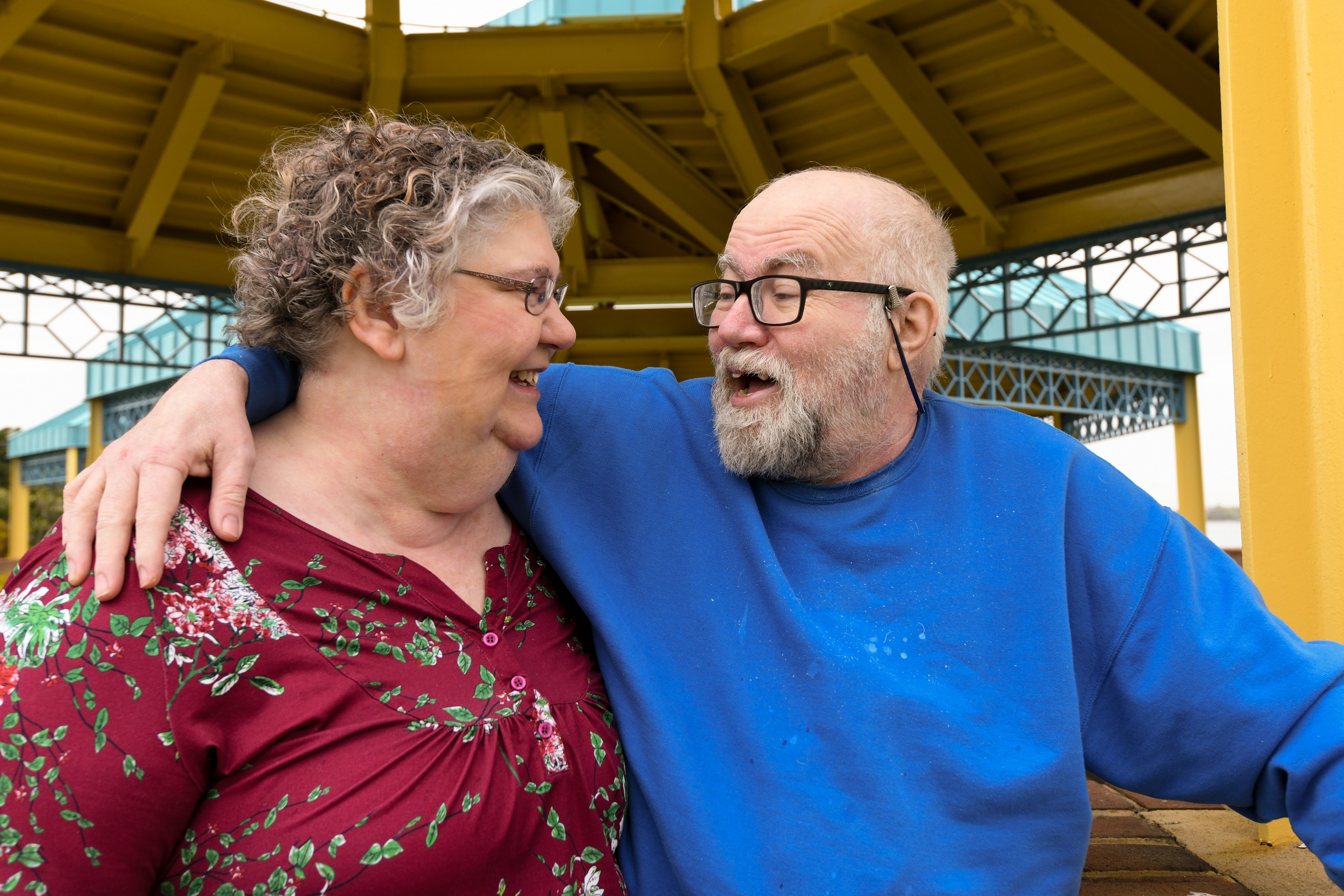
Despite heart medications and prior stent procedures, 63-year-old Michael Riley’s heart failure had progressed due to advanced disease and several heart attacks.
“Michael had complex heart disease, and his condition was rapidly deteriorating, requiring hospitalization, to treat his heart failure,” says Michael’s cardiologist, Shaddy Younan, M.D.
Michael’s severe type of heart failure meant that he had only six months or fewer to live—that is, until a team of cardiac experts at Jersey Shore University Medical Center joined forces to save his life and reverse his heart failure.
“Michael had been so ill, he did not have the strength to get out of bed on his own, and his kidney function was deteriorating from heart congestion and fluid build-up,” says Jesus Almendral, M.D., FACC, medical director, Advanced Heart Failure Program at Jersey Shore. “He wasn’t eating and was weak. When he was admitted to Jersey Shore, he was in cardiogenic shock, a life-threatening condition where the heart can’t pump enough blood to meet the body’s needs.”
A Temporary Solution
About 6.2 million Americans have heart failure, which is caused by conditions that damage the heart muscle, such as coronary artery disease, heart attacks, diabetes and high blood pressure. Advanced heart failure is the most serious stage of the condition.
“I suffered from heart attacks and had a pacemaker and defibrillator, but the congestive heart failure progressed so quickly. I was so weak, I could not hold my head up straight,” says Michael, who lives in South Amboy, New Jersey, with his wife of 40 years, Susan.
Dr. Younan worked with his team to devise a care plan for Michael to save his life, utilizing leading-edge cardiac technology.
As part of the first step in his care, doctors placed an Impella® 5.5 temporary left ventricular assist device (LVAD), the world’s smallest heart pump, into position by inserting it through an artery under the collarbone and into the heart. Once in place, the pump was turned on, providing support to the heart while monitoring the pumping activity.
This temporary procedure supported his heart function, got him better from a cardiogenic shock perspective and allowed Dr. Younan to perform additional stenting and shockwave coronary lithoplasty, a new technology combining a balloon angioplasty catheter with the use of sound waves—similar to that used for treating kidney stones—to open the arteries that supply blood to the heart.
Permanent Heart Fix
The shockwave stenting was successful: It enabled Michael to walk again and improved his kidney function. Still, his heart function did not improve, and a permanent solution was needed.
The team implanted a permanent HeartMate III LVAD, a high-risk open-heart procedure in patients with cardiogenic shock. Michael needed this type of intervention to survive long-term.
Fortunately, Michael did well after the surgery to implant the heart pump. He was able to leave the hospital and start cardiac rehabilitation after nine days. Eventually, his cardiovascular function began to normalize, allowing him to carry on all his activities without any shortness of breath.
“I am still recovering and gaining my strength, but I feel so much better,” says Michael, father to four sons and former pastor and journalist. “Everyone comments about how much healthier I seem and how my outlook and mood have improved.”
Next Steps & Resources:
- Meet our sources: Shaddy Younan, M.D. and Jesus Almendral, M.D., FACC.
- Make an appointment online with a cardiologist near you, or call 800-822-8905.
- For more information, call the Heart Failure Center at 732-776-4196.

Top Fruits and Veggies for a Healthy Heart
Jason Sayanlar, M.D., FACC, a cardiologist at Hackensack University Medical Center, lettuce know the top fruits and veggies for heart health.
Denville, New Jersey, Father Receives Lifesaving Care After Life-threatening Aortic Dissection
Bonit Sharma is grateful for the care he received at Hackensack University Medical Center for a life-threatening aortic dissection.
Oradell Woman Has Major Heart Attack
One day, Manisha Mehta was given a clean bill of health. The next, she was fighting for her life.

6 Reasons Your Heart Rate is High
High heart rate? Learn 6 common causes from Dr. Moosvi. Understand your symptoms & find relief. Call 800-822-8905.