

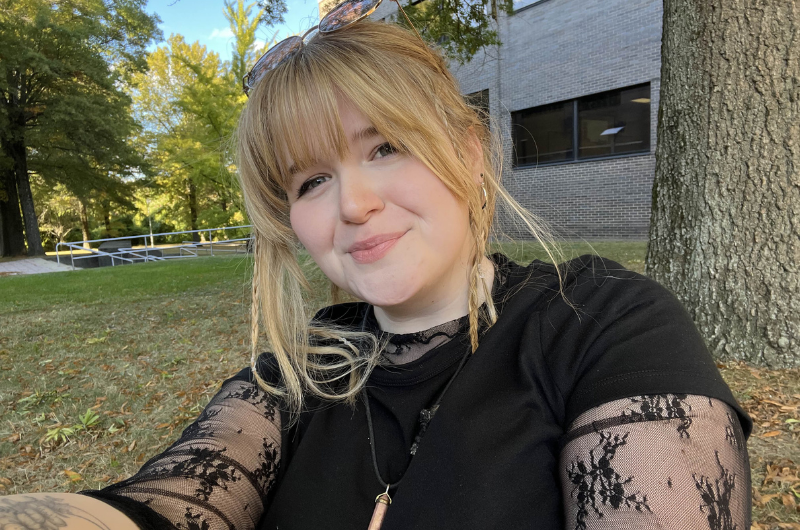
At 22 years old, Sarah Murphy is a college senior studying psychology in New York. Between classes and studying for exams, she’s busy planning her next move – graduate school. But long before she achieved such academic success, Sarah struggled to keep up with her classmates.
Starting in third grade, Sarah had trouble focusing in class and on her homework. By sixth grade, she was falling behind in math and other subjects, leading her teachers to believe she had a learning disability. They told Sarah’s parents that she most likely was battling attention-deficit/hyperactivity disorder (ADHD), which affects an estimated 7 million children ages 3-17 in the U.S.
“That didn’t really make sense to me or my parents,” Sarah says. “But now I know that ADHD is often a ‘gateway diagnosis,’ and it was a place for us to start.”
Trial and Error
Sarah saw a doctor who prescribed a common stimulant used to treat ADHD.
“It was horrible,” Sarah says. “It was such a bad experience. I started washing my hands obsessively to the point where my knuckles were bleeding. I got really anxious and paranoid, and my parents knew it wasn’t the right medication for me.”
After Sarah’s parents took her off the ADHD medicine cold turkey, she became withdrawn and depressed. One day, Sarah grabbed her mother’s shoulders and said, “Mom, I’m exhausted.”
So in 2014, Sarah’s parents took her to see neurologist Georges A. Ghacibeh, M.D., director of Developmental Neurology and Neurological Sleep Disorder at the Hackensack Meridian Neuroscience Institute at Hackensack University Medical Center. Dr. Ghacibeh didn’t believe Sarah had ADHD.
“When I started to dig into the symptoms, the recurrent theme that Sarah’s mom kept telling me was that Sarah couldn’t keep her head up in the classroom, and she often put her head down to rest,” Dr. Ghacibeh says. “And to me, this was a huge red flag that we might be dealing with a sleep disorder, not with ADHD.”
Finding the Root of the Problem
Dr. Ghacibeh ordered a nighttime sleep study and a multiple sleep latency test (MSLT), which measures daytime sleepiness by monitoring brain activity and eye movements during multiple naps. The tests confirmed his suspicion: Sarah had narcolepsy, a chronic neurological disorder that affects a person’s ability to control sleep-wake cycles.
“Sarah was not the first patient I’ve seen with a sleep disorder who had been misdiagnosed with something else,” Dr. Ghacibeh says. “When children are sleepy, they sometimes become hyperactive, irritable or just inattentive. If you let them sit down quietly, they might eventually fall asleep. But that’s not always the case. Like any other condition, it falls on a spectrum of severity.”
Dr. Ghacibeh prescribed a wake-promoting agent, a medication specific for patients with sleep disorders that improves alertness and wakefulness. Sarah responded well immediately and has been on the same medication for almost a decade. She says it helps her to be productive.
As a soon-to-be college graduate, Sarah says she has a deep respect for anyone in a traditional classroom setting who might be dealing with any disability, whether physical or cognitive.
“I usually have to tell my professors that I promise their class isn’t boring; it’s just that I have a condition, and I can’t stay awake,” she says.
And though she’ll need to be on medication for the rest of her life, Sarah says she’s learned to advocate for herself when necessary and when to practice self-care.
“My roommates don’t always know I’m home until I walk out of my bedroom after taking a long nap, but it’s what I need to do for myself,” she says.
Next Steps & Resources
- Meet our source: Georges A. Ghacibeh, M.D., who also serves as associate professor of Neurology at Hackensack Meridian School of Medicine.
- To make an appointment with a neurologist near you, call 800-822-8905 or visit our website.
- Learn more about neurology services at Hackensack Meridian Health.
Is Sleep Affecting Your Mental Health?
Do you feel cranky if you stay up too late and wake up early? One night may sour your mood but chronic sleep loss may contribute to mental-health disorders.

ADHD in Kids: The Link Between Diet and Symptom Management
What your child eats makes a big difference in the severity of their ADHD symptoms. Learn why from developmental-behavioral expert Eileen Dolan, M.D.

How to Support Your Child's Mental Health
Support your child's mental health. Learn practical tips from Dr. Vieux at Hackensack University Medical Center. Get resources and support now.
Which Side Should You Sleep On? Tips from a Cardiologist
Could the position that you sleep in have an impact on your indigestion, sleep apnea or heart health? A cardiologist weighs in and shares his recommendations for better-quality sleep.