

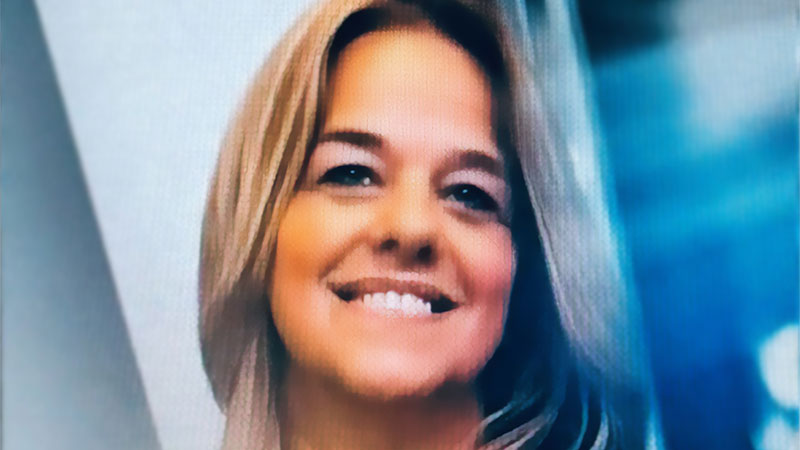
When Joanne C.’s doctor suggested a small implant under her chin to treat her obstructive sleep apnea , her first instinct was to say no. The 56-year-old Bergen County resident had spent years trying CPAP machines, mouth guards and other fixes with no luck
But her doctors kept warning her: While she slept, her airway was collapsing dozens of times a night, cutting off oxygen and forcing her heart to compensate.
If she continued without treatment, her risk of stroke, heart failure and high blood pressure would climb. She was running out of options.
A Surprising Diagnosis
Joanne had been snoring since she was a kid. Her sister would tell her about it, but it never seemed like a big deal.
“There was no internet to Google it back then,” she recalls. “It wasn’t something I worried about.”
It wasn’t until her 40s that she was diagnosed with obstructive sleep apnea (OSA), a sleep disorder where the throat muscles relax during sleep and briefly block the airway. Someone with OSA might wake up gasping for air or be told by a family member that they snore loudly.,
But not everyone has obvious symptoms. About 70% of sleep apnea patients don’t experience the classic signs like daytime sleepiness, says Khaled Abu-Ihweij, M.D., a pulmonologist and sleep medicine specialist who treats Joanne at Hackensack Meridian Health in Lodi.
As a single mom commuting from north Jersey into New York City and caring for her two kids, Joanne chalked up any tiredness to her busy life.
A Breath of Fresh Air
Dr. Abu-Ihweij told Joanne she would be a good candidate for the Genio® system, a newer option for people with OSA who can’t tolerate CPAP.
Approved by the FDA in August 2025, it’s a small, battery-free device that’s implanted under the chin through a single incision. When activated, the device gently stimulates the nerves on both sides of the tongue, causing it to move forward and keep the airway open during sleep.
“It’s much more comfortable and patient-friendly than CPAP,” Dr. Abu-Ihweij explains. “It’s more portable. You’re not tethered to a cord, so there’s more freedom of movement.”
Ahmad Mahmoud, M.D., an otolaryngologist at Hackensack Meridian Health, agreed that Joanne was an excellent candidate for the treatment. Joanne was hesitant at first, but Dr. Mahmoud put her mind at ease.
“He was very helpful in terms of explaining what to expect and what the outcome would be,” she recalls. “I felt very comfortable with him, and I don’t know if I would have done it with anybody else.”
In November 2025, Dr. Mahmoud performed the outpatient procedure, which took about two hours. When Joanne woke up, she was wearing a “jaw bra,” a soft, adjustable chin strap that provides support and reduces swelling. She felt comfortable, and the recovery was minimal.
“There was a little soreness from the incision, but nothing I needed medication for,” she says. She spent a few days at home icing the area before heading back to work. Dr. Mahmoud checked in regularly to see how she was feeling.
Getting on Track
After letting the implant area heal for eight weeks, Joanne activated the Genio device with Dr. Abu-Ihweij’s help at an in-office appointment.
The system comes with personalized settings that can be controlled through a smartphone app, so Joanne can set it to kick in about 25 minutes after she falls asleep. Once it starts, the device sends a signal to her tongue every three seconds, causing it to move forward. She’s gradually working her way up to a higher setting, which provides more stimulation to the nerves of the tongue and can offer greater symptom relief.
It’s taking time to adjust to the device, which Joanne describes as a painless pulsing sensation. “I notice it if it kicks in before I fall asleep, or if I wake up in the middle of the night,” Joanne says, though it doesn’t stop her from dozing off.
It’s normal for patients to need time to get used to the device, Dr. Abu-Ihweij notes. That’s why people typically increase their settings slowly. “We want patients to expect at least three to six months of adjustments before we look at how the therapy is working for them,” he says. “This is a chronic disease. It’s not an overnight fix.”
During a test at one of her follow-up appointments, Joanne’s care team was already able to see that the device is keeping her airway more open, which means she’s getting more oxygen while she sleeps.
“I’m confident that she’ll fully adjust [to the Genio device] over time,” Dr. Abu-Ihweij says. And as she moves up to a higher setting, he’s also confident that her OSA will either be cured or greatly minimized
.For Joanne, that means getting the heart-health protection she’s long been seeking.
“Thanks to my care team, I feel like I have a new beginning,” she says. “And finally, a good night’s rest.”
Next Steps and Resources
- Meet our source(s): Dr. Khaled Abu-Ihweij, M.D., and Dr. Ahmad Mahmoud, M.D.
- Make an appointment online with a sleep medicine provider near you, or call 800-822-8905.
- Learn more about our sleep medicine services.
Which Side Should You Sleep On? Tips from a Cardiologist
Could the position that you sleep in have an impact on your indigestion, sleep apnea or heart health? A cardiologist weighs in and shares his recommendations for better-quality sleep.

Here’s How Alcohol Affects Your Sleep
Alcohol impacts sleep quality and duration. Learn how Dr. Ghacibeh explains alcohol's effects on sleep and potential solutions. Call 800-822-8905.

Hidden Dangers of Sleep Deprivation: How it Affects Your Body
Consistently not getting enough sleep may increase the risk of various health problems such as obesity, high blood pressure, and even heart disease. Learn how to prioritize sleep for better long-term health.
Everything You Want to Know About Sleep (But Never Thought to Ask)
How much do you know about nightmares? Or microsleeps? Or what really happens when you wake a sleep walker? Read to learn more.