

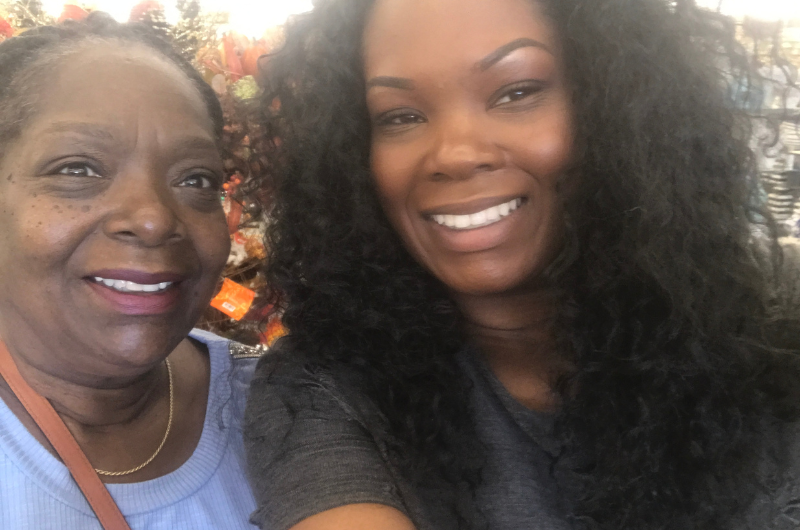
Curlean Phillips, 70, felt her spirit sinking. Every plan she made, whether a lunch with friends or a trip with her family, was entangled with the demands of her daily dialysis treatment. Life, it seemed, was now tethered to a machine.
Losing Kidney Function & Hope
For 25 years, Curlean has battled Lupus, a chronic autoimmune disease that led to severe kidney problems. After the progressive decline of her kidney function, she began dialysis last year.
What is dialysis?
Your kidneys are your body’s main filtration system – when they aren’t working properly, dialysis is a life-saving treatment.
Dialysis acts as an artificial kidney to help clean your blood. It helps remove waste, salt and excess water from your body. Life on dialysis means spending many hours each week connected to a machine.
The Mental & Physical Burden
Curlean’s dialysis treatment was seven days a week, and it was taking a major toll on her physical and mental well-being.
She was feeling depressed and held back from living her life fully. A planned trip to Dubai with friends was out of the question, and even a family vacation to Disney World was complicated by the need to transport dialysis equipment.
Finding Another Way: Organ Transplant
When a kidney transplant became her best hope, Curlean and her family turned to the one hospital they knew they could trust: Hackensack University Medical Center.
Her family’s connection to their community and hospital runs deep. Both Curlean’s daughter, Chanda, 41, and her granddaughter were born at Hackensack.
During their meeting with the transplant team, the family learned about the advantages of a living donor. Kidneys from living donors typically last longer and function better than those from deceased donors. Most importantly, living donor kidneys dramatically reduce the waiting time for a life-saving transplant.
Becoming a Living Donor
To become a living organ donor, you must meet certain health requirements and be a compatible donor for the recipient.
Here is what you can expect:
- All donors must donate voluntarily and be at least 18 years of age.
- You need to be in good health.
- You will get a full check-up. This includes blood tests and other exams to make sure you are a good match for the person receiving the organ.
- You will meet with a team of experts who will explain everything and answer all of your questions.
The Decision to Donate
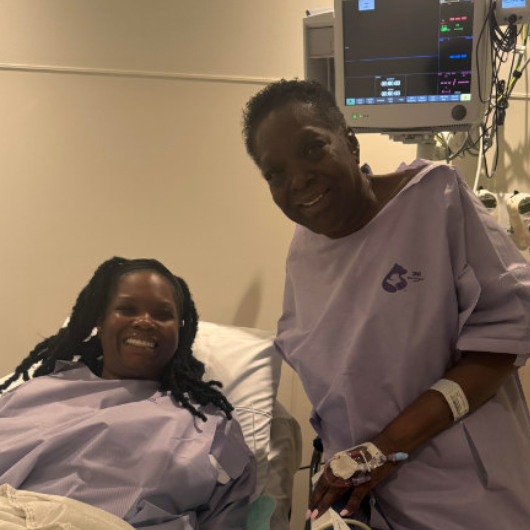
While Curlean was telling the team that there was no one she could ask for a donation, Chanda had already made a selfless decision: she would donate her kidney to her mother.
Chanda witnessed firsthand the toll dialysis takes on a person, and she wanted a better life for her mom.
Worried about her daughter's future, Curlean was against the idea, but Chanda had made up her mind. “Sometimes you have to be the parent and tell your parents what's best for them,” she said.
A Priceless Gift
Over 100,000 people in the United States are currently on the organ transplant waiting list, with close to 90,000 of them in need of a kidney. The average wait time for a deceased donor kidney can be three to five years.
"Living donation is a transformative act of generosity that can dramatically shorten the agonizing and life-threatening wait for a life-saving organ," said Michael J. Goldstein, M.D., Director of Organ Transplantation at Hackensack and Curlean's surgeon. "It offers recipients a new lease on life with improved outcomes."
Chanda's generous act has given her mother just that. The surgery, a robotic-assisted laparoscopic kidney removal, was done by Alexandra J. Erhardt, D.O., a transplant surgeon at Hackensack. This type of surgery is less invasive because it uses a robotic system and small cuts to remove the kidney.
"It is a privilege to be part of a team that facilitates such a profound gift between family members," Dr. Erhardt said. "The minimally invasive technique we use for the donor operation allows for a quicker recovery and return to normal life."
A New Chapter, Untethered
Now fully recovered, Curlean and Chanda are excited to do all the things they were held back from before. They are planning road trips and flea market visits, and hope to take a trip to Disney with no limitations. Now free from dialysis, Curlean is even planning a trip to Japan with her friends.
The whole experience changed the family's life, especially for Curlean's granddaughter, who lovingly calls her "Coco" and helped take care of her.
Chanda's courageous act of kindness, along with the expert care of the Hackensack transplant team, didn't just save a life; it gave a family their future back.

Next Steps & Resources
- Meet our source: Michael J. Goldstein, M.D., and Alexandra J. Erhardt, D.O.
- Make an appointment online with a doctor near you, or call 800-822-8905.
- Learn more about the living organ donor program at Hackensack Meridian Health.

56-Year-Old Conquers Heart Transplant and COVID Thanks to Cardiac Rehab
Cardiac Rehab Helped 56-Year-Old Sam Recover From Heart Transplant & COVID. Learn more and schedule your appointment today.

6-year-old on Road to Recovery After Bone Marrow Transplant
After Piper Law was diagnosed with a life-threatening disease in which the bone marrow doesn’t make enough blood cells, but doctors give new hope.
Teenager’s Harrowing Health Crisis Ends Happily with New Kidney
A kidney transplant saved 16-year-old Dominic Lipka’s life. Now, he’s living it to the fullest playing video games and hanging out with his friends.
Managing Life with One Kidney
Live with one kidney? Learn how to maintain a healthy lifestyle and protect your kidney. Expert advice from Drs. Naqvi and Serur. Schedule an appointment today.