Troy Devries had been horseback riding for about two years, taking weekly lessons on Sundays at a stable in Warwick, New York. The indoor arena with sand footing felt safe, and as a newcomer to the sport, he was gradually building his confidence.
During one lesson, Troy was posting at a trot when he signaled his horse to turn left.
“The horse slowed down from a trot to a walk and turned at the same time,” Troy says. “I lost my balance, fell sideways off the horse and landed on my feet, but I had collapsed my legs to take the impact, and the horse was still moving forward. My left toe caught the ground before the rest of my foot, and my ankle twisted all the way around backward.”
Troy heard two pops in his ankle but felt OK to continue his lesson. He resumed posting, but the pressure on his toes caused so much pain that he knew something was wrong.
Newer Ankle Surgery Method Aims for Less Scarring
Since it was a Sunday, Troy drove himself to urgent care. X-rays were taken and showed one broken bone in his left ankle. The next day, Troy called his primary care physician, who referred him to Daniel Murray, M.D., at Hackensack University Medical Center.
Dr. Murray ordered more detailed imaging that revealed not just one broken bone, but two: his fibula and part of his tibia (the two pops Troy heard when his ankle twisted).
Dr. Murray recommended ankle repair surgery, but not using the standard approach. He offered a newer method using a fibula nail instead of the typical plate and screws.
“The way I did his ankle surgery using a fibular nail, instead of a plate, which is the more typical way to do it, required much smaller incisions.” Dr. Murray says. “With a fibular nail, the scarring is also a lot less.”
For someone like Troy, who hoped to return to activities like horseback riding, where boots press against the outside of the ankle, this technique offered significant advantages.
“The hardware winds up being a lot less prominent,” Dr. Murray says. “So, the chance of Troy having long-term effects where the plate bothers him, or needing another surgery to have the hardware removed, is significantly less compared to the more traditional style of surgery.”
Communication and Care Excellence
What impressed Troy most about his experience wasn’t just the surgical technique, but also Dr. Murray’s exceptional communication throughout the process.
“He’s really great at explaining what he is doing,” Troy says. “I think I was there by myself the first day I met with him. The next time I saw him, my wife was there, and he explained everything to her as well. He gave me written documents that were four pages long: Here’s what’s going to happen. Here’s the recovery process.”
The detailed recovery timeline proved invaluable.
“At this point in the recovery, you should be putting weight on it. You should be walking on it. You should be in an ankle brace instead of a boot by this point,” Troy says. “I kept referring back to that written document. That was gold for me.”
The surgery was performed at Hackensack University Medical Center, which impressed Troy with its state-of-the-art facilities.
“Really nice facility,” he says. “The operating room was probably 10 times bigger than it needed to be for little old me.”
Recovery Exceeding Expectations
Troy’s recovery exceeded expectations. The pain was minimal. “I really wasn’t getting much pain, so kudos to Dr. Murray,” Troy says.
Throughout his follow-up visits, when medical staff asked about his pain level on a scale of one to ten, he tended to say one or two. Dr. Murray’s hands-on approach continued throughout recovery.
“He even went over the medications,” Troy says. “He’s really good at all the things that you would want a doctor to do for you.”
Looking Forward to New Adventures After Ankle Surgery
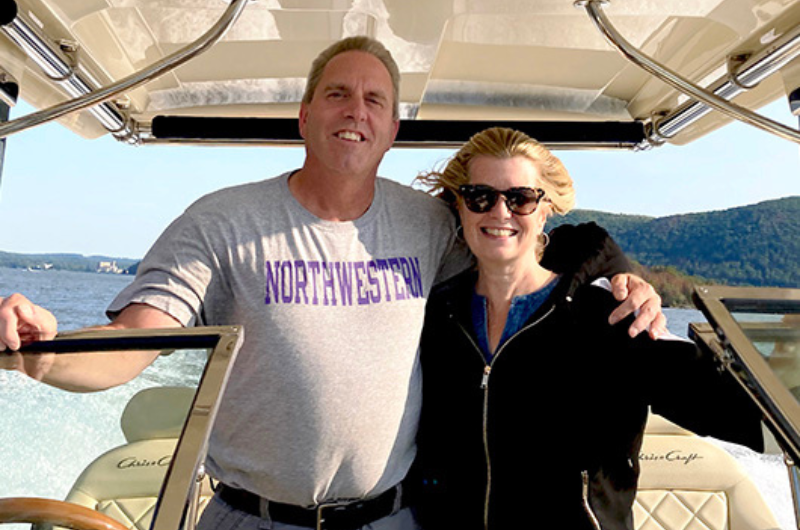
Today, Troy has returned to his active lifestyle. He’s spending plenty of quality time on his boat and enjoying scuba diving, including a recent trip to Cozumel, Mexico. The restoration of his ankle’s range of motion stood the test of kicking with swim fins in strong currents.
While Dr. Murray has cleared Troy to return to horseback riding, Troy is taking his customary seasonal approach.
“My boat has to be put in dry dock for the winter by Halloween. So sometime after that,” he says of returning to riding.
Looking ahead, Troy is excited to use the skydiving gift certificates his wife gave him and their daughter.
Advanced Techniques Making a Difference
Dr. Murray emphasizes that Troy’s case illustrates the benefits of newer, minimally invasive orthopedic techniques.
“The world of foot and ankle surgery is moving toward more minimally invasive techniques with smaller incisions, less scarring, faster recovery and less hardware prominence,” he says.
For Dr. Murray, cases like Troy’s represent what makes orthopedic surgery so fulfilling.
“Being able to guide somebody from a preoperative injury back to as close to their preoperative or pre-injury level of function as possible is very rewarding.”
Troy’s Advice for Patients Like Him
Troy’s advice for anyone facing a similar injury focuses on the importance of finding the right surgeon and clear communication.
“I don’t think I was ever worried,” he says. “But I think people who are worried would be really appreciative of Dr. Murray’s bedside manner and the way he explains things.”
Troy also emphasizes Dr. Murray’s personal qualities: “He’s a very pleasant guy. I really enjoyed talking to him, and he was very patient explaining the details of the ankle surgery.”
Next Steps & Resources
- Meet our source: Daniel Murray, M.D.
- Make an appointment online with an orthopedic specialist near you, or call 800-822-8905.
- Learn more about orthopedics and minimally invasive surgical techniques at Hackensack Meridian Health.
Bunion Relief: Is it Possible Without Surgery?

5 Ways to Avoid a Pickleball Injury