Hackensack University Medical Center Physicians Perform 1,000th Ion Bronchoscopy Case
New Jersey’s highest volume center applies tool in robotic surgery to ID and remove lung nodules under one round of anesthesia
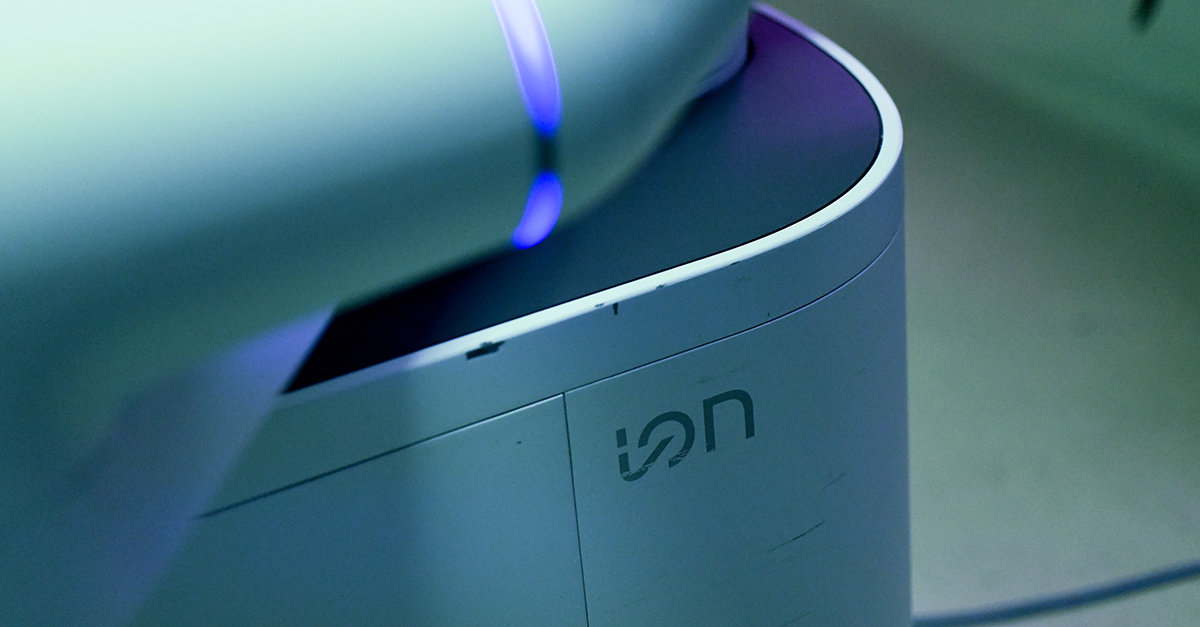
The thoracic surgeons and pulmonologists at Hackensack University Medical Center recently completed their 1,000th Ion robotic bronchoscopy case.
Pulmonologists or surgeons can use the Ion to biopsy lung nodules and place markers for radiation in patients who cannot undergo surgery, and surgeons can mark small or nonsolid lung nodules for surgical removal. They can guide the tiny camera to essentially any part of the lungs, reaching areas inaccessible or unsafe for other biopsy methods.
The center, New Jersey’s highest volume Ion bronchoscopy program, obtained the technology in June 2020 and immediately integrated it with the DaVinci robotic surgery platform to provide patients a one-stop treatment option. With the technology in the operating room, surgeons can first enter through the airways to mark the lung nodule, then immediately perform minimally invasive robotic surgery to remove it. This spares patients from multiple procedures and rounds of anesthesia.
As CT lung cancer screening has become more common, smaller nonsolid, ground glass opacity nodules are increasingly detected. These cancers can be difficult to locate during surgery. In these cases, the Ion can help pinpoint the lung area to remove, allowing early intervention instead of waiting for solid, more easily detected masses to form. This allows surgeons to perform more minimally invasive lung-sparing surgeries and preserve more lung tissue. Many patients go home the same day of surgery.
Three years after the first case, doctors made another technology leap by incorporating 3D imaging during biopsy procedures with the 3D OEC Fluoroscopy. This system takes and compiles hundreds of images during the procedure to give 3D confirmation of the correct biopsy location, compensating for CT body divergence. Before this approach, multiple biopsies with less precision were necessary to ensure nodule tissue removal.
“Rather than just relying on a two-dimensional X-ray, we can now use the equivalent of a CT scan when performing biopsies. The technology makes all the difference when 1 or 2 millimeters can mean getting an accurate biopsy or missing the target.” Geoffrey Pelz, M.D., a thoracic surgeon at Hackensack University Medical Center, said. A software upgrade last year even allowed the imaging data to be directly imported into the Ion for faster procedures with less radiation.
“It’s quite an accomplishment in just over five years to reach a thousand cases and help so many people,” Dr. Pelz said. “The hospital and the entire team are invested in adopting new technologies that help our lung surgery patients undergo less invasive treatments, recover faster, and get back to their lives cancer-free.”
Learn more about innovative pulmonary and thoracic surgery care at Hackensack University Medical Center.
If you are a patient looking for expert pulmonary medicine care at Hackensack Meridian Health, please visit our pulmonology services page to learn about our specialties, find locations, and schedule appointments.