

Why It’s Essential for Companies to Protect Their Employees’ Hearing
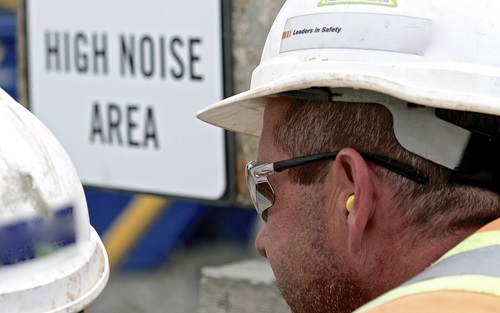
Not all hearing loss is preventable, but noise-related hearing loss can be reduced or prevented. Work-related noise is a significant occupational health hazard that can lead to hearing loss if proper measures aren’t followed.
Occupational Safety and Health Administration (OSHA) standards require employers whose workers experience noise exposure levels greater than or equal to 85 decibels over 8 hours to adopt a hearing conservation program and provide affected employees with hearing protection.
“Hearing loss is a work-related injury,” says Mary Beth Laskay, director of clinical management at Hackensack Meridian Health. “When employers implement hearing conservation programs, they’re working to prevent this work-related injury, to keep everybody safe.”
Problems Associated with Excessive Noise Exposure
Someone who doesn’t wear hearing protection when they work in an environment that’s constantly 85 or 90 decibels may begin to experience hearing-related concerns, such as:
- Tinnitus. When employees leave work, they may hear a constant hum or ringing in their ears, which can be an early sign of noise-related hearing loss.
- Temporary hearing deficits. Some workers may experience gaps in their hearing after working in an excessively noisy environment.
- Signs of hearing loss. Employees may be unable to hear a colleague who’s standing three feet away unless they shout.
- Inability to hear safety warnings. When a noise-exposed worker in a quiet space can’t hear someone whispering, they may not be able to hear emergency alerts in their work environment, putting them at increased risk of safety events.
How to Protect Workers’ Hearing
If you’re unsure whether your workplace exposes employees to noise greater than or equivalent to 85 decibels for extended periods, monitor the environment.
“It can be as simple as using an app to determine the noise level, and finding out how long team members are there, to see if they have prolonged exposure,” Laskay says.
When a workplace environment is noisy enough for a hearing conservation program, employers should take steps to protect team members’ hearing:
- Test affected employees. Send workers who are routinely exposed to at least 85 decibels for hearing tests, whether at HM Works or through another provider. Employees should get a baseline hearing test when they begin working in a noise-impacted position, and they should be retested annually.|
“The annual test gets compared back to the initial test results, to see any variants in the hearing,” Laskay says. “We highlight the change, and then the company policy dictates their next step. The workplace should refer the employee to an audiologist.”
- Provide hearing protection. Employees with exposure to 85 decibels or more should be fitted with appropriate, company-provided hearing protection.
“Each hearing protection device has different levels of muffling sound,” Laskay says. “For flexible silicone earplugs, it’s only 10 to 15 decibels, but the ear muffs are higher.”
- Make hearing protection an easy habit. Ensure that your employees’ hearing protectors are easily accessible and convenient to use. Corded ear plugs, for example, may be preferable to handheld ear plugs, which are small and easy to drop or misplace.
“Typically, people wear ear muffs and corded ear plugs around their necks when they’re not in use,” Laskay says. “It’s part of their safety suit, just like in some industries, people have to wear steel-toed boots.”
- Train employees about hearing protocols. During onboarding, then annually, provide workers with hearing conservation training. The training program should teach employees about the dangers of noise-related hearing loss, so they understand why they need hearing protection. Employees should also learn the pros and cons of different hearing protectors, how to wear them properly and how to care for them.
“By preserving their employees’ hearing, employers are helping prevent a lifelong disability,” says Laskay, who notes that workers must be invested in the plan for it to be most effective. “Testing and education about hearing protection is important and non-negotiable, like wearing a uniform.”
To inquire about hearing tests for noise-exposed workers, contact us at hmworks@hmhn.org.
To learn more about our Occupational Health Services visit:
https://www.hackensackmeridianhealth.org/en/services/hackensack-meridian-works