Wound Treatment Options
Hackensack Meridian Health provides expert wound care treatments across New Jersey, delivering advanced therapy for chronic, non-healing, and complex wounds. Patients in North, Central, and South Jersey have access to state-of-the-art treatments and nationally recognized specialists close to home. As New Jersey’s #1 ranked health network by U.S. News & World Report, we combine innovation, clinical expertise, and compassionate care to achieve the best possible outcomes.
Advanced Wound Care Treatments
Bio-engineered Skin Grafting
A bio-engineered skin graft is an alternative to a skin graft taken from the patient’s body. A skin substitute is made in a lab and helps wounds heal by allowing new skin growth, especially for difficult-to-heal wounds and ulcers.
Compression Therapy
Compression therapy involves the patient wearing stockings or socks that are specifically designed to increase circulation in the legs and support the veins.
Debridement
Debridement is the process of removing unhealthy or dead tissue from a wound to help improve wound healing. It creates a clean wound to decrease scarring and helps chronic wounds to heal properly. In some cases, advanced wound healing techniques and skin substitutes will be placed on the wound to minimize scarring and help with healing. Other treatment options for debridement include:
Hyperbaric Oxygen Therapy (HBO)
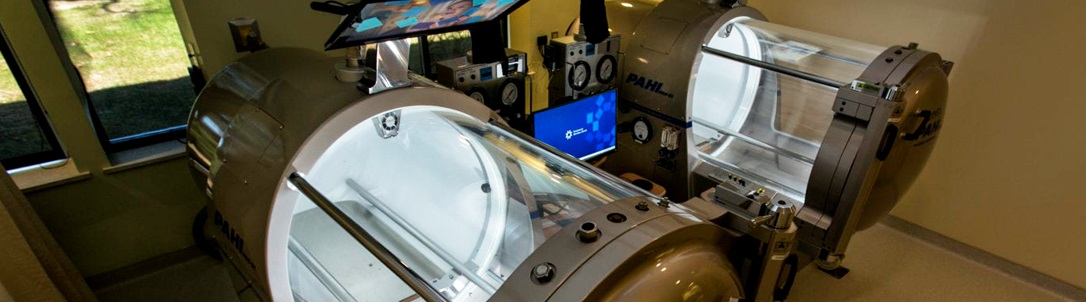
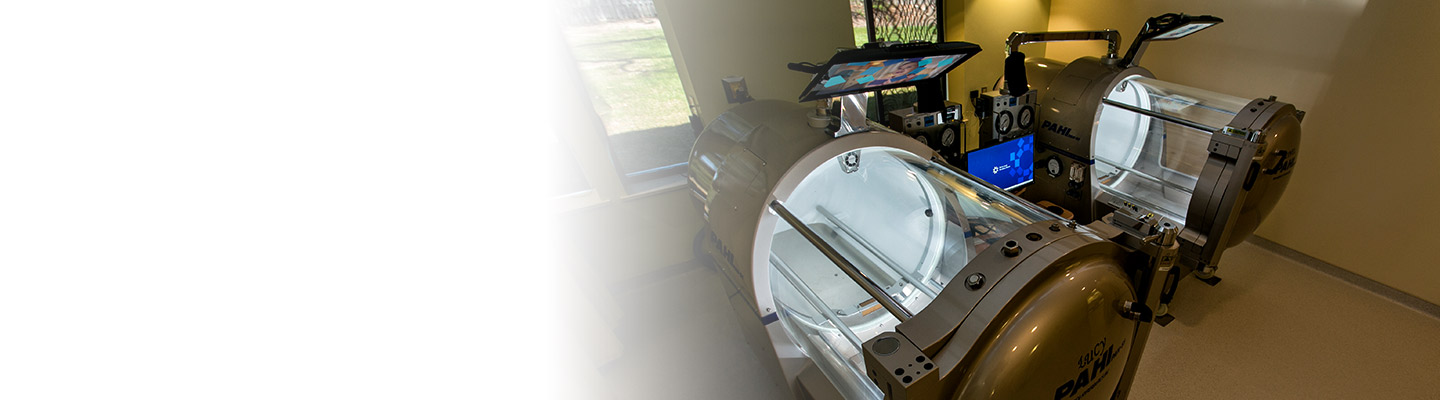
Hyperbaric Oxygen (HBO) Therapy is a non-invasive treatment in which the patient breathes pure oxygen while inside a pressurized chamber. The air pressure inside a hyperbaric oxygen chamber is about two and a half times greater than the normal pressure in the atmosphere. This “hyperbaric” (or high pressure) dose of oxygen helps the blood carry more oxygen to organs and connective tissues, which promotes wound healing. HBO can be the primary treatment for wound healing or it can be used in combination with other treatments. This comfortable and painless therapy is an outpatient procedure that requires daily treatment of two-hour sessions for approximately six to eight weeks.
Pulse Volume Recordings (PVRs)
A PVR uses a blood pressure cuff and handheld ultrasound device to determine the presence of blockages in the arteries. The ultrasound captures sound waves to measure the speed and flow of blood.
Epidermal Autograft (AKA Skin Grafting)
An epidermal autograft is when tissue is grown from the patient’s own skin cells and is placed on the patient’s own body.
Vacuum Assisted Wound Closure Therapy
VAC therapy uses a device that decreases the air pressure on a wound, allowing it to heal more quickly.
Vascular and Arterial Workups/Doppler Studies
Doppler studies are tests that monitor the blood flow in a patient’s veins and arteries using a Doppler ultrasound device. They can also find areas of abnormal blood flow, which may indicate a blockage.
Wound Cleansing and Advanced Dressing Selection
Advanced products for wound healing are designed to treat more complex wounds and are usually prescribed by your physician
Why Choose Hackensack Meridian Health
- Multidisciplinary care from wound care specialists, surgeons, podiatrists, and vascular experts
- Comprehensive technology including hyperbaric oxygen chambers and advanced diagnostic tools
- Personalized treatment plans designed for your specific wound type and health needs
- Collaborative care model for patients with diabetes, vascular disease, or chronic conditions
- Convenient wound centers across New Jersey offering full-service care close to home
Frequently Asked Questions (FAQs)
Are these treatments painful?
Most wound care treatments are minimally invasive and performed with comfort measures or local anesthesia when necessary.
How do I know if my wound is infected?
Signs of infection include redness, swelling, warmth, foul odor, increased pain, or drainage. If you notice these symptoms, contact your doctor immediately.
What are the most common types of wounds treated at Hackensack Meridian Health?
We treat diabetic ulcers, venous or arterial ulcers, pressure injuries, burns, surgical wounds, radiation injuries, and other complex or non-healing wounds.
What kind of wounds require advanced treatment?
Chronic wounds, diabetic ulcers, pressure sores, radiation injuries, and surgical wounds that do not heal normally benefit most from advanced therapies.