

Updated on 2/26/2026
Measles, a highly contagious disease once considered eliminated in the U.S., is surging back at an alarming rate.
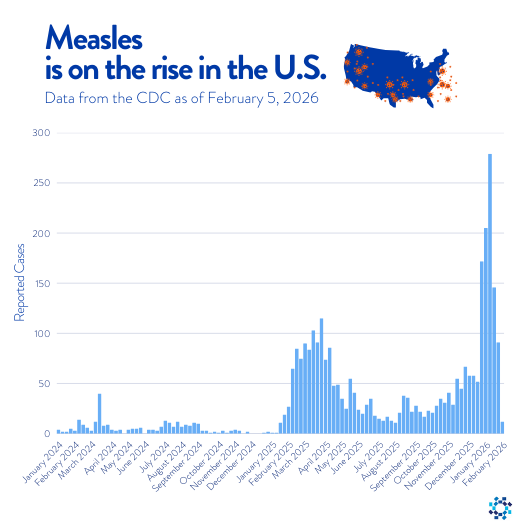
With case counts in 2025 reaching a record high and over 700 cases already reported in early 2026, communities are facing a public health emergency.
Here’s what you need to know to protect your family.
Status of the Current Outbreak
As of January 2026, the U.S. is facing one of its worst years for measles in decades. The current epicenter is in South Carolina, where hundreds have been infected in a major outbreak.
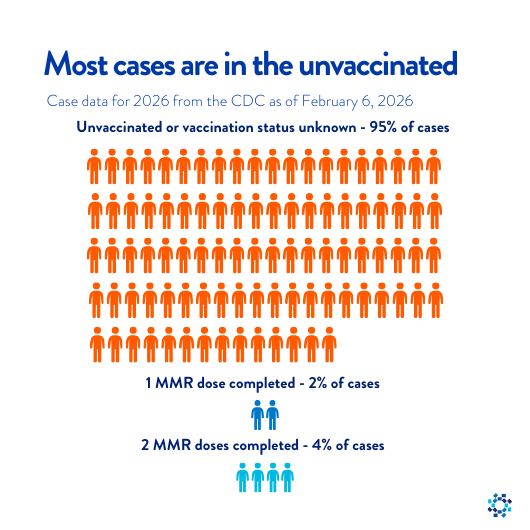
This dangerous resurgence is largely because of declining childhood vaccination rates. While the disease was once practically eradicated, now entire communities are at risk.
The measles is not just a harmless rash. In 2025 alone, three people in the U.S., including two young girls, died from a measles infection.
If you hear about a measles outbreak in your area, our experts advise you to take these important steps:
Focus on Prevention
Vaccination is the best way to protect children and loved ones from contracting the measles.
- Measles vaccine: The measles vaccine is given with the vaccines for mumps and rubella (MMR) and is usually given in two doses (one shot at 12 months and a second shot at 4 to 6 years of age), but can be given as early as 6 months of age in special situations such as travel or during an outbreak.
- MMRV vaccine: You can also get the MMRV vaccine (MMR plus varicella or chickenpox). MMRV is only approved for children between the ages of 12 months through 12 years. Ask your doctor which option is best for you or your child.
Know Your Options
Some people are too young or have health conditions that prevent them from being vaccinated. Immunoglobulin is a medicine that has been shown to prevent measles if given within 6 days of exposure. It's important for patients to be aware of this option and consult with a doctor immediately if exposed.
Understand Who is at High Risk
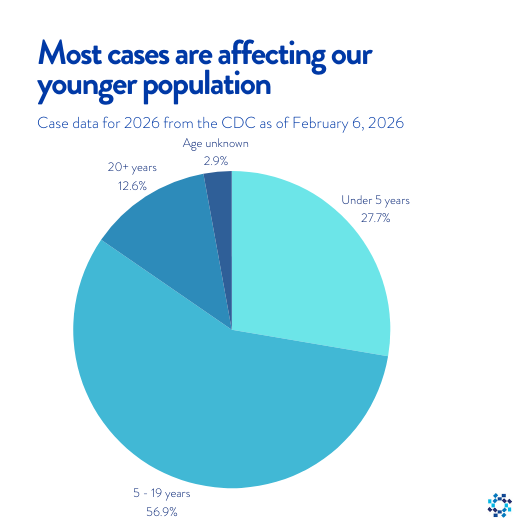
Children less than 6 months of age, pregnant women without evidence of measles immunity, and people with weakened immune systems are at high risk of complications from measles and should speak to their doctor immediately if there’s any chance they’ve been exposed to the disease.
Look Out For Signs and Symptoms
Measles is a respiratory disease (in the lungs and breathing tubes) caused by the measles virus.
Symptoms include:
- Fever, often as high as 104 to 105 degrees
- Cough
- Stuffy or runny nose
- Conjunctivitis (pink eye)
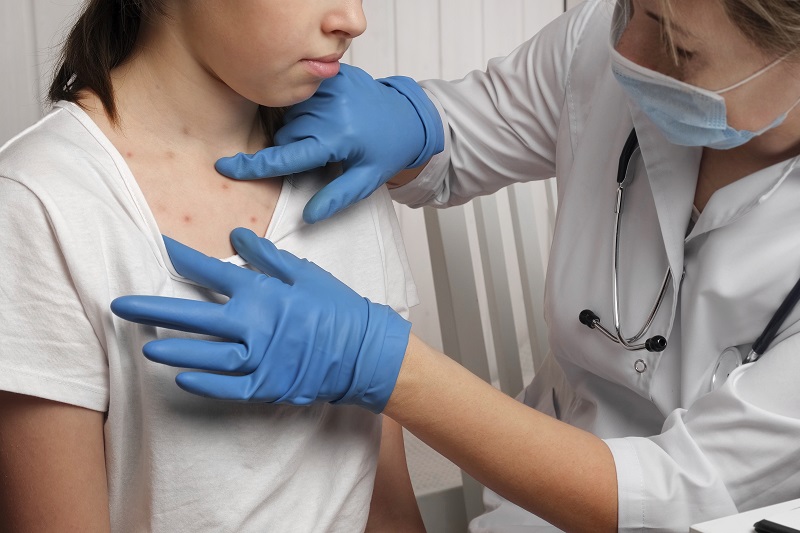
- A rash two to five days after symptoms begin. The rash generally spreads downward from the head to the trunk to the lower extremities.
When To Call Your Doctor
Measles spreads through the air by breathing, coughing or sneezing. People infected with measles are infectious four days before a rash appears and continue to be infectious four days after the rash appears. It is highly contagious to anyone who has not been protected by previously receiving the measles vaccine. If you believe you have been exposed to measles, call your doctor immediately.
Find Out if You’re Protected
If you have a record indicating that you received two doses of a measles-containing vaccine, you are considered protected. You can also have a blood test to confirm that you have protection. Anyone born before 1957 is considered immune. Before 1957, all children were exposed to measles.
Help Us Protect Our Patients
It can be extremely dangerous for people who are hospitalized to be exposed to measles and other viruses, such as the flu. If you or a family member has any sign of infection, especially during an outbreak or cold and flu season, please refrain from visiting patients in the hospital.
Next Steps & Resources:
- Make an appointment online with a doctor near you, or call 800-822-8905.
- For additional information, please visit CDC’s Measles website or the NJ Department of Health Measles website.
Find a doctor near me
Our Doctor’s Home Remedy for Seasonal Flu
Dr. Tadepalli's home flu remedies offer relief. Get expert advice on managing fever, boosting immunity, and when to seek medical care. Call 800-822-8905.
How Long Is the Flu Contagious?
Flu contagious period explained by Dr. Tossounian. Learn prevention tips and how long the flu lasts. Protect yourself and loved ones. Call 800-822-8905.
How Many Times Can You Get COVID?
Reduce your COVID-19 risk. Dr. Varga explains reinfection, prevention, and vaccination. Learn how to protect yourself and schedule an appointment today.

Can’t stop coughing? Six common causes and when to see a doctor
Learn about common causes of coughs, from colds to GERD, RSV and croup, and discover when it’s time to contact your doctor.