


We have a lot of names for it—bowel movement, poop, stool and several that shouldn’t be mentioned. But we rarely actually talk about bowel movements.
You may have questions about yours but are too embarrassed to ask. Never fear, Jonathan Weinberger, M.D., a gastroenterologist at Hackensack University Medical Center, answers all of them here!
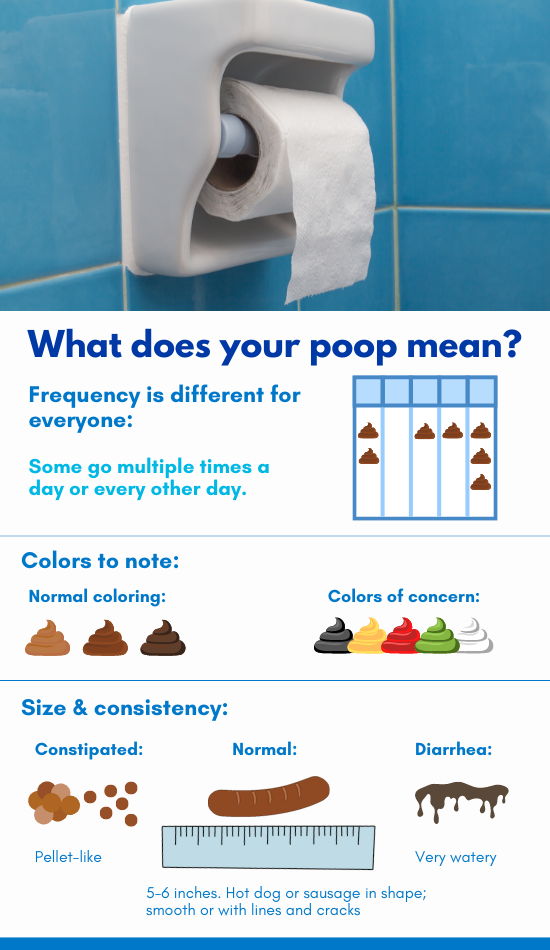
How often should you poop?
There is no specific answer. Some people go three times a day, while others go every other day. The reasons abound. “Everybody is different in terms of what we eat, meal timing, the motility of our digestive system and the medications we may be taking,” says Dr. Weinberger.
What color is normal?
A healthy bowel movement is usually a medium to dark brown color. Other shades could signal an issue. Some include:
- Black stool can come from bismuth preparations (like what you find in Pepto-Bismol and Kaopectate) or iron supplements. Or, it could be a sign of bleeding in the upper part of the intestinal tract, such as the stomach, esophagus or duodenum.
- Red stool could come from eating or drinking something with strong red coloring (like gelatin, cherries, beets or a sports drink), or it could signal bleeding from something like a hemorrhoid or a fissure in the lower part of the intestine, or from something higher up like diverticulosis, colitis or possibly cancer.
- Light or colorless stool usually means your stool lacks bile, which could be blamed on a bile duct obstruction or some sort of infection in the liver, gallbladder or pancreas.
- Yellow, greasy, foul-smelling stool could be a sign of a surplus of fat. This could mean your body isn’t absorbing nutrients properly, due to something like celiac disease or something in the liver or pancreas.
- Green stool could mean you overdid it on the green smoothies, or it could be a sign that things are moving rapidly through the intestines due to an infection or a medication you’ve taken.
What about size and shape?
Shape can range from loose and watery (which means your stool is going through the digestive tract so fast that it doesn’t have time to firm up) to small, hard pellets (which means you’re constipated and need more fiber and/or more water). The “ideal” poop profile looks like a hot dog or sausage, and can be either smooth, or have lines or cracks on the surface.
Size can vary, depending on your own size, but in general should be at least 5 to 6 inches in length and relatively easy to pass. If your stool suddenly becomes thinner or flatter than usual, it could point to some sort of blockage in the colon.
The bottom line (no pun intended): “If your stool deviates from its usual for longer than a day or two, or it’s accompanied by any other symptoms, such as light-headedness, pain or fever, you should check it out with your doctor,” says Dr. Weinberger.
Next Steps & Resources:
- Meet our source: Jonathan Weinberger, M.D.
- Make an appointment online with Dr. Weinberger or a gastroenterologist near you, or call 800-822-8905.
Find a doctor near me

What Do the Vitamins in My Multivitamin Do for Me?
Most multivitamins pack a similar assortment of vitamins in them, and they each offer various health benefits. Learn more about what each vitamin can do.

5 Ways to Reduce Your Stress
Reduce stress and improve your health. Dr. Leopold shares 5 ways to manage stress. Learn simple techniques for better well-being. Call 800-822-8905.
5 Ways to Prevent Dry Skin in the Winter
Prevent winter dry skin. Doctors Mitre, Seeni, and Tadepalli share 5 tips for healthy skin. Learn more and find a doctor.

Are Butterboards Okay to Eat?
Learn about butterboards from a registered dietitian. Enjoy this trendy appetizer in moderation. Get healthy alternatives & tips for safe food handling. Call 800-822-8905.