

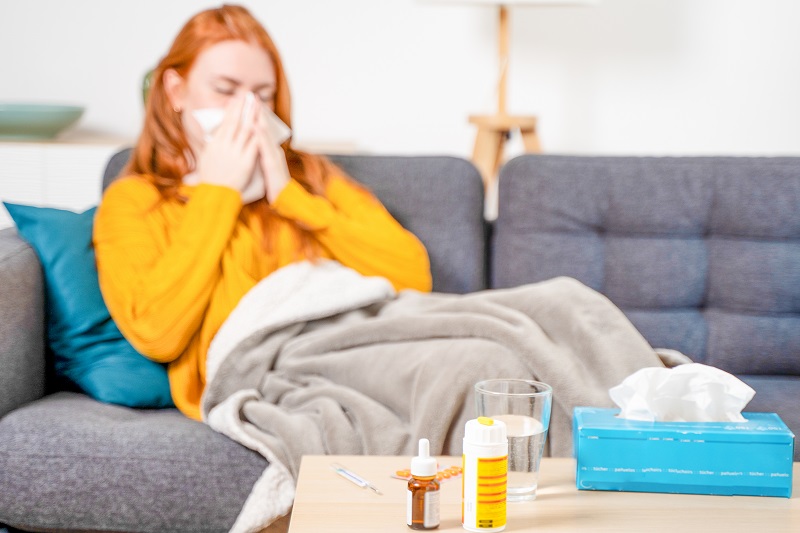
Since the start of COVID-19, our focus has been on the pandemic and infectious disease spread. But the common cold and seasonal flu remain common concerns.
Our expert, Satish Tadepalli, M.D., a primary care doctor in Toms River, New Jersey, offers six ways to take care of yourself at home if you have the seasonal flu.
- Use over-the-counter pain relievers to manage fever. Dr. Tadepalli recommends taking acetaminophen to manage a fever. He advises caution if using nonsteroidal anti-inflammatory drugs, specially for anyone with gastrointestinal issues or on blood thinners, as these drugs can cause an increase in bleeding. If a high fever—greater than 101.4 degrees—is unmanageable with acetaminophen, you should see a doctor right away.
- Up your vitamin intake. “Vitamin C is helpful every day but especially helpful when it comes to respiratory tract infections,” Dr. Tadepalli says. “But if you can eat fresh fruits and vegetables, that's much better than taking vitamin supplements.” Elderberry syrup can also boost immunity.
- Drink plenty of water. Most adults need two to three liters of water a day. But Dr. Tadepalli advises that other health concerns, such as heart failure or kidney problems, can change the amount of water needed, so you should talk with your doctor.
- Get plenty of rest. “I don't recommend exercising when you are sick with the flu because the body uses a lot of energy to fight the infection,” Dr. Tadepalli says. In the case of a person who has no serious health issues, exercise during a mild cold is fine. But in a serious infection, even the healthiest people can feel drained and should rest.
- Reduce flu spread in your home. Dr. Tadepalli also advises patients to disinfect commonly touched surfaces and isolate from others in the household.
When to See the Doctor for Seasonal Flu
It’s time to see a doctor when:
- Home remedies and over-the-counter medications are not keeping fever or chills from worsening
- You are unable to remain hydrated and are getting weaker
- Symptoms last more than the usual five to seven days, a doctor should be seen.
For elderly people, a doctor should be consulted if there’s difficulty staying hydrated, if they behave in a confused way or if oxygen saturation drops below 90. You can measure oxygen saturation at home with a portable finger pulse oximeter, or watch for signs of low oxygen levels—a rapid heart rate and a fast breathing rate.
Next Steps & Resources:
- Meet our source: Satish Tadepalli, M.D.
- To make an appointment with a primary care doctor near you, call 800-822-8905 or visit our website.
Find a doctor near me

Can’t stop coughing? Six common causes and when to see a doctor
Learn about common causes of coughs, from colds to GERD, RSV and croup, and discover when it’s time to contact your doctor.
Why Does the Flu Cause Body Aches?
Flu causing body aches? Learn why Dr. Mosko explains this common symptom and how to find relief. Get tips for managing discomfort.
Can Long COVID Impact Your Mental Health?
Long COVID mental health impact? Dr. Jacobs explains how long COVID affects mental well-being and offers support. Find resources and schedule an appointment today.
At-home Cold Remedies for Kids
Kids' cold remedies: Dr. Terrin shares at-home treatments for symptom relief. Get expert advice & resources. Call 800-822-8905.