

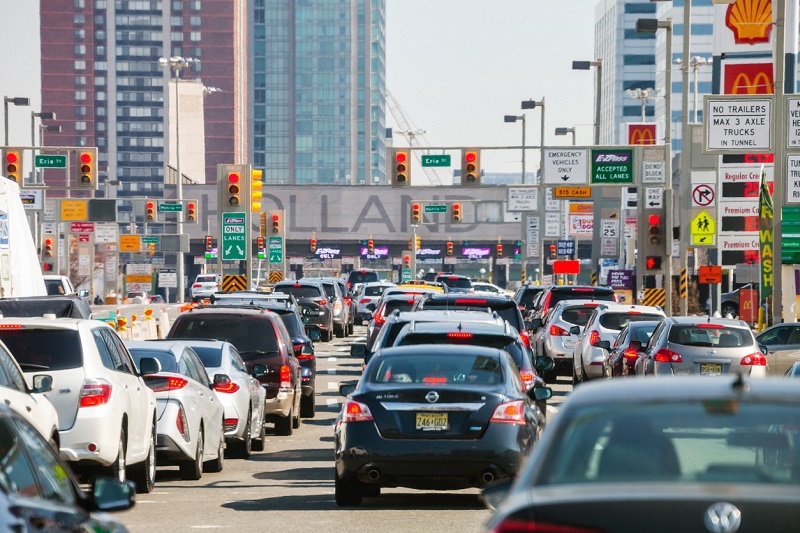
Have you sat in standstill traffic on the Turnpike, Parkway or another busy road? You inhale more harmful fumes when cars idle together than when they’re speeding along.
“We think about cars causing air pollution, but we don’t think about the effect that air pollution has on us,” says Lisa M. Casale, M.D., a pulmonologist in Edison, New Jersey. “Once we had all those forest fires, people started talking about air quality and how it affects your breathing.”
What You’re Breathing In
Cars and trucks that run on gasoline and diesel expel exhaust emissions.
Vehicle emissions include byproducts that may be harmful when inhaled. Byproducts created by burning gasoline and diesel include:
- Carbon dioxide
- Water vapor
- Nitrogen oxides
- Carbon monoxide
- Methane
- Benzene
- Formaldehyde
- Sulfur dioxide
- Particulate matter
- Polycyclic aromatic hydrocarbons and other hydrocarbons
- Volatile organic compounds
The size and type of molecule that you inhale will affect what happens in your body.
“Some compounds that we inhale from exhaust are carcinogens, and some are just irritants,” Dr. Casale says. “The fumes we inhale contain particles and compounds that vary in size. The larger ones get stuck in your nose and upper airway, and the smaller ones travel into your lungs.”
- Larger particles can cause irritation to your upper airway. Particulate matter falls into this category. “These particles can cause rhinitis [stuffy nose], postnasal drip, or a sore throat,” Dr. Casale says.
- Smaller particles/molecules include sulfur, dioxide, nitrogen oxides, other particulate matter and volatile organic compounds. “When the small particles get trapped in your lungs, it could flare your asthma or COPD,” Dr. Casale says. “Even if you have no lung disease, you could cough or wheeze from inhaling the particles.”
Who Is Affected Most By Traffic Fumes
Certain groups of people are most at risk to traffic fumes, which include:
- Those with existing lung conditions. People with asthma or chronic obstructive pulmonary disease (COPD) are most sensitive to exhaust.
- Older adults are also susceptible. “Older people are more frail, and lose their lung protective mechanism that defends against inhaled toxins,” Dr. Casale says. “Their respiratory system probably isn’t as effective at fighting all the side effects.”
- Highway maintenance workers. People who constantly inhale exhaust fumes while on the job are also at risk. “Ongoing exposure may lead to chronic lung disease, which we know from people who work around these fumes,” Dr. Casale says.
What To Do When You’re Affected By Traffic Exhaust
People with asthma or COPD should be cautious when they’re exposed to pollution. If you haven’t before, consider drives on busy highways as risky situations.
“They should always carry their medications with them – their emergency inhalers and regular medications,” Dr. Casale says. “They should use their medications regularly to prevent side effects or inhalation injury.”
If you don’t have lung disease but are affected by emissions, seek medical treatment.
“If you’re in a car and you start wheezing and coughing, seek medical attention immediately,” Dr. Casale says. “If you’re short of breath after inhaling these chemicals for years, you still need medical attention.”
How To Decrease Your Exposure To Fumes
You may not avoid all exhaust emissions, especially if you commute during rush hour. These tips may help reduce your exposure, which may protect your lungs:
- Avoid heavy traffic. Choose less congested routes, or travel at off times, if you can.
“In heavier traffic, there will be more emissions,” Dr. Casale says. “It’s more likely you would inhale some fumes and particles.”
- Keep your windows closed. If you enjoy driving with the windows down, do it on empty side roads. Open windows let more exhaust into your car, which is worse in traffic.
- Use the “recirculate” button while in traffic. You’ll keep breathing the air that’s inside the car, not contaminated air from outside. If it isn’t too hot or cold out, consider turning your fans off altogether.
- Replace your cabin air filter. Cabin air filters limit the amount of air pollution that enters your car. They may not catch every particle, but they reduce your exposure to exhaust.
“They have to be maintained and replaced,” Dr. Casale says. “Each car is different, so they’ll vary from vehicle to vehicle.”
- Maintain distance from other stopped cars. In standstill traffic or at busy red lights, leave space in front of you. The farther you are from other idling vehicles, the better.
“You don’t want to be one inch from the car ahead of you, because you’ll inhale more exhaust,” Dr. Casale says. “With stationary cars, the fumes are more dense; when you’re driving, the fumes are dissipated.”
Next Steps & Resources:
- Meet our source: Lisa M. Casale, M.D.
- To make an appointment with Drs. Casale, or a doctor near you, call 800-822-8905 or visit our website.
Find a doctor near me
Tips to Help You Quit Smoking Cold Turkey
Quit smoking cold turkey? Dr. Ali offers tips and support to help you succeed. Get started today and improve your health.
What Happens to Your Lungs When You Vape?
Learn vaping's lung effects. Doctors Hanhan and Rizk explain risks and symptoms. Protect your health; get information and resources now.

Why Are E-cigarettes Dangerous?
Learn why e-cigarettes are dangerous from Dr. Nakhleh. Discover the toxic chemicals and health risks. Get primary care now.
What a Pulmonologist Wants You to Know About Humidifiers
Like many ailments, the common cold, COVID-19 and RSV just need to run their course, but humidifiers can help make recovery a bit smoother.