

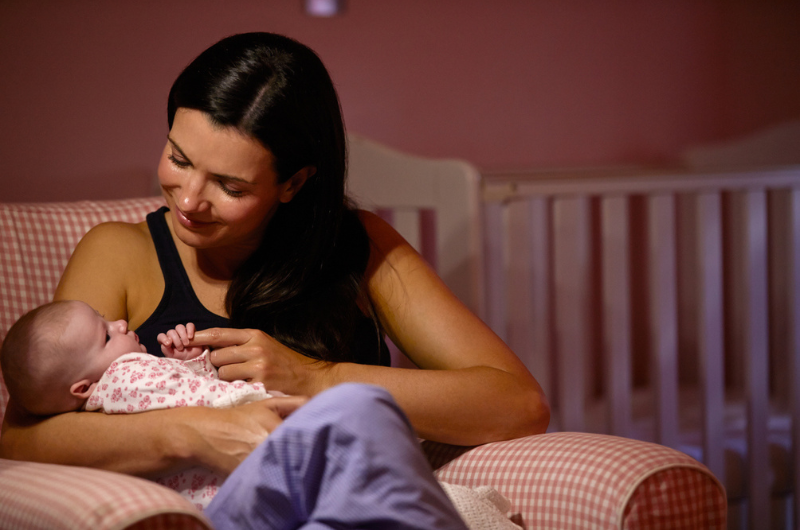
Every new parent has heard the adage “Sleep when the baby sleeps.” It sounds simple, but it’s hard to do, especially if you have other children.
Many parents want their babies to sleep through the night, meaning six hours straight. Some babies sleep through the night at three months; others take six to nine months or more, and that’s OK!
How Newborns Sleep
During the first month, your baby may sleep 14 to 20 hours daily. They only sleep a few hours at a time, and you’ll be on their schedule.
After a baby is two weeks old, you can start teaching them the difference between night and day. You can give your baby cues like:
- Going outside in the morning to expose the baby to early-morning light.
- Keeping the lights on and doing noisy activities during the daytime.
- Dimming the lights and keeping things quiet at night.
Newborns don’t sleep long partly because their stomachs are tiny. As they grow and eat more, they’ll sleep for longer stretches.
Where Babies Sleep
Be intentional about where you put your baby to sleep:
- Keep your baby in your room for the first six months.
- Babies should sleep in a bassinet or crib, not your bed.
- Don’t put blankets, toys or pillows in the crib; they can smother the baby.
- If you swaddle your baby, stop before they learn to roll over.
Sleep Tips from a Sleep Specialist
- A consistent bedtime routine is helpful for anyone, including babies. You may try to introduce a bedtime routine as early as six weeks. With a bedtime routine, your baby knows what to expect every night.
- Dimming lights and bathing or other calming activities are also helpful.
- "Dream feeds" may help you get more sleep once your baby is around 2-3 months old. Try waking your baby 2-3 hours after they go to bed for a feeding, even if they’re half asleep. This meal should shift their next stretch of sleep to later in the night to give parents more time to sleep before their next awakening.
Be patient if your baby’s sleep habits don’t improve quickly; gradual changes are helpful. Realize that it’s hard to drastically change even your own sleep habits overnight.
When to See a Doctor
Sleep apnea, reflux and other conditions may have an effect on a baby’s sleep. Talk to the pediatrician if your baby snores or their breathing pauses while sleeping.
Sometimes, pediatricians refer children of all ages to a pediatric sleep medicine specialist. They can screen for sleep disorders like sleep apnea, narcolepsy or restless leg syndrome.
The specialist will ask about the baby’s sleep patterns, daily routines and family history. They can check for different conditions with a sleep study or daytime assessments.
Next Steps & Resources:
Meet our source: Stacey Elkhatib Smidt, M.D.
To make an appointment with Dr. Elkhatib Smidt or a doctor near you, call 800-822-8905 or visit our website.
Find a doctor near me

Are Naps Good for You?
Learn about the benefits and drawbacks of napping. Short naps may improve alertness, but don't replace nighttime sleep. Get tips for healthy napping habits.

Easy Morning Exercises for Busy Parents
Easy Morning Exercises for Busy Parents. Dr. Patel offers simple, time-saving workouts. Improve your health and well-being. Call 800-822-8905.

4 Reasons You Might Be Tired Often
Feeling tired often? Learn four possible reasons for chronic fatigue from Dr. Baird. Discover tips for better sleep and find a doctor today. Call 800-822-8905.

Sweaty Sleeper? Find Out Why
Sweaty Sleeper? Learn why night sweats occur and when to seek help from a doctor like Dr. Elkhatib Smidt. Find relief and improved sleep. Call 800-822-8905.