

Hip and knee pain rarely happens overnight. It can creep in after years of wear and tear from workouts, sports and daily activity.
Maybe you're still figuring out the best ways to manage discomfort, or you're nearing the point of joint replacement. But how do you know if it's time for surgery?
"First, advanced imaging shows evidence of knee or hip degeneration," says William Baione, M.D., a hip and knee replacement surgeon at Jersey Shore University Medical Center in Neptune. "Second, you have pain that affects your quality of life. And third, conservative treatments like home exercises or physical therapy have stopped working."
It can feel daunting to schedule surgery, but putting it off can come at a cost. "Waiting could contribute to reduced range of motion and muscle strength, which could impact overall outcomes," says Dr. Baione.
Fortunately, the latest advances in joint replacement surgery allow extraordinary surgical precision. Some technologies could reduce post-operative pain and support a smoother recovery. Newer surgeries might also deliver better-fitting implants that last longer.
Learn about three breakthrough approaches for hip and knee surgery that can help keep you in good shape for years to come.
For Hip Replacement: OrthoGrid Hip AI
How it works: When surgeons perform a joint replacement, they rely on real-time imaging. OrthoGrid takes that to a whole new level: It analyzes hip X-rays with AI, identifying anatomical landmarks and generating data that helps guide implant positioning. Think of it as the difference between using a map and having GPS with turn-by-turn directions.
Who it's for: OrthoGrid is suitable for all patients requiring hip replacement, says Harlan Levine, M.D., a hip and knee replacement surgeon at Hackensack University Medical Center. "It can be especially useful for people who have aberrations in their anatomy, like hip dysplasia, when restoring the hip to a more native state can be challenging."
The benefits: OrthoGrid minimizes the risk of potential complications. "It's insurance for putting the hip precisely where it needs to go," says Dr. Levine. "Accurate implant positioning and restoration of hip anatomy have been associated with improved outcomes and lower rates of future surgery."
For Knee Replacement: Velys Robotic-Assisted Solution
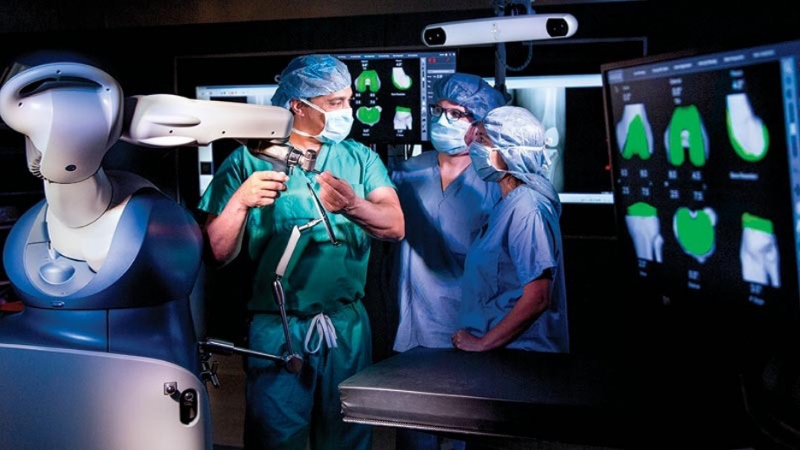
How it works: This robotic system allows surgeons to make precise bone cuts during knee replacement and fine-tune implant positioning in real time. Rather than relying on preoperative CT imaging, Velys uses an infrared camera and optical trackers attached to bones to map knee alignment during surgery.
"Technology allows us to really individualize how we cut and balance the knee," says Dr. Baione.
Who it's for: People who are candidates for knee replacement, particularly patients for whom minimizing blood loss is important. The system's precision may help reduce soft-tissue disruption, which can influence postoperative bleeding and swelling.
The benefits: Because Velys is imageless, patients avoid the time, cost and radiation exposure of a preoperative CT scan, says Dr. Baione.
Advances in technology, he continues, "allow doctors to offer implants at an earlier point in patients' lives, whereas in the past they often had to wait. Patients can restore their quality of life and move on."
For Knee and Hip Replacement: Mako SmartRobotics
How it works: During this procedure, surgeons use a robotic arm with an attached cutting tool, guided by a 3D plan created from a preoperative CT scan, to prepare knee or hip bones for the implant.
"We can make millimeter adjustments to the implant positioning that cannot be seen with the naked eye using traditional means," says Edwin Theosmy, D.O., a hip and knee replacement surgeon at Old Bridge Medical Center.
Who it's for: "Any patient can benefit from a Mako knee replacement," says Dr. Theosmy. He also uses Mako's hip technology for patients with complex spine and pelvic issues. Old Bridge is one of the first hospitals at HMH to feature the newest Mako robot.
The benefits: "One unique feature of Mako is that the arm and tool can only move within the preset plan—like a visual force field—ensuring efficacy while also protecting structures around the bone," says Dr. Theosmy. "This can in turn result in a lower probability of needing a 're-do' surgery for issues related to an unstable implant or poor initial implant positioning."
Some research suggests robotic-assisted surgery may reduce the need for post-op pain medication and facilitate earlier mobility during recovery.
The Bottom Line:
Joint replacement surgery has come a long way. The latest advancements are improving outcomes and supporting smoother recoveries. If you’re considering joint replacement surgery, ask your doctor if any of these technologies may be a fit for you.
Next Steps & Resources:
- Meet our sources: William Baione, M.D.,Harlan Levine, M.D., Edwin Theosmy, D.O.
- Make an appointment online with an orthopedics provider near you, or call 800-822-8905.
- Learn more about orthopedics careat Hackensack Meridian Health.
- Take our free hip or knee health assessment.
Find a doctor near me

Hip Replacements: What to Expect
Hip Replacement: Understand what to expect. Learn about the procedure, recovery, and Dr. Theosmy's expertise. Schedule your appointment today.

Nine Ways to Slow Osteoarthritis Progression
Slow osteoarthritis progression. Dr. John shares nine ways to manage joint pain and damage. Learn effective strategies now.

3 Ways to Fix Neck and Shoulder Pain
Dr. Delavaux explains three common work-related scenarios that can lead to neck and/or shoulder pain and provides helpful solutions. Learn more.

Tips for Stronger Knees
Knee Osteoarthritis, also known as “wear-and-tear” arthritis, affects more than 30 million adults in the United States. Don’t let it slow you down.