

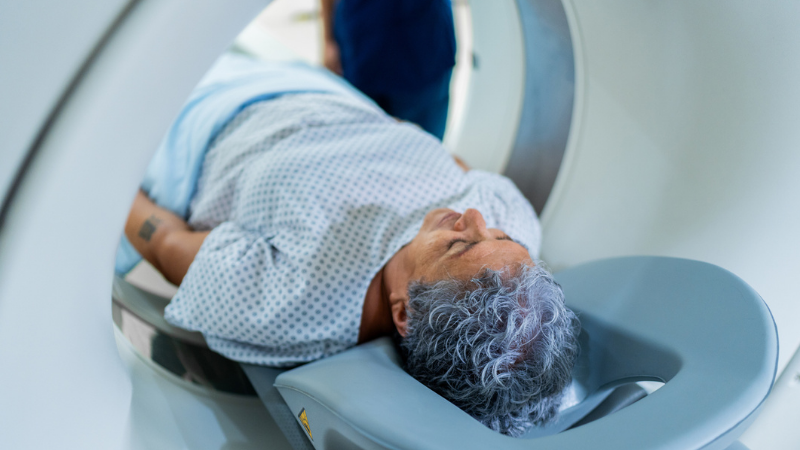
Despite the concerning lung cancer statistics — it is by far the leading cause of cancer death in the U.S. — there is great reason to be hopeful. That’s because early lung cancer screenings can lead to earlier, lifesaving diagnoses: Two trials have reported statistically significant reductions in lung cancer mortality associated with low-dose CT scans. If caught early — at Stage 1, before it spreads and symptoms start — the likelihood of surviving increases, according to the American Lung Association.
So, what can you (and your loved ones) do to reduce your risk? Be proactive about early detection.
“In states all across America, we typically end up screening less than 25 percent of people who qualify,” says Stuart Campbell, M.D., a thoracic surgeon at Hackensack Meridian Health. In fact, people rarely know they have lung cancer when it’s in the earliest stages and is more curable: Only 15 percent of lung cancers are diagnosed early.
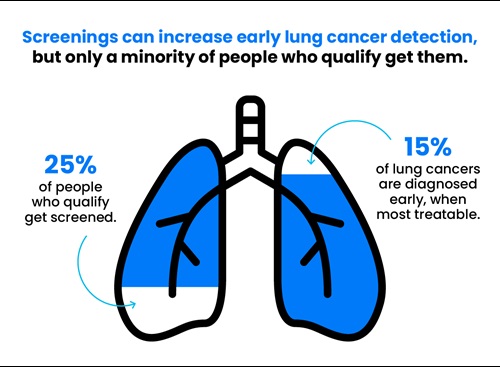
“One of the biggest things is getting more people who qualify in to get their CT scans,” he says, “because we’re missing a huge part of the population, and one of the biggest issues with lung cancer is finding it too late.”
When combined with innovative, noninvasive lung biopsy procedures, early screenings can literally be lifesaving. Dr. Campbell shares his guidance on when and why to get a low-dose CT scan for lung screening — and what you can do once you get the results.
What Is a Low-Dose CT Scan, and How Does It Work?
A low-dose CT scan for lung cancer screening is a quick, painless imaging test that takes detailed pictures of the lungs using a lower level of radiation than a standard diagnostic CT scan.
“It’s an incredibly fast test that doesn’t require any IVs, needles or contrast,” says Dr. Campbell. “It’s also an open scan, so it doesn’t cause claustrophobia.”
You lie on a table that moves through the scanner while images are captured. — often before symptoms appear. The purpose is simple: Detect lung cancer early, when it is most treatable.
“It gives all the appropriate information of your lung fields with less radiation than a regular CT scan,” Dr. Campbell explains, adding that as more people get imaging for other reasons — like heart scans — doctors are finding more lung nodules incidentally.
What Is the Process for Getting a Low-Dose CT Scan?
It starts with asking your doctor whether you qualify for a lung cancer screening. “Advocating for yourself and asking the question is important,” says Dr. Campbell. HMH offers the screening at many imaging locations.
For health care providers, “any time you’re dealing with a patient who smokes or has a history of smoking, it’s important to determine if they qualify for lung cancer screening and ensure they get the appropriate imaging.”
Generally, an X-ray isn’t required first: Any provider who determines that you should be screenedshould have you schedule a low-dose CT screening and then follow up appropriately. “As long as you meet the criteria, that’s the best way to make sure that anyone who is eligible is getting the appropriate screening.”
What Happens If a Lung Screening Leads to a Finding?
Most low-dose CT lung screenings do not find cancer: In fact, over 80 percent do not detect cancer. Many nodules are benign, caused by old infections or scarring. Still, any abnormal result requires careful follow-up.
Depending on how a nodule looks, your doctor may recommend:
- Repeat low-dose CT scans over time to monitor changes
- Referral to a specialist if the nodule appears suspicious
- Biopsy to confirm whether cancer is present
At HMH, thoracic surgeons help guide this next phase of care. If a biopsy is needed, minimally invasive tools can often avoid a larger operation.
Just as important as the clinical path, however, is overcoming fear. Dr. Campbell sees patients hesitate to get screened due to guilt about smoking. “But the truth is, we can catch lung cancer earlier and if we can catch it earlier, it can be treatable.”
Who Qualifies for Lung Cancer Screenings in New Jersey?
Lung cancer screening is recommended for people at higher risk — especially those with a significant smoking history, including:
- Adults ages 50 to 80
- People with a smoking history of 20 pack-years (multiply the number of packs smoked per day by the number of years smoked) or more
- Those who currently smoke or quit within the past 15 years
“We know that we miss a ton of individuals who fall within those screening guidelines,” Dr. Campbell says. However, many eligible people never get screened: Some don’t realize they qualify; others are not referred.
If you have a history of smoking, even if you quit years ago, ask your primary care provider whether you should get a lung cancer screening test.
Are There Reasons to Get Screened If You Aren’t a Smoker?
Smoking isn’t the only risk factor. Certain environmental and occupational exposures may increase lung cancer risk, including exposure to toxins or heavy smoke. “People with certain occupations — individuals exposed to smoke or chemicals or those at 9/11 exposed to inhaled toxins — may be at risk for lung disease or lung cancer,” Dr. Campbell notes.
If you’ve had long-term exposure at work or through the environment, bring that up with your provider to see if you should get screened.
A history of vaping presents a different set of challenges: “We’ve certainly seen individuals present with vape-induced lung injury as well as collapsed lung,” says Dr. Campbell. “But it hasn’t been around long enough to have associations with lung cancer.”
Next Steps & Resources:
- Meet our source: Stuart Campbell, M.D.
- Make an appointment online with a thoracic surgeon near you, or call 800-822-8905.
- Find a lung screening location near you.
Find a doctor near me

Surgery Successfully Removes Encapsulated Lung Cancer
Doctors waste no time in removing a cancerous mass in Kim Mosko’s lung and later discover a gene mutation that led to the tumor.
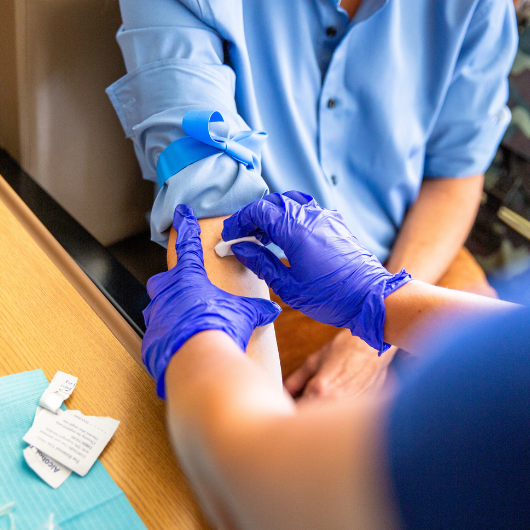
The New Blood Test That’s Helping Doctors Screen For Lung Cancer Sooner
Learn how doctors at Hackensack Meridian Health are using a new lung cancer blood test to screen for the disease sooner and improve cancer outcomes.
What Causes Lung Cancer in Nonsmokers?
Lung Cancer in Nonsmokers: Learn about risk factors from Dr. Spallone at Palisades Medical Center. Reduce your risk & discuss concerns with your doctor.

Man of Faith Manages Surprise Lung Mass Finding
A test to explore blood in the urine uncovered a lung mass: See how faith and science saw Joe Doherty safely through his lung mass surgery.