

Living with asthma, Susan dismissed her shortness of breath. She never anticipated that she could be in severe heart failure. Learn more about her story of hidden symptoms and her inspiring recovery.

Susan's energy and enthusiasm light up a room. Whether she’s planning a big work event, spending time with her family or helping a friend in need, she is a woman who feels most herself when her life is in motion.
“I thought I was Superwoman,” she laughs. But underneath her lively spirit, her heart was quietly struggling to keep up.
The Mask of Asthma
In the fall of 2024, Susan made a pact with her friend to prioritize her health. She had her mammogram, had bloodwork done and a primary care appointment.
As someone with asthma, Susan didn’t think twice about having shortness of breath and thought it could be related to an abnormal EKG reading – a test measuring the heart's electrical activity. Her primary care doctor thought it was essential to investigate further.
After hearing a presentation on women’s heart health by cardiologist Sheila Sahni, M.D., Susan scheduled an appointment with her. She had felt generally well; her only symptom was shortness of breath.
“I made her think about any other symptoms she may have. Her husband revealed that Susan noticed her stamina was down after a viral illness, and she couldn't exercise as much as before," Dr. Sahni notes. “She was using her inhaler more, which was a sign that something had changed and was not going right; there had been a change.”
Dr. Sahni wanted to be sure these changes weren’t related to her heart. She ordered several tests, including a stress test, a Doppler ultrasound and an echocardiogram.
The echocardiogram test results showed that Susan’s heart was only functioning at 20%.
From Full Speed to Active Heart Failure
Like many patients today, Susan saw her test results before Dr. Sahni had a chance to call her. While apps and online patient portals are great for transparency and immediate access, they can also mean navigating alarming results without context or support.
“I saw my ejection fraction was 20%, and I didn’t know what that meant – but I knew it wasn’t good,” she recalls.
“Dr. Sahni had then called me with the results and said, ‘Susan, it’s not good news. You are in heart failure,” Susan reflects. “You hear the word ‘failure’ and just think this is the end.”
Piecing Together the Puzzle
Think of your heart's main chamber like a squeeze bottle. With each heartbeat, it squeezes out a certain amount of blood. Ejection fraction is the percentage of blood pushed out with each squeeze. A result of 50% or higher is considered normal. Susan’s, unfortunately, was only 20%.
Dr. Sahni worked together with Kanika Mody, M.D., a heart failure and transplant specialist at Hackensack University Medical Center. The doctors recommended additional testing to determine the cause of her heart failure.
- A coronary angiogram revealed no blockages in the heart's blood vessels.
- A cardiac MRI scan showed the heart muscle was swollen.
- This swelling is a condition called myocarditis, which is often caused by a virus.
“There’s no way of really knowing if it was from COVID, because I had it twice years ago, but who knows,” Susan guesses.
Dr. Mody explains that recovery from myocarditis depends on the severity of the condition, how it started and the treatment provided. “Depending on the cause of myocarditis, the outcome can be very different; some fully recover and some only partially,” she says.
A Shock to the System
While there was no blockage, Susan was still in serious heart failure.
She was told she needed to go on medical leave immediately and would have to wear a wearable cardioverter defibrillator. “I was told I could have a heart attack at any point in time, and this thing was going to zap me and save my life,” she says.
A wearable defibrillator monitors your heart rate, and if there is a problem with the rate or rhythm of your heartbeat, it will deliver an electric shock to bring the heart back to a normal rhythm. Susan was told she would always have to wear the vest, except for showering.
“That was when I lost it,” she recalls. “At that point, I’m thinking, I should have taken this a lot more seriously, not realizing how devastating my condition was. It really made me question my mortality.”
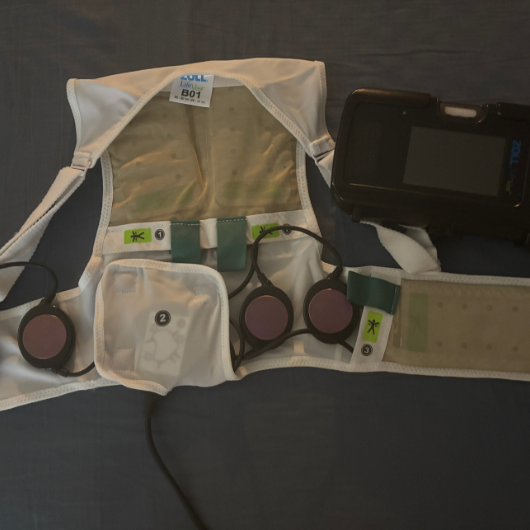
The emotional toll of wearing a vest 24/7 was not something Susan had anticipated. “It looked and felt like wearing a bomb vest, needless to say, I didn’t really leave the house too often,” she adds. “Daily, I was questioning: Am I going to recover? How long am I going to live?”
Her Treatment Plan: Step by Step
After her diagnosis, Susan’s care team moved quickly to help her heart recover.
First, she started medications to help her heart pump better and reduce strain:
- Beta blockers slow the heart rate and help the heart rest while it heals.
- ACE inhibitors open up blood vessels so blood can flow more easily. This can lower blood pressure, ease the heart’s workload and help prevent scar tissue.
- Diuretics, sometimes called “water pills,” help the body get rid of extra fluid so the heart doesn’t have to work as hard.
- SGLT2 inhibitor – This medication helps the kidneys remove extra sugar and fluid to reduce the heart's workload and protect the heart muscle.
- Common brand names include Farxiga and Jardiance. While you may have seen it advertised for diabetes, it is also a powerful tool for preventing heart failure. This can sometimes cause confusion, as Dr. Mody explains: “Sometimes patients will go to the pharmacy, and the pharmacist says, ‘Well, you do not have diabetes, you don't need to take this,’ and they get really scared.” Rest assured, you are taking this medicine to keep your heart strong.
Lastly, lifestyle changes were a big piece of the puzzle. Susan learned to watch her sodium (salt) intake, take breaks when she felt tired and check in with her doctor to track her progress regularly.
Cardiac Rehabilitation
Once Susan was stable, Dr. Mody recommended cardiac rehabilitation to help her heart get stronger and healthier. The team worked with Susan to learn safe and gentle exercises, set small achievable goals and gain the confidence to be active again without fear.
After being diagnosed with a serious heart condition, it’s common for patients to feel overwhelmed and scared, even when they are physically getting better. It can be hard to tell the difference between a normal body signal and a sign that something is wrong.
“In Susan’s case, it was extremely traumatic. She didn’t know something was wrong to begin with. So how will she make sense of this when she starts going back to the gym? How will she know the difference between shortness of breath when she's on a hike and shortness of breath if it's heart failure?” Dr. Sahni explains.
In addition to the physical benefits, “Cardiac rehab also helps with a lot of psychological trauma that's associated with any type of cardiac diagnosis. It is very important to reintroduce exercise in the face of a new life, which is, ‘hey, I'm a heart failure survivor,’ or ‘I'm a cardiomyopathy survivor. ’”
Healing the Heart and Mind
While these changes were there to help her heart function improve, Susan still needed some support for the emotional toll this experience had taken on her.
As a Hackensack Meridian Health team member, Susan utilized the HMH Employee Assist Program, which provided no-cost therapy sessions. “From a mental health standpoint, it was really debilitating with constant thoughts of how my condition impacts my husband and children, my future. But with our health coverage, we just have tremendous resources to support our mental health,” she adds.
Stronger Every Day
One year later, Susan’s heart is now operating at about 45% and she has a renewed sense of purpose.

“I’m just incredibly grateful, and I feel like this is my opportunity to pay it forward to the next person,” she reflects. “I’ve realized I don’t need to be the Energizer Bunny, and not to take anything for granted. I’m more cognizant of being a wind-up toy and listen to my body when it tells me to slow down.”
Don’t Wait – Get Checked
Susan hopes that by speaking openly about what happened, others will understand the importance of not putting off regular check-ups and screenings.
“I wanted to share my story because I’m not someone you would typically think would have anything wrong with me,” she says. “I’m a high-energy person, and I feel I’m physically fit and was relatively asymptomatic. It’s important to see your primary care doctor and get all the necessary screenings to prevent potentially catastrophic things from happening.”
Here are some guidelines to help you stay safe.
Pay Attention to New Symptoms
Especially for those who are over 40, it’s time to call a doctor if you feel something new that:
- Happens anywhere between your belly button and your nose.
- Starts when you are active (like when you exercise or walk up stairs).
- Stops when you rest.
Even if you think it's nothing, it's always safest to tell a doctor about a new symptom.
“Also, don’t ever dismiss fatigue that doesn’t improve with rest,” adds Dr. Mody. “It can be easy to dismiss tiredness as a normal part of getting older, but especially in women, it can be the first sign of a heart attack.”
Know Your Numbers & Family History
It is also very important to know three key health numbers:
- Blood pressure
- Blood sugar
- Cholesterol
Having high levels of these can increase your chances of getting heart disease. Knowing these three numbers can help you and your doctor work together on a plan to keep your heart strong.
Certain health conditions, especially heart problems, can “run in the family.” Knowing your family’s health history is a powerful tool, especially for heart conditions.
For example, if you have a parent with high blood pressure or cholesterol, it’s a sign that you may need to pay closer attention to your heart health.
Don’t Wait: If You Have Concerns, Seek Care
The message is simple – don’t wait. It’s easy to put our health at the bottom of the to-do list, but serious conditions can develop silently, even without obvious symptoms.
Routine visits with your primary care doctor give the best chance to spot potential issues early, before they can become life-threatening.
Next Steps & Resources
- Meet our experts: Sheila Sahni, M.D. and Kanika Mody, M.D.
- Make an appointment online with a cardiologist near you, or call 800-822-8905.
- Learn more about cardiac care at Hackensack Meridian Health.

A Cardiac Care Army
Cardiac care saved Simon's life at JFK Medical Center. Learn how a team's rapid response helped him recover. Read his story.

How to Check Your Heart Rate
Learn how to check your heart rate. Dr. Batsides offers guidance on understanding your pulse, improving your health, and scheduling an appointment. Call 800-822-8905.
62-year-old Survives Heart Attack and Complete Artery Blockage
The cardiac team at Jersey Shore University Medical Center restored Anthony Lucia's stunned circulatory and respiratory systems after a major heart attack.
56-Year-Old Conquers Heart Transplant and COVID Thanks to Cardiac Rehab
Cardiac Rehab Helped 56-Year-Old Sam Recover From Heart Transplant & COVID. Learn more and schedule your appointment today.