
From running a marathon to casually strolling through cities, or simply standing all day at work, our feet take a beating. As many as 75 percent of adults experience some foot pain or other issue with their feet at one time or another, according to a survey from the American Podiatric Medical Association. Half of people surveyed said their foot problems were severe enough to limit their activities.
DIY: How To Reduce Foot Pain
The best way to prevent foot pain is to wear proper-fitting shoes with good arch support, explains Paramus, New Jersey podiatrist Jeffrey Conforti, D.P.M., of Ridgewood Foot & Ankle Center in Paramus, New Jersey. Make sure your toes have space and are not touching the front of the shoe. Keep in mind that feet can stretch out and grow over time, and middle-aged and older people may need a bigger size than they wore when young.
There are several do-it-yourself remedies you can try to bring your feet some relief:
- 1. Soak your feet. Add Epsom salts to a tub of warm water. Dry feet thoroughly after.
- 2. Cool feet down. If you have an impact injury or any swelling, elevate the feet and use ice or cold packs.
- 3. Warm feet up. If you have general foot pain and strain, take an over-the-counter pain reliever such as ibuprofen and apply moist heat to the feet, like a warm, wet washcloth or microwavable heating pad. Be careful not to make it too hot so you don’t burn the skin.
- 4. Moisturize. If you have dry, cracked skin, apply lotion daily. Scrub cracked heels with a sanding sponge.
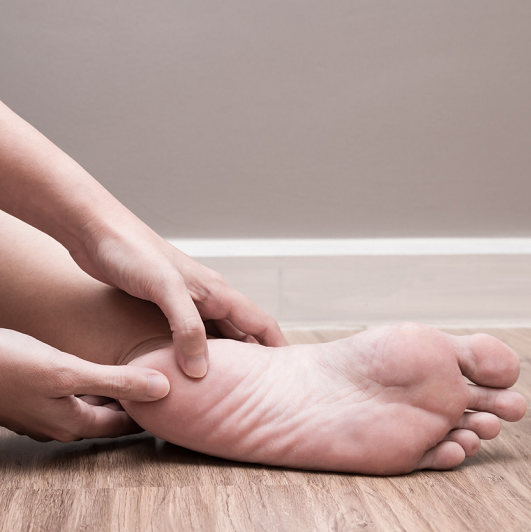
- 5. Knead out the kinks. Massage your feet or ask a partner to massage your feet with lotion.
- 6. Use an over-the-counter medication. Apply creams, such as Bengay or Icy Hot to areas where it hurts. . They can provide some pain relief along with warmth to relieve minor aches and pains.
- 7. Stretch your foot and calf muscles:
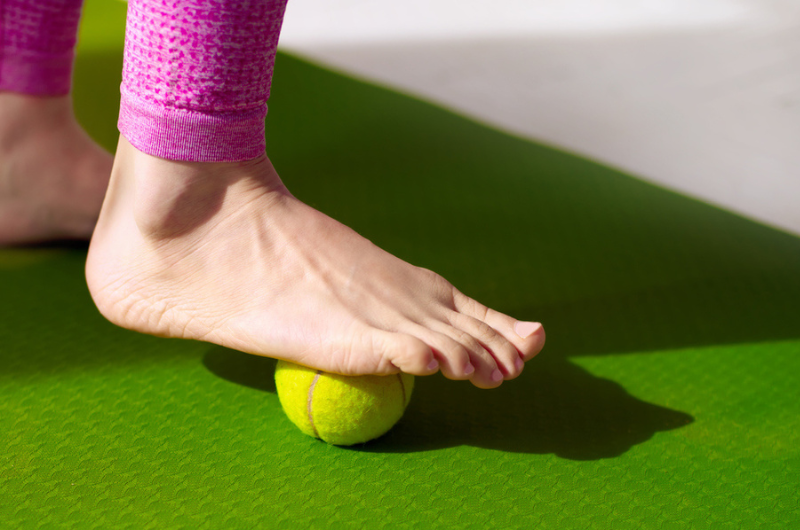
- To stretch the soles and plantar fascia (tissue running along the bottom of the foot), put a tennis ball, golf ball or rolling pin on the ground. Push your foot down on it as you roll your foot back and forth for a few minutes.
- To stretch your calves, stand on the edge of a step backward while wearing sneakers. Plant the balls of your feet firmly on the step, lock your knees, and drop and raise your heels. This can help prevent Achilles tendinitis, which causes pain and swelling at the back of the heel.
- 8. Embrace your orthotics. If you have orthotics, or prescription shoe inserts, wear them in shoes or slippers, even inside the house, says Dr. Conforti.
- 9. Wear footwear. The best way to protect your feet is to wear shoes when you’re outside and inside your home.
“Outside, you could step on a foreign body and get a puncture wound,” Dr. Conforti says. While many people go barefoot inside their homes, “it just is bad for the bottom of your feet if you’re middle-aged, because that’s what gives you plantar fasciitis. You’re overstretching the plantar fascia because your foot is pistoning up and down, and the arch collapses to absorb shock.”
Common Foot Pain Causes
“Middle-aged people get heel pain quite often. A common cause is plantar fasciitis, inflammation of the tissue running along the bottom of the foot,” explains Dr. Conforti. “People with flat feet can have problems because they are overstretching the tendons in their ankle. People who are overweight put a lot of pressure on their feet.”
Foot pain also can result from several other causes, including:
- Plantar warts that form on the soles of the feet
- Ingrown toenails
- Infections from unclean pedicure salon tools
- Neuromas (nerve inflammation in the base of the toes)
- Bunions (bony bumps that form at the base of the big toe)
- Hammertoes (a deformity that causes a toe to curl downward instead of pointing straight)
- Stress fractures, often seen in runners
When to Call a Podiatrist for Foot Pain Relief
If these options don’t bring any relief within a few days, don’t keep waiting. Make an appointment promptly with a foot doctor.
“If people are having any foot pain, they really should see a podiatrist,” Dr. Conforti says. “Things can become much worse over time. If people don’t attend to their foot problems quickly, that can turn into needing surgery.”
This is especially true for people with diabetes because they can develop nerve damage that can cause them to lose feeling in their feet and be unaware if they are having a problem, according to the American Diabetes Association. People with the condition also can experience tingling, pain or weakness in their feet. Diabetic foot exams should occur once a year, even if you’re not experiencing any issues, Dr. Conforti says.
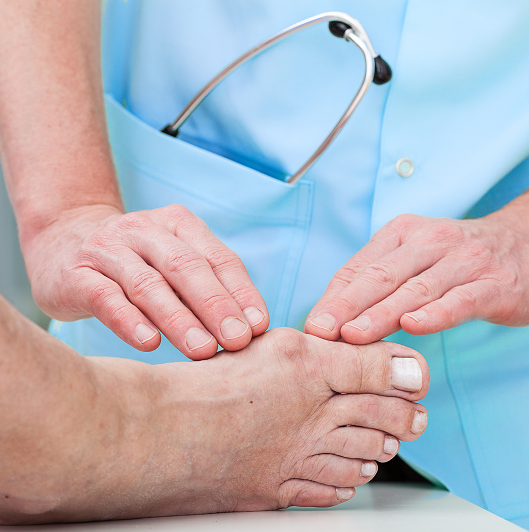
During the appointment, the podiatrist will ask about your foot pain and what type of shoes you wear and perform a detailed exam of the foot and ankle. “We try to identify what the problem is and then outline a course of treatment,” says Dr. Conforti, who specializes in correcting bunions and hammertoes and treating heel pain.
Young people can have a very flat foot and still not experience any foot pain because the soft tissue is very flexible, but that can change as we age. Sometimes people are surprised to discover the cause of their foot pain, he says.
“People will say to me, ‘Doc, I’ve had flat feet for my whole life — it can’t be because of my flat feet,’” Dr. Conforti says. But as people age and gain weight, problems can worsen.
Next Steps & Resources:
- Meet our source: Jeffrey Conforti, D.P.M.
- Make an appointment online with a doctor near you, or call 800-822-8905.
- Learn more about foot and ankle care.
Find a doctor near me
The Worst Shoes for Your Feet
Foot Care for Diabetics
Bone Spurs in the Heel: Symptoms and Recovery