

In spite of repeated hospitalizations, Tony couldn’t get a diagnosis — until help from his daughter and the HMH team got him the heart care that would allow him to enjoy retirement.
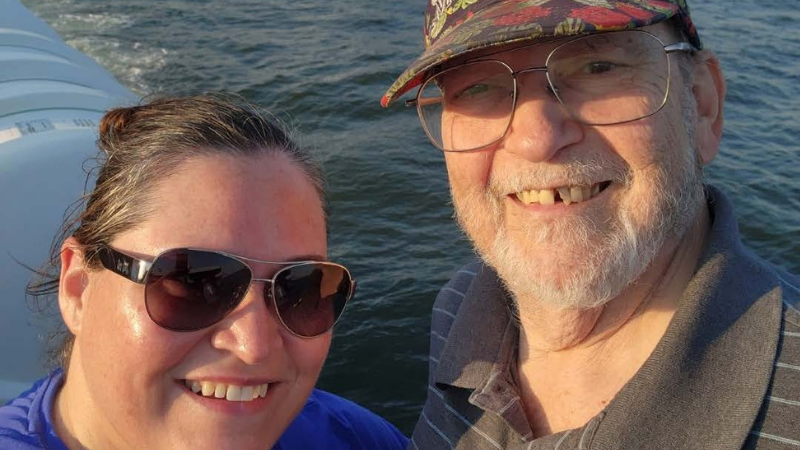
Tony Wozniak could tell something was wrong. After episodes of dizziness brought him to the emergency room in 2022, the 75-year-old from Manalapan, New Jersey learned he had a third degree heart block. He received a pacemaker, but once home, his symptoms lingered. He was fatigued, gaining weight from fluid retention and having difficulty moving.
In spite of primary care appointments and follow-ups from his cardiologist, he wasn’t getting better. In fact, thanks to increased falls, shortness of breath and fatigue from fluid retention, especially in his legs, things seemed to be getting worse.
Fortunately, his family was on the case.
The Right Team
As the manager of the Hackensack Meridian Health Transfer Center at Jersey Shore University Medical Center, his daughter Liz was familiar with the signs - and she was worried.
“I’m an ER nurse,” Liz says. “I’m thinking, ‘This isn’t good. He needs more definitive care.’”
She reached out to her colleague, Dreamy James, an advanced practice nurse at the Advanced Heart Failure Center in Brick. Collaborating with Tony’s primary care doctor to keep him home, Liz and Dreamy quickly got him in for an appointment with the Center’s lead cardiovascular disease specialist, Jesus Leandro G. Almendral, M.D.
“Tony was not doing well, and he and Liz contacted us and asked if we could help. We changed the diuretics, and by making that change, he was doing well and retaining less fluid in his stomach and his legs,” Dr. Almendal says. “By the time we saw him in the office, he was looking much better and lost a lot of fluid weight. Then we went about trying to determine the correct diagnosis.”
Dr. Almendal suspected amyloidosis, a buildup of abnormal proteins that can accumulate in the heart tissue and lead to heart failure, and ordered a CAT scan and genetic testing. The imaging found that the bottom part of his heart wasn’t pumping properly, and the workup confirmed it wasn’t hereditary — Tony had ATTR amyloidosis.
“We didn’t just manage the symptoms, we were able to diagnose,” Dr. Almendal says of the notoriously hard to diagnose condition.
Revolutionary Heart Treatment
It was a bittersweet moment. Tony and his family had answers, but they were hard to hear.
Dr. Almendral swiftly recommended a novel medication then in clinical trials, but the price would be steep. Not content with simply narrowing on an impossible diagnosis, Dr. Almendral, Dreamy and team set to work getting Tony the care he needed.
They used the medication’s new arrival to market to their advantage, and waited for a new year of insurance coverage before working with companies who could help offset the high cost.
“The office bent over backwards,” Liz says. “They were just amazing with all of it. It’s not just because I’m a team member and we work together — they do this for everyone. They’re really a great group of people.”
The medicine worked, and Tony is back to doing what he loves.
“I’m just really grateful to their clinical expertise that they picked it up so quickly,” Liz says. “It’s not something anyone wants to be diagnosed with, but knowing there was a plan and a specialized care team made me feel a lot better.”
“When he came here, we diagnosed the real problem,” Dreamy says. “He's been doing amazing since then.”
Back to What Matters Most
For Tony and his family, the difference is like night and day.
“Your quality of life is much better,” Liz says to her dad. “From in bed with your legs up, wearing compression stockings, out of breath going downstairs — now you go bowling. And you’re your granddaughter’s personal courier!”
Tony can now finally enjoy his retirement, though as Liz says, he’s not content to just relax. He fills his days with DoorDashing, school pickup and time with family.
“No complaints!” Tony says. “I’m very satisfied with the team, and I feel fine. I get to be there for my granddaughter.”
Next Steps & Resources
- Meet our sources: Dreamy James, APN and Jesus Leandro G Almendral, M.D.,
- Make a cardiology appointment online or call 732-321-7050.
- Learn more about Jersey Shore University Medical Center.

What Does a Cardiac Stress Test Reveal?
Learn about cardiac stress tests. Understand how this common heart assessment works and what it reveals about your heart health. Consult your doctor.
Pediatric Genetic Testing Can Help Save Lives
Pediatric Genetic Testing: Save your child's life. Dr. Jethva provides expert care & testing. Call 800-822-8905.
Two Life-saving Heart Devices Give New Hope
When Ralph Auriemma’s cancerous kidney tumors kept coming back after surgery, injectable gel formulation chemotherapy treatment gave him a new option.

Keeping Our Hearts Healthy As We Age
Many heart diseases like congestive heart failure and atrial fibrillation can be caught early and treated.