

Register for an AngioScreen
Cardiovascular disease – including heart attack and stroke – is the number one cause of death for men and women in this country, more deadly than all cancers combined. Knowing your risk now can go a long way toward prevention.
Register Here
CT Calcium Scoring Scan Scheduling
Take a test to check your risk for heart disease with a CT Calcium Scoring scan for just $99. This offer is discounted from regular prices that are $250 or more.
Learn How
Heart Screenings and Diagnostic Tests in New Jersey
Protect Your Heart with Preventive Screenings
Heart disease often develops silently, without obvious symptoms. That’s why screenings and diagnostic tests are so important. At Hackensack Meridian Health, our cardiologists use advanced tools to detect problems early, so you can take steps to protect your heart before serious issues develop.






Types of Heart Screenings We Offer
At Hackensack Meridian Health, we provide a wide range of noninvasive and minimally invasive tests to help understand your heart health. Please note that most screenings require a doctor’s order. Your cardiologist can help you understand which screenings are appropriate for you.
- AngioScreen: A comprehensive heart and vascular screening that can help you identify your risk for heart disease and stroke.
- Cardiac MRI & Advanced Imaging: Provides detailed pictures of your heart’s structure and function.
- Cardiac Stress Test: Monitors your heart while you exercise (or with medication that simulates exercise) to see how it responds to activity.
- Coronary CT Angiography (CCTA): A non-invasive imaging procedure that uses computed tomography (CT) to visualize the coronary arteries, the blood vessels that supply the heart muscle.
- CT Calcium Scoring: A specialized scan that can detect calcium buildup in your arteries, which may increase your risk for a heart attack.
- Echocardiogram (Echo): Uses ultrasound to create moving images of your heart and show how well it’s pumping blood.
- Electrocardiogram (EKG/ECG): Records your heart’s electrical activity to detect irregular rhythms.
- Holter Monitoring: A portable device worn for 24–48 hours that tracks your heart’s rhythm during normal daily activities.
- HeartFlow Analysis: A non-invasive test used to determine if a patient has coronary artery disease.
- Nuclear Stress Test: A stress test that involves an injection of radioactive dye and an imaging machine that shows pictures of blood flow to your heart.
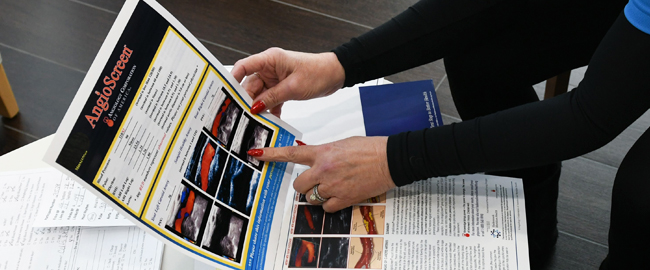
Register For An AngioScreen
Cardiovascular disease – including heart attack and stroke – is the number one cause of death for men and women in this country, more deadly than all cancers combined. Knowing your risk now can go a long way toward prevention.

Schedule Your CT Calcium Scoring Scan
Take a test to check your risk for heart disease with a CT Calcium Scoring scan for just $99. This offer is discounted from regular prices that are $250 or more.
When Should I Get a Heart Screening?
Heart screenings aren’t just for people who already have symptoms — they’re an important way to stay ahead of heart disease. You may need a screening if you have risk factors like high blood pressure, diabetes or a family history of heart disease. Even if you feel healthy, your doctor may recommend certain tests.
Who they’re for: Adults with risk factors like high blood pressure, high cholesterol, diabetes, family history of heart disease or new/worsening symptoms.
Why they’re important: Early detection can help prevent heart attack, heart failure or stroke.
What they detect: Structural heart issues, abnormal rhythms and early signs of artery disease.
If you ever experience sudden chest pain, shortness of breath, dizziness or other severe symptoms, call 911 or visit your nearest emergency department right away. These can be signs of a medical emergency.
What Happens if a Screening Finds Something?
If your screening results reveal an issue, our cardiologists will work with you to decide the next step. This may include lifestyle changes, medications, minimally invasive procedures or advanced treatments like:
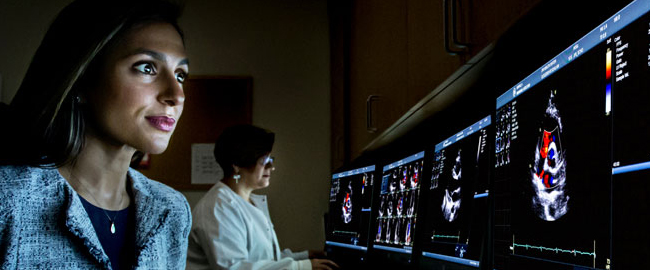
Heart Screenings, Prevention and Diagnostics
Heart screenings, prevention tools and diagnostic tests are all services offered by our cardiology specialists to help understand a patient’s heart condition or risk of heart disease, as well as what prevention or treatment options should be used.
Are You At Risk for Heart Disease?
Complete this simple 10-question quiz to determine if you're at risk for heart disease and get connected with a doctor to keep your heart health in check.
Frequently Asked Questions
Take the Next Step
Don’t wait for symptoms to appear. Protect your heart today with screenings and diagnostic tests at Hackensack Meridian Health. Find a location near you to schedule a screening today.

Why Choose Us for Heart Care
Our heart experts perform New Jersey's most successful minimally invasive heart surgeries. Hackensack University Medical Center has earned the distinction of being among the top 10% in the nation for Cardiology, Heart & Vascular Surgery programs from U.S. News & World Report, 2026-2027.

Our Cardiology Specialists
The combination of expert surgeons, advanced technology and array of heart care services makes Hackensack Meridian Health a trusted choice for patients and families in New Jersey.