

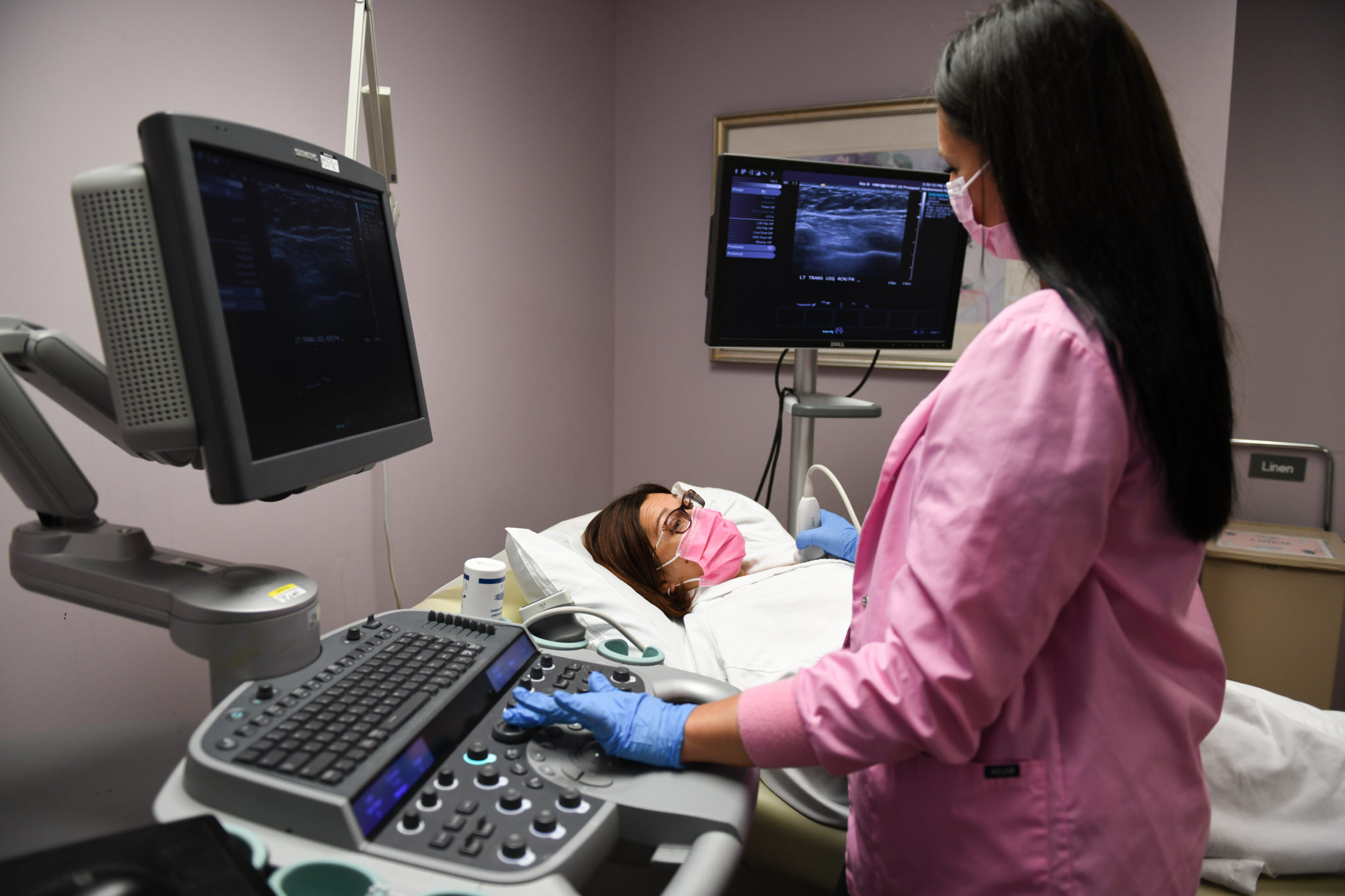
One in 8 American women will develop invasive breast cancer over the course of her lifetime. Certain factors can make someone at higher risk of developing breast cancer—notably, carrying a BRCA gene mutation in one’s DNA.
Is Genetic Testing Right for You?
Genetic testing is encouraged for anyone who is at an increased risk of having inherited the gene mutation. You are more likely to have a BRCA gene mutation and should seek out genetic counseling and testing if you:
- Have a relative with a known BRCA1 or BRCA2 mutation
- Have a personal history of breast cancer or Ashkenazi Jewish ancestry
- Have or had breast cancer that was diagnosed before age 50
- Have a personal history of two or more types of cancer
- Have three or more family members with breast cancer and/or ovarian cancer
- Have a male relative with breast cancer
- Have triple-negative breast cancer diagnosed before the age of 60
Genetic counseling is often recommended for those seeking genetic testing to help people better understand what their results mean in regard to their health. A positive test result means you carry the BRCA gene mutation, while a negative result means that no mutation was found.
When to Consider Surgery
If you test positive for a BRCA1 or BRCA2 gene mutation, you may want to consider the ways in which you can reduce the risk of developing cancer in the future. According to the National Cancer Institute, a prophylactic (preventive) mastectomy in women who carry a BRCA1 or BRCA2 gene mutation can reduce the risk of developing breast cancer by 90 to 95 percent.
During a prophylactic mastectomy, surgeons remove both breasts before any breast cancer diagnoses to reduce the risk of breast cancer developing in the future.
“The BRCA gene mutations are rare, affecting only 0.2 percent of the U.S. population, but it is always best to identify and reduce any potential risk of cancer as early as possible,” says Catherine Campo, D.O., FACOS. “Undergoing a prophylactic mastectomy is a tremendous thing to consider, but it could potentially save a life.”
You might consider a prophylactic mastectomy if you test positive for a BRCA1 or BRCA2 gene mutation or other breast cancer-related gene mutation that puts you at a significant risk of breast cancer, including but not limited to PTEN, CDH1, NF1, PALB2, CHEK2, TP53, STK11 and ATM. You may also consider prophylactic mastectomy if:
- You have a strong family history or personal history of breast cancer
- You have been diagnosed with lobular carcinoma in situ (LCIS), a condition in which abnormal cells are found in the lobules of the breast
- You have had radiation therapy to the chest before the age of 30
If you are at a high risk of developing breast cancer, talk with your medical team about all of your options, and lean on the support and guidance of a breast surgeon, medical social worker and even mental health professional to help you find the right path for you.
The decision to have any surgery to reduce the risk of breast cancer is a major one. If you are at high risk of breast cancer, talk with your medical team about all of your options, and lean on the support and guidance of a breast surgeon, medical social worker and even mental health professional to help you find the right path for you.
Next Steps & Resources:
- Meet our sources: Catherine Campo, D.O.
- Make an appointment online or call 800-822-8905.
- Learn about our comprehensive services for breast cancer
Find a doctor near me
Fighting Breast Cancer to Win
Breast cancer survivor Chereese McMillan shares her Mountainside Medical Center journey. Find hope and support. Learn more.

Should You Get Genetic Testing for Breast Cancer?
Genetic Testing for Breast Cancer: Learn about your risk and proactive steps to take. Reduce breast cancer risk with early detection.

New Life After Breast Cancer
New Life After Breast Cancer. Silvana M. shares her journey at John Theurer Cancer Center. Learn her story and find hope. Call 800-822-8905.

Who Should Get Screened for Breast Cancer?
Breast cancer screening: Learn when mammograms are recommended. Doctors Starr, Borofsky, and Gamss share crucial information. Schedule your appointment today.