

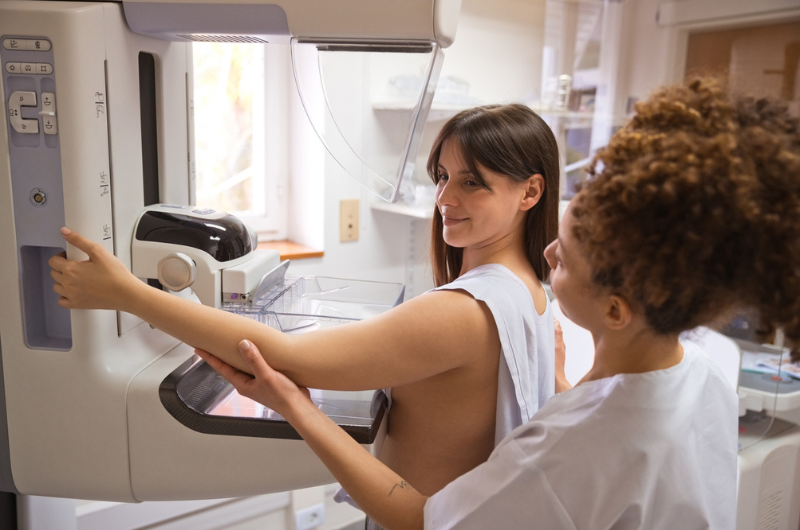
Would you be surprised to learn that the compression of the breasts during a screening mammogram is the shortest part of the appointment? Typically, only four images are captured (two for each breast), and each image takes only four to eight seconds.
Radiologist Gail E. Starr, M.D. of the Betty Torricelli Institute for Breast Care and The Breast Center at Palisades Medical Center suggests to expect at least 30 minutes for the appointment, but many visits are as fast as 20 minutes.
The total appointment time for mammograms includes:
- Registration
- Changing
- Clinical discussion and risk assessment
Of the compression, Dr. Starr says that “most patients tolerate it very well. Many patients say it doesn't hurt at all, in fact.”
The majority also receive reassuring results from their mammograms.
"Eighty-five to 90 percent of screening mammograms are negative,” she says. “Of the 10-to-15 percent of patients called back for additional imaging, most of those patients still do not have breast cancer."
Ways to Ease Discomfort During a Mammogram Screening
If your breasts are tender at certain points of your menstrual cycle (usually just after a period), try to plan your mammogram for another day.
Consider taking your go-to, non-prescription headache or pain reliever right before your appointment and skipping caffeine.
During the breast compression, don’t be afraid to communicate with your technologist. They can make adjustments to ease discomfort during mammograms while maintaining image quality.
It can also be helpful to:
- Wear a two-piece outfit, so you only have to remove your top
- Wear flat shoes
- Don’t wear necklaces
- Skip deodorant and lotions that can show up on images and cause re-takes
Results are typically available from a screening mammogram in MyChart immediately after the radiologist (the doctor) interpreting your exam signs the report, and your primary-care physician is notified, if you have one. If additional evaluation is needed, you’ll receive a phone call to schedule promptly.
More Than a Result – a Breast Cancer Risk Assessment
At Hackensack Meridian Health, you'll receive a breast cancer risk assessment along with your screening mammogram at no additional cost. Based on the Tyrer-Cuzick model, risk factors include:
- Age
- Age when menstrual cycle began and ended
- Breast density
- Race and ethnicity
- Family cancer history
- Having children
- Age at child bearing
- Hormone replacement therapy
- Overall health
- History of prior breast biopsies
- Genetic testing results if you have had any
This assessment enables your health care team to personalize your breast cancer screening routine, including how often and what type of screening.
For example, if you have an average risk or low risk, you should begin mammograms at age 40, according to the American Cancer Society guidelines.
If your lifetime risk for developing cancer is high, you may be advised to begin breast cancer screening with a breast MRI at age 25 and add mammography at age 30.
If you have dense breasts, you may be offered supplemental ultrasound imaging. Dense breasts have more fibrous and glandular tissue which makes cancer a little harder to see in images. Having dense breasts also increases the risk of breast cancer.
“All of our patients have 3D mammograms (tomosynthesis) with high resolution at a minimum,” Dr. Starr says. “We have the best equipment there is.”
Regardless of Family History of Breast Cancer…
…mammograms matter. The two biggest risk factors of breast cancer, Dr. Starr points out, are being a woman and getting older. Most patients who are diagnosed with breast cancer are at average risk.
“If we screened only the patients identified as high risk,” she says, “we would miss 75-80 percent of all cancers.”
Screening supports early detection, and when caught early, the breast cancer survival rate is almost 99 percent, according to the American Cancer Society.
"If we do find cancers through regular mammography,” Dr. Starr says, “we find them early, as opposed to when a patient feels them. These early cancers are less advanced, therefore having a better prognosis and more treatment options.”
One mammogram is only part of the story.
“The best screening results come from being able to compare mammograms over time,” Dr. Starr says. “That’s how you see subtle changes that may need early attention for the best outcomes. In addition, by comparing to older studies, we are able to avoid additional imaging and/or biopsy when we can document a finding to be unchanged over time, and therefore not worrisome.”
Next Steps and Resources:
- Meet our source: Gail E. Starr, M.D.
- Make your mammo appointment online or call 800-822-8905.
- Learn more about women's health at Hackensack Meridian Health.
Find a doctor near me
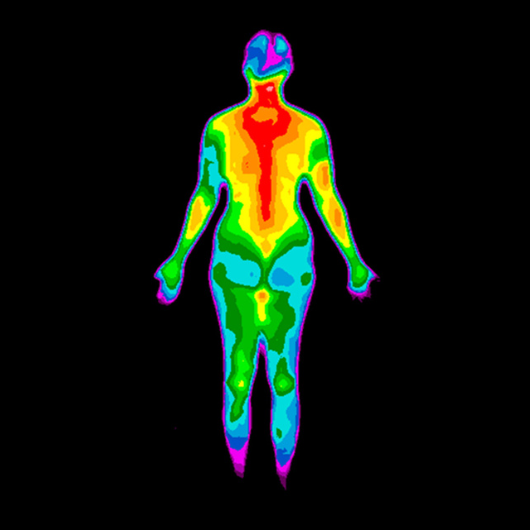
Can Thermography Detect Cancer?
Learn about mammography and thermography for breast cancer detection from leading doctors. Mammography is the gold standard for early detection. Book your mammogram today.

Are Cancerous Breast Lumps Painful?
Painful Breast Lumps? Learn what cancerous tumors feel like from Dr. Graham. John Theurer Cancer Center offers screenings and expert care. Schedule your appointment today.
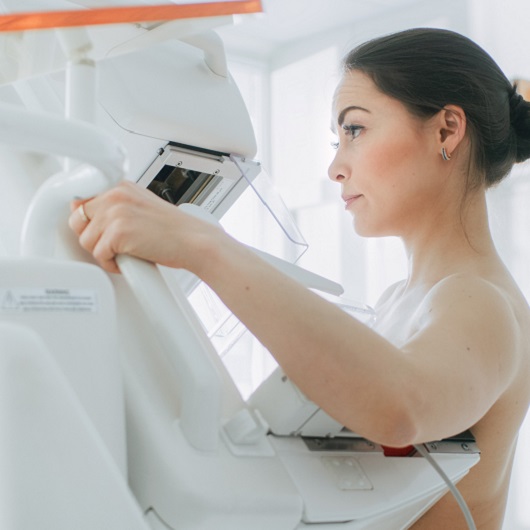
When Should You Start Getting a Mammogram? Experts Say at 40
The U.S. Preventive Services Task Force recently updated their recommendations that women should begin regular mammogram screenings at age 40, instead of 50. Our expert explains why and how to protect yourself from breast cancer.
Cervical Cancer Screening: What You Need to Know
Cervical cancer screening: Learn about Pap smears & HPV tests. Doctors Borowsky, Vaidya, & Misra explain screenings & scheduling. Get the information you need for your health.