

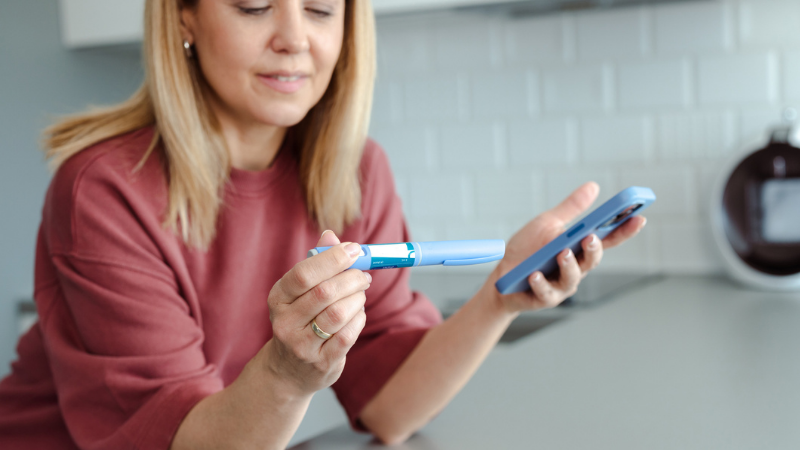
You’ve probably seen it on TikTok or Instagram: people cutting their Ozempic dose in half, stretching their Zepbound supply an extra week or two, or buying compounded doses of GLP-1s from telehealth platforms.
The trend is called microdosing GLP-1s, and it’s becoming more common. A survey that included more than 8,000 GLP-1 users found that 15% had tried or were currently microdosing the drug. Nearly half did so without consulting their doctor.
The promise is appealing: lower costs and fewer side effects. But does microdosing GLP-1s actually work? And is it safe?
Here’s what you need to know, according to Ritu Anand, M.D., DABOM, an endocrinologist and obesity medicine specialist at the Hackensack Meridian Health Center for Weight Loss at JFK University Medical Center.
What Is Microdosing GLP-1s?
“Microdosing GLP-1s means taking a dose that is even lower than the lowest FDA-approved dose for a particular weight-loss medication,” says Dr. Anand.
For example, the lowest dose studied and approved for Zepbound (tirzepatide) is 2.5 mg. Microdosing would mean injecting any amount lower than that minimal dose, whether that’s 1, 1.5 or 2.3 mg.
“It became a popular thing to do when these weight-loss medications were in short supply, in 2025 and earlier,” says Dr. Anand. “That’s also when compounding pharmacies jumped in, making smaller doses available.”
Another form of microdosing involves taking the full prescribed amount but stretching out the time between shots or skipping a weekly dose entirely.
Why Are People Microdosing GLP-1s?
On social media, people cite all kinds of reasons for microdosing GLP-1s: wanting to lose just a few pounds, quieting food noise, reducing cravings for alcohol or other substances or even pursuing longevity benefits. But these uses aren’t FDA-approved.
In Dr. Anand’s practice, the reasons tend to be more straightforward: patients want to save money or lessen side effects.
Without insurance, Wegovy starts at $149 a month and Zepbound at $299. And coverage isn’t guaranteed.
“These weight-loss medications are only approved and covered for people who have a BMI of more than 30, or a BMI of 27 or higher with a weight-related comorbidity such as sleep apnea or high blood pressure,” Dr. Anand explains. If you don’t meet those criteria, insurers typically won’t cover it.
Then there are the side effects. An estimated 82% of patients on the full dose of these medications report symptoms like nausea. Taking less than the recommended amount might seem like it would reduce side effects, but that’s not necessarily the case, according to Dr. Anand.
Some people also worry about having to increase their dose over time, and microdosing can feel like a way to stay on a lower amount and still see results.
What Are the Risks of Microdosing GLP-1s?
“The effects of microdosing GLP-1s have not been clinically tested, and these doses are not FDA approved,” Dr. Anand warns. There’s a reason medications undergo rigorous testing and trials before gaining FDA approval, and microdosing essentially bypasses that process, which is risky.
When it comes to reducing side effects, microdosing GLP-1s may backfire. If you take less than the recommended dose, you may have fewer side effects that week, but when you take your next shot, it’s as if you’re starting over.
“The side effects will come back full force,” Dr. Anand explains. “That leads to a cycle of symptoms going up and down rather than gradually improving over time.”
That’s why doctors recommend increasing the dosage gradually, which allows your body to get used to the medication while keeping weight loss on track.
If nausea or fatigue is a problem, Dr. Anand says it makes more sense to address these side effects with lifestyle changes, including:
- Get enough protein. Aim for one to 1.2 grams per kilogram of your ideal body weight. For example, if your ideal weight is 135 pounds, that’s about 73 grams of protein a day.
- Stay hydrated. Dr. Anand suggests 70 to 80 ounces of water a day.
- Avoid fried or fatty foods and dishes heavy on cheese, which can increase bloating, diarrhea and other GI symptoms.
Does Microdosing GLP-1s Work—and Should You Try It?
“I don’t recommend it,” says Dr. Anand. “There’s no evidence that microdosing works to help people lose weight.”
That being said, you can stay on the lowest FDA-recommended dose and still lose weight.
“Many of my patients are successful at losing weight even while staying on the starting dose,” she says. “They lose pounds, and they never have to increase. But that’s not the same as microdosing.”
Next Steps & Resources:
- Meet our source: Ritu Anand, M.D., DABOM
- Make an appointment online with a weight management provider near you, or call 800-822-8905.
- Learn more about our weight management services.
Find a doctor near me
Life After Ozempic The Decision to Stop and What Comes Next
The latest craze in weight loss is medication like Ozempic. But what happens when the medication is stopped? Our expert tells you everything you need to know.
How to Use Weight-Loss Medication Safely
Use weight-loss medication safely. Dr. Strom offers expert tips for safe use and managing side effects. Learn more and schedule an appointment today.
Are Weight-Loss Injectables Safe?
Weight-loss injectables safety concerns? Dr. Eid explains risks of unapproved options. Learn safe ways to lose weight; schedule a consultation today.

Gelatin Trick for Weight Loss: Does It Work?
Weight-loss injectables safety concerns? Dr. Eid explains risks of unapproved options. Learn safe ways to lose weight; schedule a consultation today.