

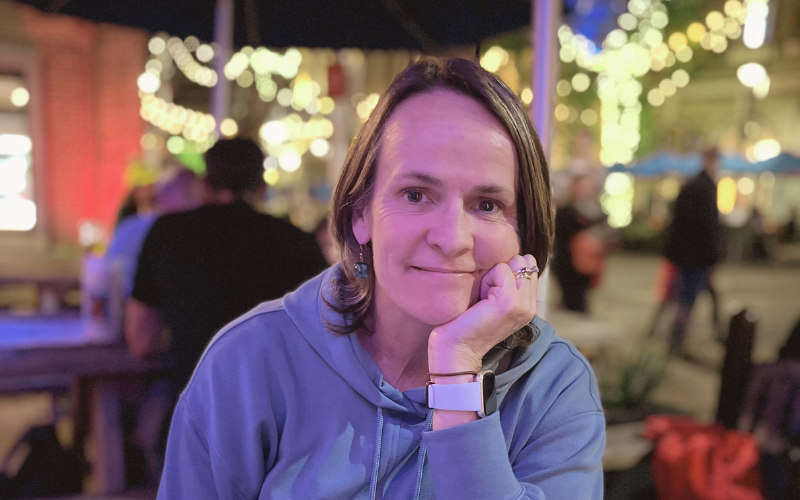
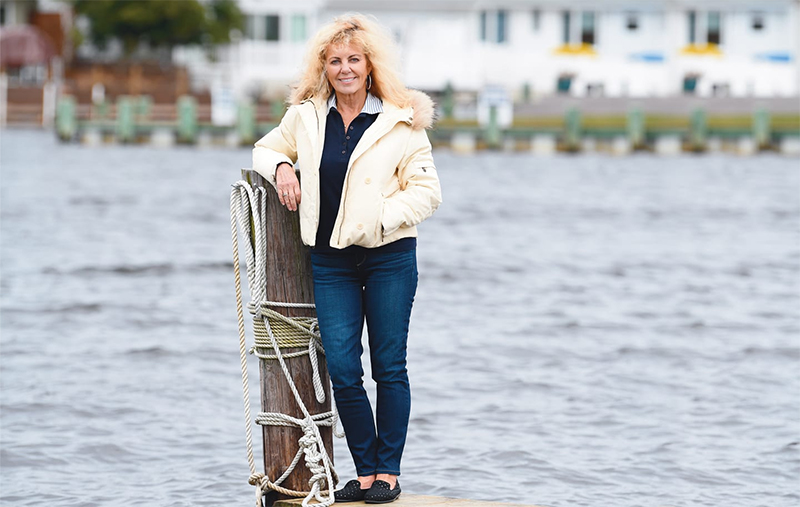
“I firmly believe I wouldn’t be here if it were not for the unbelievable care that I got,” shares Jackie Ffrench, 59, of Fair Haven, NJ.
As a nurse with 36 years of experience, Jackie was the calm in any storm. But nothing could have prepared her for the moment she became the patient, fighting for her life.
Her journey started on a rare weekend off, with an alarm she couldn’t ignore.
A Sleepless Night Turned Nightmare
Jackie was having trouble falling asleep. Tossing, turning, continually getting up for a drink of water and her chest pounding – she knew in her gut that something was wrong.
After a couple of hours, Jackie knew it was time to get help. She woke her husband, Martin, and they headed to Riverview Medical Center’s emergency department.
Jackie explained to the team that her chest was bothering her. After bloodwork and a couple of electrocardiograms (EKGs) to evaluate her heart’s activity, things changed in an instant.
Her husband went home to shower quickly, and the next thing Jackie remembers is waking up 10 days later.
Jackie’s heart enzymes (troponin) were elevated, which meant her heart was under severe stress, indicating heart damage. Her condition was deteriorating rapidly, and the team had to act.
Jackie had to be intubated for breathing support and was started on an Impella device – a temporary heart pump that is used to help ease the burden on the heart. As her condition worsened, she was transferred to Jersey Shore University Medical Center.
“I coded a couple of times in the ambulance on the way there, but the cardiologist at Riverview spoke to his partner at Jersey Shore, so they knew I was coming and were ready for me when I got there,” she adds.
A Race Against Time
Once at Jersey Shore, Jackie’s battle was just beginning.
“I ended up having to go to the operating room, I think five times,” Jackie says. She had to be placed on extracorporeal membrane oxygenation (ECMO), where a machine works as an artificial heart and lung.
When on ECMO, Jackie had bleeding in her chest and needed two tubes to help drain it. In collaboration with the cardiac and thoracic surgery teams, her vascular surgeon, Satishkiran Kedika, M.D., even had to put a stent in her upper right arm to help with bleeding.
After ten long days, Jackie woke up. Her immediate battle for survival was won, but her recovery journey was just beginning. Shortly after, she experienced a mild stroke, a complication that occurs when blood flow to the brain is interrupted.
The Power of a Collaborative Team
This rapid decline is where her story could have ended. Instead, it’s where the power of a collaborative medical team became clear.
“There was an army of people involved; it wasn’t just one doctor,” says Renato Apolito, M.D., her cardiologist and medical director of the cardiac catheterization laboratory at Jersey Shore. “There was a collaborative effort across several specialties, and that’s what saved her life.”
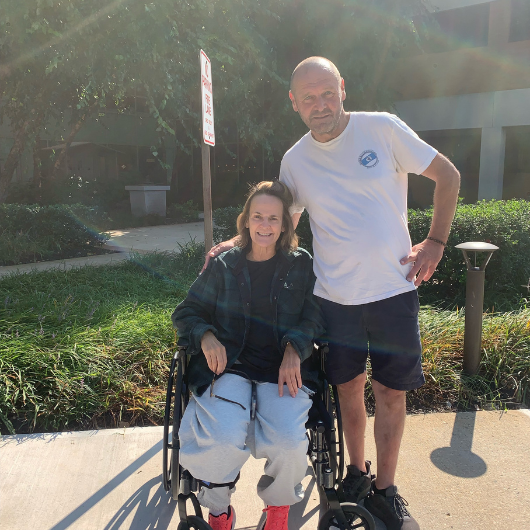
Once stable, Jackie was moved to the Johnson Rehabilitation Institute at Ocean University Medical Center for two weeks and then continued outpatient speech, physical and occupational therapy.
A Second Event Prompts a Deeper Look
After a long recovery, life returned to normal. Then, in February, it started again.
“I woke up that morning, and my chest just felt weird,” Jackie recalls. “It wasn’t a stabbing pain, just… achy.”
While on a long work-related drive, the ache intensified, and she became violently ill. “I started vomiting in the car. I vomited for an hour and a half,” she says. “I just said to the person who was driving, ‘Please just drop me off at the emergency room.’”
In the ER, the scenario was frighteningly familiar. Her heart function was severely diminished, and she was admitted to the cardiac intensive care unit.
New Insight Unlocks a Targeted Treatment Plan
This second event provided a crucial opportunity to refine Jackie’s long-term care plan. Heart failure specialist Jesus Almendral, M.D., was brought in to offer his expert perspective.
After reviewing imaging from her first cardiac event, Dr. Almendral found that her heart muscle was still inflamed, a condition called myocarditis.
This understanding led to a new targeted treatment plan. Jackie began a three-month course of medication specifically designed to reduce the inflammation around her heart.
Healing is an Ongoing Journey
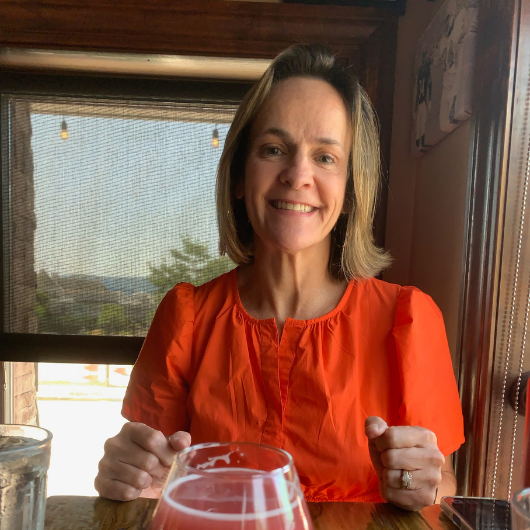
Today, Jackie is feeling great, but her journey continues to show the importance of diligent follow-up care. A recent visit with her vascular surgeon, Dr. Kedika, revealed that the stent placed in her arm during her first hospitalization had closed. She is now scheduled for a procedure to fix it.
“When I look back on everything, I am just unbelievably grateful,” Jackie says. “The staff at Riverview, Jersey Shore and the Johnson Rehabilitation Institute were incredible. They didn’t just take care of me, they took care of my family through an incredibly difficult time for all of us, and that made all the difference.”
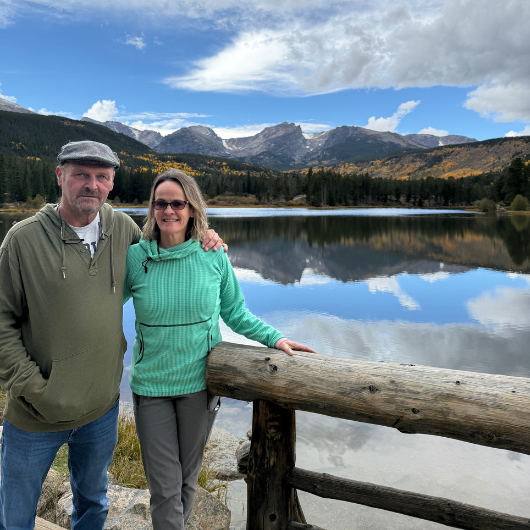
Her story is a powerful lesson in resilience and the importance of listening to your body.
“You absolutely need to listen to your body,” Jackie advises.
Dr. Apolito, her primary cardiologist, emphasizes that point, “Come to the ER. You may think you’re overreacting, but it could easily save your life. If Jackie didn’t act, she absolutely would not be alive today.”
Ultimately, Jackie’s experience highlights the strength of a multi-disciplinary health system. “For a patient as critically ill as Jackie was, having a team in one place is the difference between life and death,” says Dr. Kedika. “That level of immediate, collaborative care made all the difference.”
Next Steps & Resources
- Meet our sources: Jesus Almendral, M.D., Renato Apolito, M.D., Satishkiran Kedika, M.D.
- Make an appointment online with a cardiologist near you, or call 800-822-8905.
- Learn more about heart care at Hackensack Meridian Health.
Advanced Cardiac Care Offers Hope For Manalapan Man with Cardiac Amyloidosis
In spite of repeated hospitalizations, Tony couldn’t get a diagnosis - until help from his daughter and the HMH team got him the heart care that would allow him to enjoy retirement.
From Unstoppable to Unexpected Heart Failure Diagnosis
Living with asthma, Susan dismissed her shortness of breath. She never anticipated that she could be in severe heart failure. Learn more about her story of hidden symptoms and her inspiring recovery.

The One Thing to Do Every Day to Support Healthy Blood Flow
If there’s one healthy lifestyle change you make to improve your blood flow, what should it be? Follow this advice from cardiologist Brett Sealove, M.D.
In the Right Place at the Right Time
Ocean Medical Center: Heart attack story. Learn how quick care saved Natalie's life. Find expert help today. Call 800-822-8905.