

Key Takeaways
Lung cancer is the number one cause of death among men and women in the U.S., but regular screenings and early diagnosis can save your life.
- Diagnosis: Carolyn Rothfeld was diagnosed with lung cancer after a routine heart screening.
- Treatment: After Robotic surgery at Hackensack University Medical Center, she is cancer-free.
- Get Care: Been diagnosed with lung cancer? Consult a thoracic surgeon: Book online | 800-822-8905.
Medically reviewed by Nabil Rizk, M.D, Chief of Thoracic Surgery, Hackensack University Medical Center

Carolyn Rothfeld is a vibrant, active woman in her 70’s from Hackensack. So, when a routine heart scan ordered by Mary Nakhla, M.D., her primary care physician at Hackensack Meridian Health, revealed a small nodule in her lung, she was shocked. This discovery, or "incidental finding," led to Carolyn being diagnosed with Stage 1A lung cancer, the earliest, most treatable stage.
“Her story is not unique,” says Dr. Nakhla. “A growing number of lung cancers are being discovered incidentally, often in people who, like Carolyn, don't fit the current high-risk criteria for screening.”
Robotic Surgery
After a year of monitoring the nodule, Carolyn’s pulmonologist noticed it had grown and recommended surgery. She was referred to Nabil Rizk, M.D, the Chief of Thoracic Surgery at Hackensack University Medical Center. Within four weeks, Dr. Rizk performed a robotic-assisted lung surgery segmentectomy, a minimally invasive lung-sparing procedure to remove the cancerous portion of her lung.
“Biopsies confirmed the cancer was contained in the nodule and had not spread," Dr. Pelz concluded. “Increasing the awareness, decreasing the barriers and Carolyn's story – underscored by a family history of lung cancer in her maternal grandmother and uncle and the fact that she quit smoking cigarettes over 50 years ago – are all powerful testaments to the importance of early detection, even when it happens by chance.”
“From a surgeon's standpoint, finding these cancers at their earliest stage is a game-changer," says Dr. Rizk. “A significant evolution in lung cancer surgery is that for these early-stage tumors, we can often perform less invasive procedures. In many cases, we no longer need to routinely take out large portions of the lung."
The Screening Gap
Lung cancer is the leading cause of cancer death for both men and women in the United States, yet the approach to finding it early is lagging. Only about 20% of patients eligible for lung cancer screening receive it.
"There is no denying that CT scans of the chest are the best way to catch lung cancers when they are potentially at an earlier stage and more likely to be cured," notes Geoffrey Pelz, M.D, a thoracic surgeon at Hackensack Meridian Health. He points out that most lung cancers present no symptoms until they are advanced, making screening the best available method for early detection.
Studies show a substantial number of surgically removed lung cancers, with some estimates as high as 66%, are found incidentally rather than through intentional screening.
Carolyn encourages others to follow through with routine screenings.
“Routine screenings are a critical part of taking care of our health. We can feel perfectly fine and still have something developing that we have no idea exists. Early detection can be lifesaving,” she says.
Who Should Have Lung Cancer Screenings?
The U.S. Preventive Services Task Force (USPSTF) recommends annual low-dose CT (LDCT) scans for adults aged 50 to 80 who have a 20 pack-year smoking history and either currently smoke or have quit within the past 15 years.
However, Dr. Pelz believes the current criteria are too narrow and fail to cover a large portion of the at-risk population, including:
- Former smokers: The risk of lung cancer remains elevated long after 15 years of quitting.
- Occupational hazards: Individuals with prolonged exposure to substances such as asbestos, diesel exhaust, silica, and other carcinogens face an increased risk.
- Ethnic disparities: Certain ethnic groups, such as Asian American women who have never smoked, have a significantly higher risk of developing lung cancer.
A new bipartisan bill was recently introduced to help those eligible receive lung cancer screenings. The Increasing Access to Lung Cancer Screening Act would eliminate the need for prior authorization, remove co-pays under Medicaid, expand tobacco cessation support and provide funding for education and outreach.
New Technology Could Save Lives
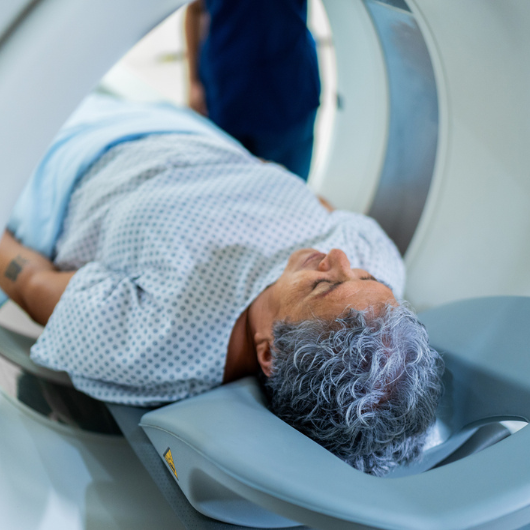
A screening tool available at several Hackensack Meridian Health locations is helping pave the way for a safer, more accurate diagnosis of lung cancer. This new state-of-the-art scanner delivers ultra-high-resolution images, eliminates electronic noise and has a lower radiation dose than conventional CT scans.
Dr. Pelz says that while new methods of lung cancer screenings, such as genetic testing, may be on the horizon, it’s important to continue educating people about the importance of traditional screenings.
"Until such time as a screening blood or exhaled breath test is fully approved and expanding the criteria of who is screened is the best way to impact the early detection and treatment of lung cancer."
Next Steps & Resources
- Meet our sources: Nabil Rizk, M.D, Mary Nakhla, M.D. and Geoffrey Pelz, M.D.
- To make an appointment online with a thoracic surgeon near you, or call 800-822-8905.
- Learn more about lung cancer care at HMH.

Young Mothers' Lung Cancer Diagnosis a Warning to Others
Nichole Molinaro was a 38-year-old active mother of three when she was diagnosed with lung cancer. She shares how an early diagnosis and the expertise of Hackensack Meridian Health saved her life.
How Low-Dose CT Scans Can Lower Your Lung Cancer Risk
Discover the latest lung cancer screening guidelines, how a low-dose CT scan can detect lung cancer early, and when you or a loved one should consider getting screened

Surgery Successfully Removes Encapsulated Lung Cancer
Doctors waste no time in removing a cancerous mass in Kim Mosko’s lung and later discover a gene mutation that led to the tumor.

New Technology Attacks Lung Cancer Sooner, When It’s Most Treatable
Thanks to a new robotic-assisted technology, one Jersey Shore woman is able to tackle head on a stage 1 adenocarcinoma in her left lung.