

Key Takeaways
Stage 0 breast cancer, also known as ductal carcinoma in situ (DCIS), is when abnormal cells are confined to the milk ducts.
- Diagnosis: Jenna Werner, 38, learned she had DCIS after a presurgical mammogram at Riverview Medical Center.
- Treatment: She had a nipple-sparing double mastectomy and reconstruction at Jersey Shore University Medical Center.
- Get care: Don’t put off your screenings. Schedule a mammogram today: Book online | 800-822-8905.
Medically reviewed by Roshani Patel, M.D., FACS, Breast Surgeon, Hackensack Meridian Health Jersey Shore University Medical Center.

Jenna Werner decided 2026 would be the year she stopped putting herself last. A registered dietitian and mom of three, she had spent six years pregnant, breastfeeding or caring for a newborn. In February, she had a breast augmentation on the calendar.
Her plastic surgeon, Fares Samra, M.D., sent her for a mammogram first. While this is not a standard requirement, Dr. Samra does a lot of breast cancer reconstruction and feels it is an important step before performing cosmetic breast surgery, for age-appropriate patients.
It was her first mammogram, and at 38, with no family history, she wasn’t worried. As someone who is very health-conscious, Jenna wasn’t thinking about cancer at all.
But the mammogram showed calcifications and a biopsy scan revealed that Jenna had ductal carcinoma in situ (DCIS).
In a heartbeat, her world flipped upside down. “I was in a parking lot and drove immediately home and collapsed on the floor in the bathroom,” she says.
DCIS is the earliest form of breast cancer, the stage before it turns invasive. The cancer cells sit inside the milk ducts and have not spread beyond them, which is what makes it so treatable.
Here’s how Jenna’s story unfolded and what she wants you to know about your own mammogram.
The Preop Scan That Changed Everything
Jenna’s mammogram was at the Women’s Center at Riverview Medical Center. Her scan showed dense tissue plus a cluster of tiny calcifications. Harriet Borofsky, M.D., medical director of Breast Imaging at Riverview and Bayshore medical centers, wanted to investigate them further.
A few days later, Riverview called Jenna back. She went in for a second mammogram and an ultrasound.
“The vibe in the room was like, something’s not happy in this moment,” Jenna says.
A nurse care manager told her three areas needed a biopsy. The next day, before she lay down for it, she asked Dr. Borofsky to explain what they were looking for.
“She zoomed in on the screen like 100X and showed me three little dots,” Jenna says. “They looked like chia seeds to me, and they were in the formation of a triangle.”
Three days later, Dr. Samra called to cancel the augmentation and give her the news that she had cancer.
“I thought I was going to throw up,” Jenna says. “My husband was with me, and I just remember screaming, saying ‘I want my mom.’”
Her mom was there in 15 minutes. Dr. Borofsky called after that to confirm the diagnosis: The cancer was Stage 0 and noninvasive; treatments existed; and Jenna was going to be OK.
“[She] had this way of making my world that was just shattered feel like it was coming back together,” Jenna says.
Weighing Her Options
Jenna was referred to Roshani Patel, M.D., FACS, medical director for Breast Surgery at Jersey Shore University Medical Center.
An MRI found DCIS in about 30 percent of the tissue in Jenna’s left breast. DCIS does tend to travel along the ducts, Dr. Borofsky says, which is how it can cover a large area of the breast.
A lumpectomy, which takes out only the cancerous tissue, was not feasible because too much of the breast tissue would need to be removed, causing a large defect.
Dr. Patel went through every scan and option with Jenna.
Jenna had genetic testing and was found to have a genetic risk for breast cancer. She eventually chose a double mastectomy, which lowered the oddsof her developing breast cancer again.
“I was terrified,” she says. “However, it felt like the right solution for me.”
Dr. Patel booked the surgery before Jenna left the office.
“It was the scariest moment of my life, to be in a pink, open-front gown,” Jenna says. “But the way that Dr. Patel carried herself in that room changed the trajectory of my care. She 1,000 percent made me feel safe, comforted, healthy, happy — all of the things.”
Getting a Double Mastectomy
Jenna had the surgery 16 days after her diagnosis.
Dr. Patel used ultrasound during the operation to protect the blood supply to Jenna’s nipples, preserving them. The cancer had not spread, and the edges of the tissue she removed came back clear, meaning she had gotten all of it.
Jenna stayed overnight and went home with drains and tissue expanders in her chest — which are placeholders that hold the space for implants. A visiting nurse came that first night for support.
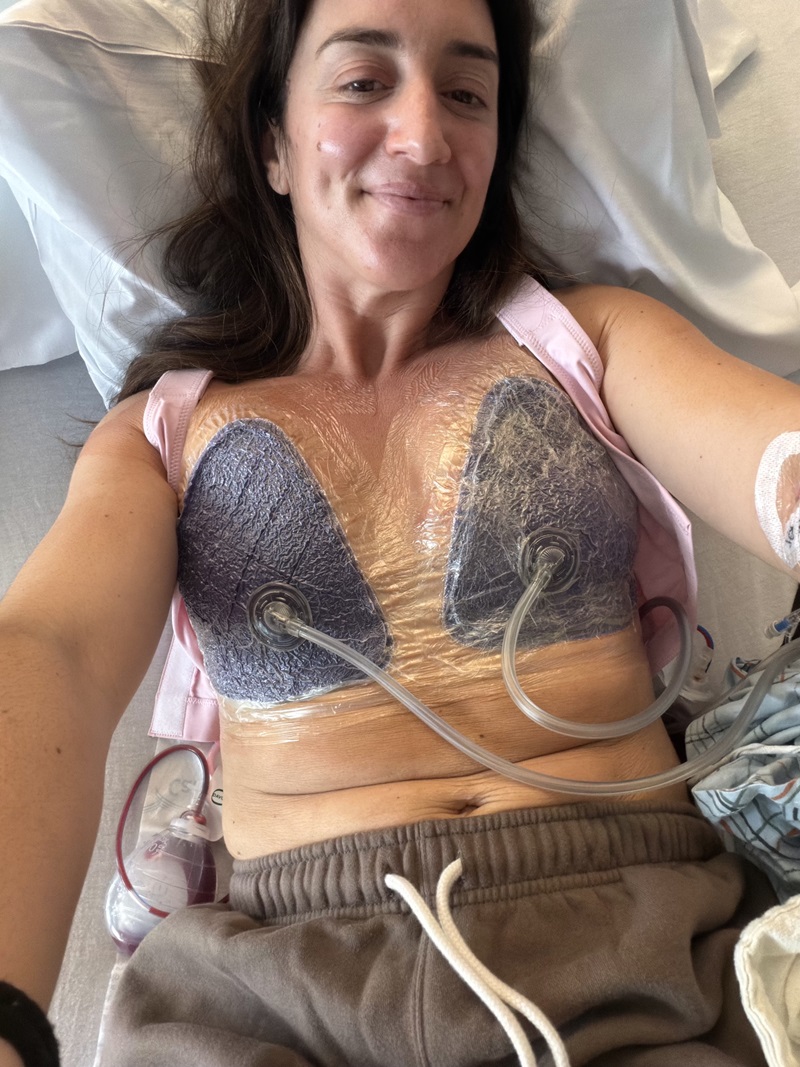
But the surgery itself wasn’t the hard part, Jenna says. It was the recovery: She couldn’t lift her arms until the drains came out, so she couldn’t pick up her children, who were 13 months, 2 and 5 years old at the time.
“I was not able to hold my children for six full weeks,” she says.
Three months to the day after her mastectomy, Dr. Samra performed the exchange surgery, which swaps the expanders for implants. “I was in by 6 a.m., and I was home in my bed recovering, watching a movie, by 9 a.m.,” she says.
She now takes medication that lowers the chance of the cancer returning, and she sees Dr. Patel every six months, a cadence she will continue for the next two years. She also does a self-exam monthly.
Jenna’s imaging, surgery and reconstruction all happened inside Hackensack Meridian Health, which runs New Jersey’s largest breast cancer and breast imaging program.
What Jenna Wants Other Women to Know
As part of Jenna’s treatment, she had genetic testing at Jersey Shore. It found that she carries a CHEK2 gene mutation, which research links to higher breast cancer risk.
After sharing this with her family, some of her relatives decided to get tested.
“My mom and two of my cousins so far have found out they also have this gene,” Jenna says.
That’s why she feels it’s so important to get screened.
“Please go get your mammogram,” she says. “They truly save lives.”
To learn about your own breast cancer risk, take our cancer risk assessment.
Next Steps & Resources
- Meet our sources: Roshani Patel, M.D., FACS,Harriet Borofsky, M.D., and Fares Samra, M.D.
- Learn more about our breast cancer services.
- Schedule a mammogram at Hackensack Meridian Health.
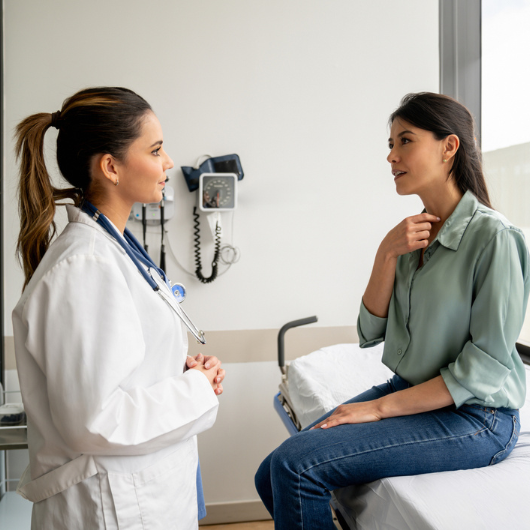
Stage 0 Breast Cancer Explained
An HMH breast cancer expert explains what Stage 0 breast cancer is, how it’s treated and why annual mammograms can save lives.
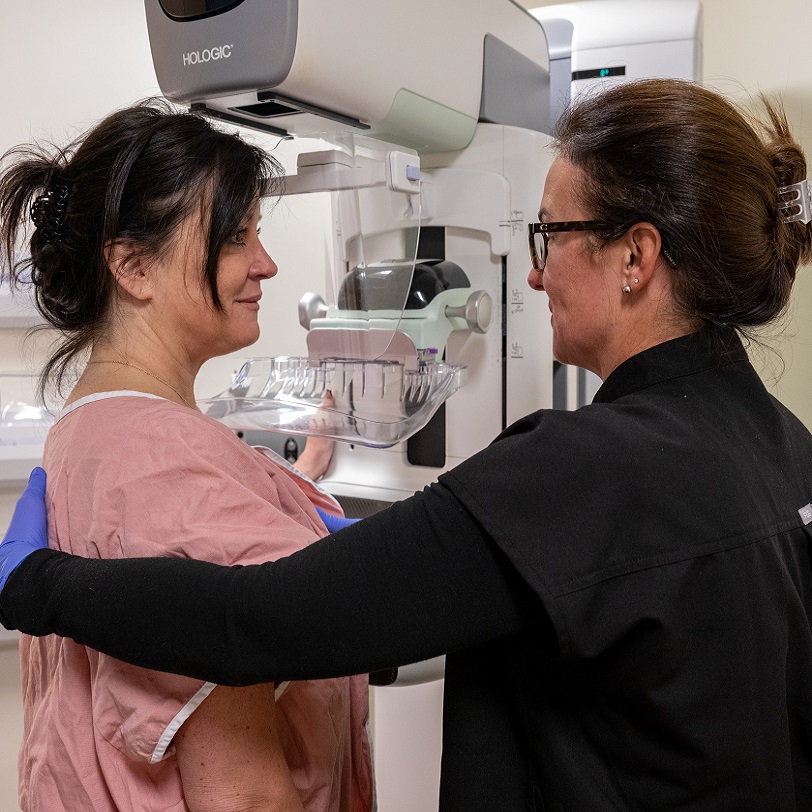
When Should You Get a Mammogram? Take the Quiz
In this quick quiz, Breast Radiologist Dr. Harriet Borofsky helps explain to New Jersey women when they should get a mammogram.
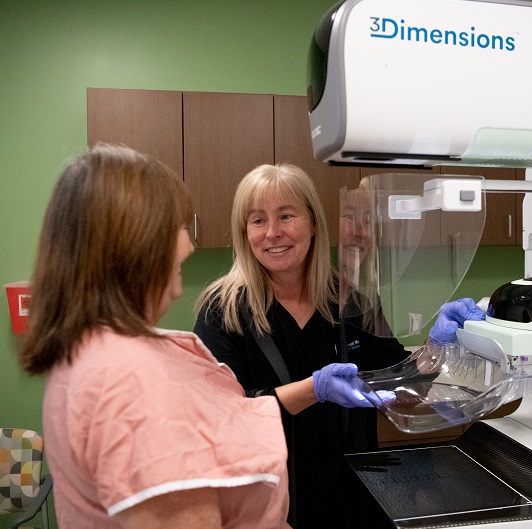
Breast Cancer Screening Improvements in New Jersey
Breast cancer screening technology is improving every day. Here are three recent advances that have the potential to save lives.
Who Should Get Screened for Breast Cancer?
Breast cancer screening: Learn when mammograms are recommended. Doctors Starr, Borofsky, and Gamss share crucial information. Schedule your appointment today.