

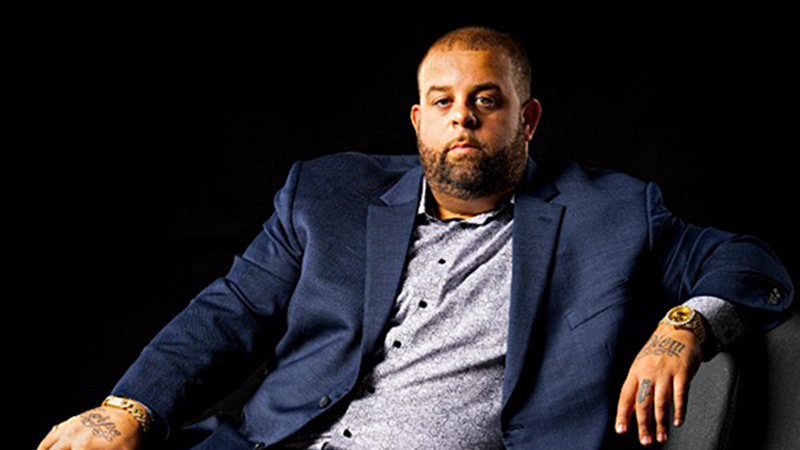
In 2010, 23-year-old Ryan Leonard was wrapping up a 400-day Army deployment in Iraq when his first sergeant barked an offer: Whoever helped load the unit’s gear onto the plane home would get first-class seats on the flight back.
Ryan and nine others jumped to it. The duffel bags weighed up to 200 pounds. The chain of soldiers passed them off one by one — grab, twist, hand off, grab, twist, hand off — until the semitrailer was empty. By the end, Ryan was drenched in sweat, and his back was aching.
The first-class seats never materialized; Ryan spent the 10-hour flight home in soaking wet fatigues, telling himself the ache in his back was just a muscle spasm.
It was the start of a 16-year journey to find relief for his back pain.
Trying Everything Short of Surgery
For more than a decade, Ryan pushed through the pain. The former powerlifter struggled to exercise, gained 50 pounds and, at one point, couldn’t put his shoes on without jolts of pain shooting through his body. He’d wake up with numb toes and stabbing sensations from his sciatic nerve. He lost feeling in his pinky toe for years.
“You put your feet on the ground, and you’re instantly in pain,” says Ryan, now 39 and the founder and CEO of a supply chain solutions company in Howell. “It’s not only physically painful, but also mentally exhausting.”
He tried everything to manage it: physical therapy, chiropractors, decompression treatments, cryotherapy, scraping therapy (where a smooth-edged tool is glided across your skin), a massage therapy technique called cupping and weekly muscle manipulation for seven years, all on his own dime.
“I probably paid a quarter of a million dollars out of pocket because the insurance didn’t cover it,” he says. None of it gave him more than an hour of relief.
At one point, Ryan paid out of pocket for a full-body MRI scan. It revealed the cause: two extruded discs in his lower back that were compressing the nerve roots leading to his sciatic nerve.
But Ryan was determined to avoid surgery. “I was petrified,” he says. “I’d never even had stitches in my life, never mind spine surgery.”
That changed in October 2025. After waking up one day unable to walk, Ryan spent three weeks in bed with his feet elevated on pillows. He’d had enough.
Finding the Right Surgeon
On the recommendation of two friends, Ryan reached out to Ramil S. Bhatnagar, M.D., an orthopedic spine surgeon at Hackensack Meridian Health.
Subsequent MRIs confirmed the problem: Ryan had two herniated discs in his lower back, both on the same side.
“The disc is a shock absorber between the bones in the spine, and it’s like a jelly doughnut,” Dr. Bhatnagar explains. “In his case, the jelly had come out and was severely pushing on nerves that supply the leg.”
Dr. Bhatnagar recommended a microdiscectomy. The minimally invasive procedure removes only the herniated parts of the discs, leaving the rest in place. Because Ryan had two herniations, he’d need surgery on both at the same time.
When his insurance initially denied coverage, Dr. Bhatnagar called the insurer himself to explain why the surgery was necessary. They approved it the next day. The procedure was scheduled for January 8, 2026.
Feeling Instant Relief
Because Ryan’s herniations had been there for so long, calcium deposits and bone spurs had built up around them, hardening the tissue and making the procedure more challenging. The surgery took a little over two hours.
Waking up in recovery, Ryan immediately noticed something different. The constant nerve pain that had defined his daily life for 16 years was gone.
“You’ll never forget nerve pain when you feel it, and that was absolutely done,” he says. “I could feel my toes and wiggle them. I didn’t have that leathery sensation on the side where I could barely feel anything. I didn’t have sciatica.”
Getting His Life Back
Ryan walked out of the surgery center that day. During recovery, he slept on a recliner for about a month to avoid twisting in bed. He did six weeks of physical therapy and was released two weeks ahead of schedule.
Today, Ryan estimates he’s about 80 percent back to his preinjury self. He’s golfing, lifting at the gym and starting to rebuild the strength he’d lost.;
“He’s been right on schedule,” says Dr. Bhatnagar. “He’s a motivated patient. He’s had a phenomenal result.”
For Ryan, the pain relief has been life changing, both physically and mentally.
“Day to day, just knowing that I don’t have to deal with that anymore, that I can live my life — that’s a game changer,” he says. “I travel all over the world. I play golf all over the place. I can’t not be mobile.”
His advice to anyone who’s been living with similar pain? “Don’t wait. Get a second opinion. Make sure you choose your team. I would have gotten this done a long time ago.”
Next Steps & Resources
- Meet our source: Ramil S. Bhatnagar, M.D.
- Make an appointment online with an orthopedic spine surgeon near you, or call 800-822-8905.
- Learn more about our spine care services.
6 Reasons Your Lower Back Hurts and How to Treat It
Learn about some of the common causes of back pain, options for finding relief and tips for keeping your back pain-free as long as possible.

4 Ways To Improve Back Pain Without Surgery
Improve back pain without surgery. Learn 4 ways to strengthen your spine and ease discomfort. Call 800-822-8905 for an appointment.

The Impact of Smoking on Spine Health and Surgery Outcomes
Smoking can have harmful effects on the spine, from decreased bone density to poor surgery outcomes. Quitting may improve spine health and surgery success.
What’s the Source of Your Back Pain?
Find back pain relief. Drs. Bagi and Levin explain causes, treatments, and when to seek medical care at Pascack Valley Medical Center. Learn more.