

Key takeaways
Robotic-assisted hernia repair is a minimally invasive procedure that uses advanced robotic technology to repair hernias, offering shorter recovery times, less pain and reduced scarring compared to traditional open surgery.
- Diagnosis: Seth Kipnis, M.D., developed two hernias from the physical demands of his job, experiencing an intermittent bulge and pain that eventually interfered with his active daily life.
- Treatment: Experts at Jersey Shore University Medical Center utilized advanced robotic techniques to perform a simultaneous double hernia repair.
- Get Care: Putting off a hernia repair or living with abdominal pain? Explore your treatment options: Book online | 800-822-8905.
Medically reviewed by Dena Arumugam, M.D., Director of Obesity Medicine, Bariatric and General Surgeon, Hackensack Meridian Jersey Shore University Medical Center.
For the past 17 years, Seth Kipnis, M.D., has been the steady hand guiding patients through life-changing procedures. As the Chief of Bariatric Surgery and Medical Director of Robotic Surgery at Jersey Shore University Medical Center, he is a pillar of strength in the operating room. Outside the hospital, the 52-year-old Morganville, New Jersey resident is first and foremost a family man, spending his free time with his wife and two daughters, tackling hands-on home projects and relaxing at the nearby beach.
But in 2026, the seasoned surgeon found himself in an unfamiliar position: on the other side of the operating table.
The Telltale Signs
In 2025, Dr. Kipnis began noticing an intermittent pain and a telltale bulge on his stomach —the classic signs of a hernia. The condition was likely brought on by the heavy physical demands of assisting his bariatric patients over his long career. However, like many busy professionals, Dr. Kipnis did what he could to push through it.
For nearly a year, he ignored the symptoms. It wasn't until the discomfort began to interfere with his active daily life and his demanding work schedule that he finally decided it was time to seek medical attention.
A Full-Circle Moment
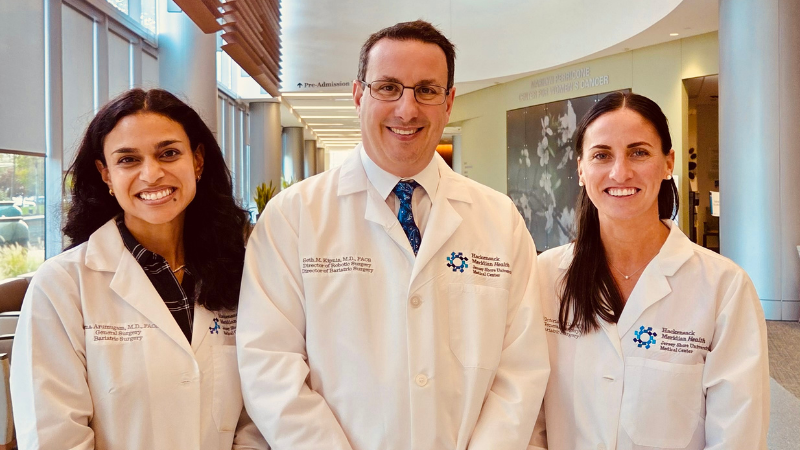
When it came time to choose his surgical team, Dr. Kipnis didn’t have to look far. He knew the highest level of care was right in his own hospital, Jersey Shore. He entrusted his surgery to two of his closest colleagues: Dena Arumugam, M.D., and Victoria Grille M.D.
What makes this choice so remarkable is that Dr. Kipnis had personally trained both of them.
“Having trained both of my partners over the last decade, placing my own health in their hands was a deeply meaningful full-circle moment and the ultimate vote of confidence in our program," Dr. Kipnis shared. "Experiencing the robotic procedure as a patient only reinforced what I already knew from our data—Dr. Arumugam and Dr. Grille maintain extraordinary standards, exceptional technique and top-tier clinical judgment, making for a seamless experience and a smooth recovery."
For Dr. Grille and Dr. Arumugam, operating on their mentor was a profound experience.
“It was truly an honor and a privilege to be part of Dr. Kipnis’ care,” said Dr. Grille.
Dr. Arumugam shared “As a Surgeon, I spent my career caring for others. It never prepared me for the experience of operating on someone who has been such an important part of my own life and specifically my career. Dr. Kipnis is my work partner and also a mentor who has helped me become the surgeon that I am today. Being entrusted with his care was both an immense privilege and huge responsibility. It helped me better understand the trust that patients give to their surgeons and it is an experience I will carry with me throughout my career.”
”Having the opportunity to care for someone who has been such an influential mentor, colleague and leader throughout our careers made this experience particularly meaningful. We were incredibly humbled by the trust he placed in us.” said Dr. Grille.
She added, “One of the greatest responsibilities we have as surgeons and mentors is to train the next generation to be the kind of surgeons we would feel confident entrusting with our own health and the health of our family members. To have someone who has dedicated so much of his career to teaching and mentoring others place that same trust in us was especially meaningful.”
The Surgery and Recovery
Dr. Arumugam and Dr. Grille utilized advanced robotic technology to perform a minimally invasive repair on not just one, but two hernias simultaneously.
The procedure took place on a Friday morning. Thanks to the precision of robotic surgery—which typically results in shorter recovery times, less pain and reduced scarring—Dr. Kipnis’s recovery was exceptionally fast. Remarkably, he was back to his demanding schedule at the hospital just eight to nine days later, feeling great and functioning as normal.
A New Perspective on Patient Care
Today, Dr. Kipnis is fully recovered, back to leading his surgical team. But the experience of being a patient has left a lasting mark on him. He gained a unique, invaluable perspective on the compassionate care and seamless teamwork demonstrated by the JSUMC staff from the moment a patient is admitted to the time they are discharged.
He now uses his personal journey to connect with his own bariatric patients, especially those who are anxious about undergoing an operation. He serves as living proof of the safety, efficacy, and world-class care provided at Hackensack Meridian Health.
Advice From An Expert
His biggest piece of advice for anyone experiencing symptoms of a hernia?
"Don't wait, and don't be scared."
Delaying a hernia repair can allow the condition to worsen over time, potentially leading to dangerous complications like enlargement and strangulation, which can turn a routine, outpatient surgery into a life-threatening emergency. Dr. Kipnis hopes his story will encourage others to prioritize their health and trust in the exceptional care available to them.
Next Steps & Resources
- Meet our sources: Seth Kipnis, M.D.,Dena Arumugam, M.D., and Victoria Grille, M.D.
- Learn more about general and robotic surgery at Hackensack Meridian Health.

23-year-old Woman Gets Answers for Her Mystery GI Symptoms
After a year of nausea and vomiting, Melanie Ferraz found relief with an esophageal disorder specialist at Hackensack University Medical Center.

HMH Doctors Address Your Top Health Concerns
Hackensack Meridian Health doctors address top health concerns, from screenings to stress, allergies and more. Get expert-backed guidance for 2026.

Hernia Surgery Guide: FAQs for Before, During and After Your Procedure
Hernias don’t always hurt, but they can still be a pain. Almost everyone can undergo a hernia surgery repair - if you’re considering it, here’s what you need to know.

Battle of the Bulge: Do I Need Hernia Surgery?
Hernias need to be fixed, not tolerated, and that often means surgery. The sooner you have your bulge repaired, the easier and faster your recovery.