

“Herd immunity” is a phrase that might sound complicated, but it’s pretty simple — and important.
It’s all about protecting yourself and your community from getting sick.
To learn more, we chatted with Sangati Kadakia, M.D., a pediatrician at Hackensack Meridian Medical Group—Rockleigh.
What Is Herd Immunity?
Think of herd immunity as a big safety net. When most people in a group are immune to a virus or bacteria, it makes it harder for the disease to spread.
It’s important for people who may not be able to get certain vaccinations, like newborn babies or people who are being treated for cancer.

“An example I like to give is herd immunity against measles, which happens when 90 to 95 percent of the population is vaccinated,” says Dr. Kadakia. “So, the remaining 5 to 10 percent of people are protected by the fact that everyone around them is protected and not spreading the virus.”
How do we get herd immunity?
A community can reach herd immunity through a few things:
- Vaccination, which often allows people to gain immunity without having to get sick
- Previous infection and recovery, which causes the body to produce protective antibodies that will shut down the infection if they see it again
- Passive immunity, such as when antibodies are passed from mother to baby
Why Vaccines Are So Important
Vaccines are beneficial for your immune system because they prepare your body to fight viruses and bacteria before they can make you sick.
They help stop dangerous viruses like measles from spreading. If you are wondering if vaccines are safe, the answer is a resounding “Yes!”
Some false information has spread online, saying that vaccines cause autism. The good news is, that’s not true.
What happens when people don’t get vaccinated?
When fewer people get vaccinated, herd immunity weakens, and diseases that were once rare can make a comeback.
Recently, measles has emerged in places where it hadn’t been seen in ages.
Why? Because fewer people were getting vaccinated. This shows how fast a virus can spread when herd immunity isn’t strong enough.
Herd Immunity Success Stories
The good news is that we’ve seen amazing successes thanks to herd immunity. Prior to the introduction of a vaccine, Haemophilus influenzae type b (Hib) regularly sickened about 20,000 people a year in the U.S.
Hib primarily affects children age 5 or younger. Hib bacteria cause swelling of the brain (meningitis) as well as pneumonia, arthritis and infections in the bloodstream (sepsis). Severe cases can even result in death.
After the Hib vaccine became widely recommended in the early 1990s, infections decreased by 99 percent. The vaccine’s robust protection significantly reduced the bacteria’s ability to spread in the community, resulting in herd immunity.
While vaccinations help prevent bacteria and viruses from spreading, they’re not always 100 percent effective. But there can still be benefits to receiving the vaccine.
As an example, Dr. Kadakia cites the pneumococcal vaccine, which protects against the most common bacteria that cause pneumonia – streptococcus pneumoniae (also known as pneumococcus).
“It’s not that you cannot get pneumonia ever,” she says, “but you are at a lesser risk of it. You’re protected more against it if you do get infected.” This means you may have a less severe case.
Why Herd Immunity Matters
Herd immunity isn’t just a medical concept; it’s a way to protect our loved ones and neighbors from getting seriously ill. Vaccines are the foundation of this protection, and keeping up with them is a simple but powerful way to help preventable diseases stay in the past.
Next Steps & Resources:
- Meet our source: Sangati Kadakia, M.D.
- To make an appointment with a primary care provider near you, call 800-822-8905 or visit our website.
- Learn more about pediatrics at Hackensack Meridian Children’s Health.
- Watch our podcast on Navigating the Noise on Pediatric Vaccines.
Find a doctor near me
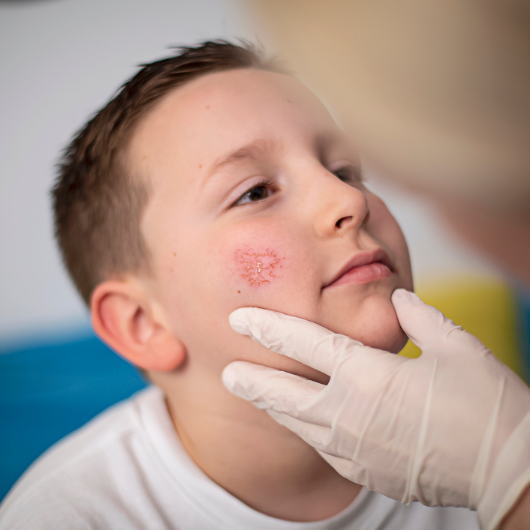
How to Identify a Measles Rash
Identify a measles rash? Dr. Hagmann explains symptoms, prevention, and risks. Learn how to protect your children. Get vaccinated.
RSV Vaccine (Antibody Injection): Who Should Get It and Why?
A new RSV antibody injection can help reduce severe cases and hospitalization for infants and toddlers. Our expert weighs in on if this is right for your child.
5 Reasons Why You Should Get Vaccinated While Pregnant
You have a lot of decisions to make while pregnant. Here are 5 reasons why you should get vaccinated for COVID-19.

A Parent’s Guide to Common Types of Stomach Pain in Kids
Tummy troubles can range from hunger or gas pains to inflammatory conditions. Our pediatric gastroenterologist outlines four common types of stomach pain in kids and their treatments.