

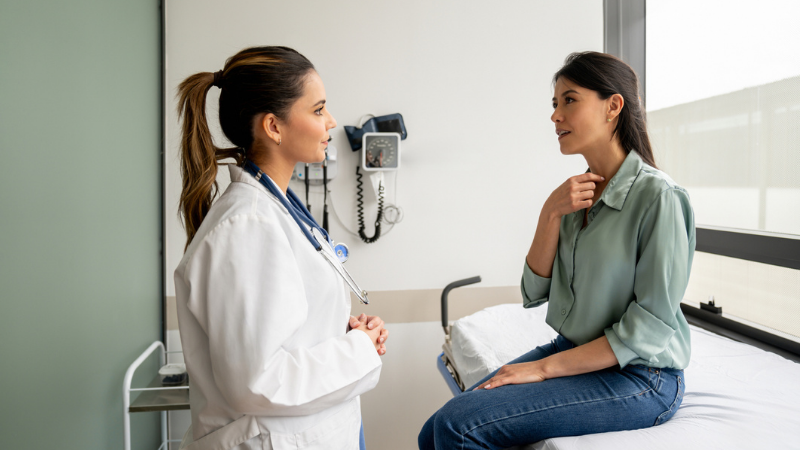
You probably already know that breast cancer is diagnosed in stages, with a lower number indicating that it’s easier to treat.
But if you or someone you love has been diagnosed with Stage 0 breast cancer, you might be wondering what exactly that means. Is Stage 0 breast cancer actually cancer?
Absolutely, says Preeti Subhedar, M.D., a breast surgical oncologist at JFK University Medical Center in Edison. Some people call it “precancer,” but Dr. Subhedar is careful to correct that: “It’s not precancer — it is cancer,” she says.
We break down what Stage 0 breast cancer is, plus how early detection and treatment can save lives.
What Is Stage 0 Breast Cancer?
Stage 0 breast cancer, or ductal carcinoma in situ (DCIS), is the earliest form of the disease. It’s noninvasive, meaning the abnormal cells are only in the lining of the breast’s milk ducts and haven’t spread to the surrounding tissue.
When it’s caught at this stage, it’s highly treatable. As Dr. Subhedar puts it, the five-year survival rate is “99 percent for Stage 0 breast cancer.” The key is early detection with an annual mammogram.
Stage 0 breast cancer accounts for about 20 percent to 25 percent of new breast cancer diagnoses every year, and it’s being found more often.
“As our imaging has improved over the last several decades, we are finding cancer at a much earlier stage,” Dr. Subhedar says.
You usually can’t feel DCIS. “By the time it’s a mass, it’s probably invasive cancer,” she says.
Instead, it typically shows up on a mammogram as tiny calcifications, which are then confirmed with a biopsy.
If you have dense breast tissue or are premenopausal, a mammogram “may not show us everything that we need to see,” so your doctor may also request an ultrasound or an MRI.
How Is Stage 0 Breast Cancer Treated?
Treatment for Stage 0 breast cancer may include a combination of surgery, radiation and hormone therapy.
There are two surgical paths, and the right one depends on your tumor, your breast and your preferences.
A lumpectomy removes just the cancerous area and is followed by radiation to lower the chance of the cancer returning. A mastectomy removes the whole breast (or both) and usually doesn’t need radiation; it’s often the better fit when calcifications cover a larger area.
Some patients also take an anti-estrogen pill daily for five years to reduce the risk of recurrence. Because DCIS is noninvasive, chemotherapy isn’t usually part of the treatment plan.
After a mastectomy, you can get breast reconstruction that uses implants or your own tissue (known as a DIEP flap) to recreate the breast. Newer techniques can spare the nipple and even preserve nerves to retain some sensation.
Sabrina’s Story
Sabrina Elson, 49, of Port Readinghas undergone annual mammograms since age 33, when her older sister was diagnosed with DCIS at age 40. So when her scan in January 2026 prompted a callback, she wasn’t worried.
“I know I always get called back because of dense tissue,” she says. This time, the follow-up imaging led to a biopsy.
The result came through the patient portal, and her husband saw it first. He called Sabrina to gently tell her the news: Stage 0 breast cancer.
“I knew this was just a difference of less than 365 days, because I go yearly,” Sabrina says. “None of that ‘how long has this been in my body’ was in my head.”
A few days later, she had an appointment with Dr. Subhedar, who reassured her that her diagnosis was incredibly manageable with the right treatment.
“Between her and my husband, I had no fear,” Sabrina says.
When it came to treatment, Sabrina chose a double mastectomy. Her sister’s history factored into Sabrina’s plan, though her sister chose a single mastectomy, not a double.
“I already knew I was going to do a double mastectomy because it was my best outcome,” she says.
She hadn’t planned on reconstruction, but after meeting the plastic surgery team, she opted for a DIEP flap, which she will be getting in the fall.
Her experience was smoother than she expected, and she credits her team.
“Dr. Subhedar just made my husband and me so comfortable,” Sabrina says. “The way she went about it, that made all the difference in the world.”
The Power of Early Detection
Sabrina’s cancer was caught early because she never skipped a year of testing.
By age 40, you “have to, have to, have to get your yearly mammogram,” Dr. Subhedar says, and she recommends getting a risk assessment by age 25 to figure out whether you need earlier or added screening.
Across Hackensack Meridian Health, that screening is close at hand, with 3D mammography, AI-assisted imaging, ultrasound and MRI available at multiple locations, along with multidisciplinary breast care and reconstruction options, if you need them.
For Sabrina, the message is simple. “It’s important for people to get screened. Make your yearly appointment,” she says. “It’s the difference between life and death.”
Next Steps & Resources:
- Meet our source: Preeti Subhedar, M.D.
- Make an appointment online with a breast specialist near you, or call 800-822-8905.
- Learn more about our cancer care services.
Find a doctor near me
Who Should Get Screened for Breast Cancer?
Breast cancer screening: Learn when mammograms are recommended. Doctors Starr, Borofsky, and Gamss share crucial information. Schedule your appointment today.

Rapid Breast Cancer Care Leads to Promising Prognosis
When Cathy McQueen noticed something suspicious on her breast days before the holiday season, her doctor sprang into action.
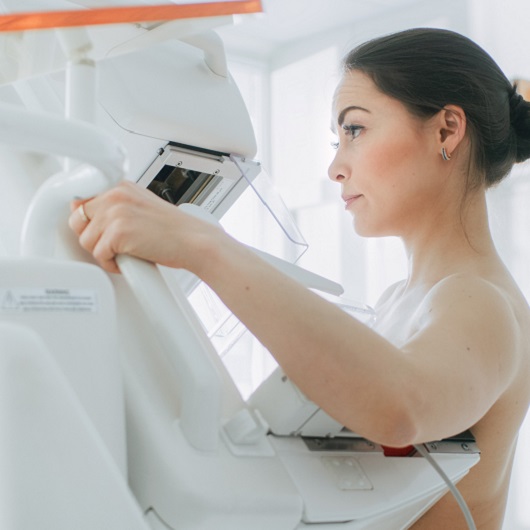
When Should You Start Getting a Mammogram? Experts Say at 40
The U.S. Preventive Services Task Force recently updated their recommendations that women should begin regular mammogram screenings at age 40, instead of 50. Our expert explains why and how to protect yourself from breast cancer.
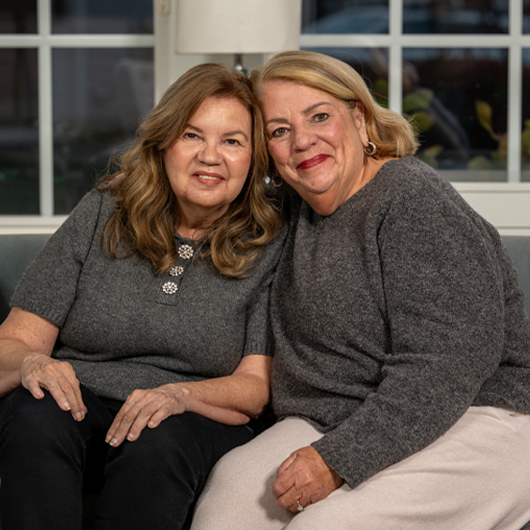
Early Detection & Expert Care: Diane’s Journey Through Breast Cancer Treatment
Discover how early mammogram screening helped detect Diane’s breast cancer early. Learn about her breast cancer treatment journey and life-saving results at HMH.