

Key Takeaways
The Pan American Health Organization (PAHO) has revoked the United States measles elimination status.
- Diagnosis: Measles is a highly contagious respiratory infection that can lead to severe complications such as hospitalization, hearing loss and death.
- Prevention: The measles, mumps and rubella vaccine is 97% effective with two doses.
- Get Care: Need a measles vaccine? Consult a pediatrician: Book Online | 800-822-8905
Medically reviewed by Daniel Ruderfer, M.D., chief of Pediatric Infectious Diseases, K. Hovnanian Children’s Hospital.
In 2000, the United States declared that measles had been eliminated thanks to high vaccination rates. That meant a public health authority, such as the Pan American Health Organization (PAHO), verified that there had been no continuous spread of the virus in a specific area for at least 12 months. However, rising measles cases nationwide prompted the PAHO to revoke the U.S. measles elimination status.
There have already been more than twice as many U.S. measles cases counted this year as in all of 2025. It’s a public health crisis that has many doctors concerned.
"Losing elimination status means measles has a home here in the US again. It isn't just arriving on planes anymore; it's readily spreading in our schools and clinics,” says Daniel Ruderfer, M.D., chief of Pediatric Infectious Diseases, K. Hovnanian Children’s Hospital. “For over 25 years, most pediatricians never saw a case. Now we're teaching residents to spot it and counting how long it's been since an exposure in the waiting room. The vaccine is still remarkably effective. The only thing that has changed is the public's commitment to using it.”
Measles is More Than a Rash
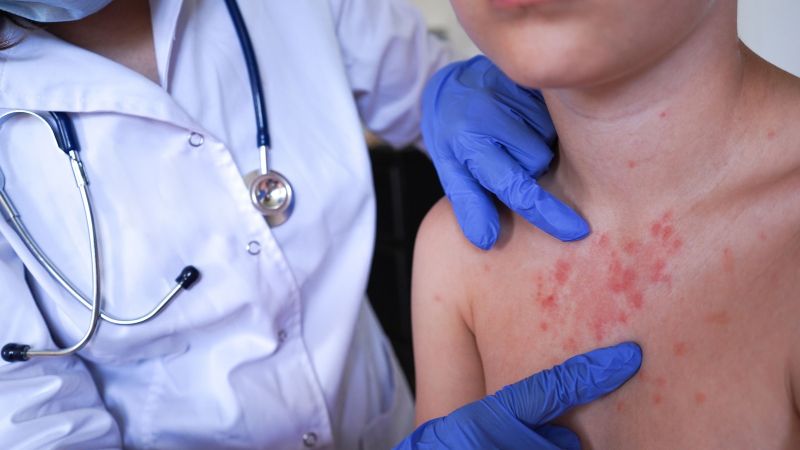
Although measles is best known for its red rash that can mark your face and body, it is a highly contagious virus that affects your respiratory tract. Symptoms generally appear 7 to 14 days after exposure and include:
- High fever
- Cough
- Runny nose
- Red, watery eyes
- Red, blotchy rash across the face
Dr. Ruderfer warns that measles can cause severe complications, especially in children under five.
“Children and those with compromised immune systems are at risk for dangerous complications such as pneumonia, brain inflammation and permanent hearing loss,” he says.
Measles is More Contagious Than the Flu or a Cold
Measles spreads through the air when someone infected with the virus coughs, sneezes or breathes. If one person has measles, up to 90% of those close to them who aren't immune will also contract it. It is more contagious than the flu or COVID-19.
“Measles doesn't need a handshake. You can catch it by walking into a room two hours after an infected person has left,” says Dr. Katherine Clouser, M.D., pediatrician at Hackensack Meridian Joseph M. Sanzari Children’s Hospital at Hackensack University Medical Center.
The Measles Vaccine is Safe and Effective
The measles, mumps and rubella (MMR) vaccine is safe and incredibly effective. The vaccine, which was introduced in 1971, is 97% effective for life with two doses. Side effects of the vaccine are generally mild and include redness and soreness at the injection site. Extensive research by the Centers for Disease Control and Prevention has confirmed there is no link between the MMR vaccine and autism.
The first dose of the MMR vaccine is recommended for children aged 12 to 15 months, with the second dose given between ages 4 and 6. If you are planning international travel, a second dose of the vaccine can be administered earlier, but must be at least 28 days after the first dose.
Measles Outbreaks Can Be Prevented
The best way to prevent measles outbreaks is through herd immunity. When most people in a community are immune to a virus or bacteria, it makes it harder for the disease to spread. It’s important for people who may not be able to get certain vaccinations, like newborn babies or people who are being treated for cancer.
However, fewer children are getting vaccinated. Coverage among U.S. kindergartners has fallen to 92.4%, below the 95% needed to achieve herd immunity. That leaves 280,000 kindergartners at risk.
“The MMR vaccine is one of the most effective vaccines ever developed. On the flip side, the virus spreads easily through the air when an infected person coughs, sneezes, or breathes. It can linger and remain infectious in the air or on surfaces for up to 2 hours after an infected person leaves a room,” says Dr. Ruderfer.
Next Steps & Resources
- Meet our sources: Daniel Ruderfer, M.D. and Katherine Clouser, M.D
- Learn more about children’s health at HMH.
Find a doctor near me
Food Allergy Rash: What Does It Look Like?
Identify food allergy rashes. Dr. Weinberger explains symptoms, triggers, and treatment. Get relief and expert care.
Why Should You Care About Herd Immunity?
One of our experts on pediatric infectious diseases breaks down how herd immunity can reduce the spread of disease and protect those who can’t get vaccinated.

Natural Immunity vs. Vaccines: Protecting Your Child
Is natural immunity better than vaccines? Learn why vaccines remain the safest and most effective way to protect children from preventable diseases like the flu, measles and polio.
What You Need to Know About the New Executive Order on Childhood Vaccines
A new executive order is aimed at overhauling the current childhood vaccine schedule by reducing the number of vaccines necessary, spacing them out and even reformulating certain immunizations. Our expert answers your questions and provides guidance on what you need to know about childhood vaccines.