

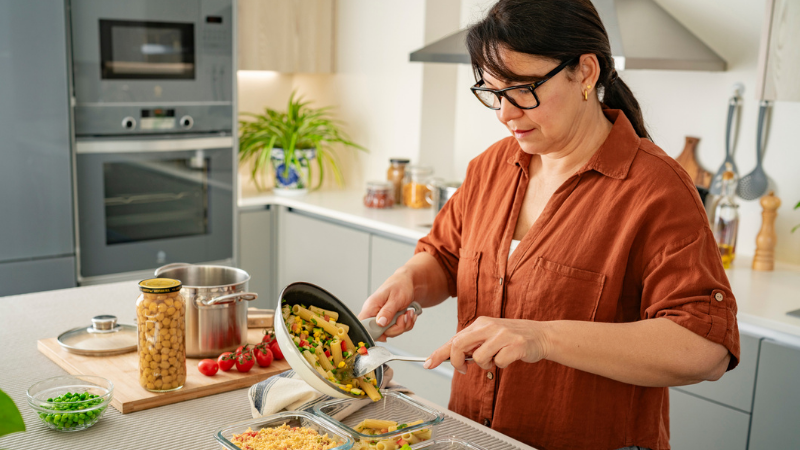
What’s for dinner?
Between work, family, errands and everything else on your plate, figuring out what to eat each day can become a challenge. What if a little planning on the weekend could make healthy meals easier for the rest of the week?
Kathryn Hamilton, an oncology dietitian at the Hackensack John Theurer Cancer Center (JTCC), recently shared practical meal prepping strategies during a JTCC Culinary Medicine Kitchen class. She explored how prepping meals in advance can save time and money, reduce the stress of deciding what to eat and make it easier to choose nutritious foods.
What is Meal Prep?
Meal prepping is the practice of preparing multiple meals or ingredients ahead of time so they’re ready to eat later. Think of it as planning ahead so you have nutritious ingredients or meals ready when you need them. Depending on your schedule, that might mean:
- Preparing several complete meals in advance
- Cooking a large batch of a protein, whole grain or vegetable to use in different meals
- Washing and chopping fruits and vegetables ahead of time
- Preparing breakfasts or snacks for several days
- Making a recipe that can be stored in the refrigerator and eaten throughout the week
The goal is to make healthy choices easier and more accessible when life gets busy.
Why Meal Prep?
One of the biggest benefits of meal prepping is convenience. When you already have something nutritious waiting in the refrigerator, you’re less likely to find yourself wondering what to eat when you’re hungry and short on time.
Planning ahead can also help you:
- Save time: Prepare several meals or ingredients at once instead of cooking from scratch every day
- Save money: Plan meals around foods you already have, seasonal ingredients and items on sale
- Reduce food waste: Buy what you need and have a plan for using it
- Make thoughtful food choices: Decide what you’ll eat before you’re hungry or rushed
- Support your health goals: Meal prepping can make it easier to follow an eating plan that supports your individual nutrition needs, including goals related to weight management
Think of it like this: Meal prep isn’t about making your diet perfect; it’s about making the healthier choice the easier choice.
How to Start Meal Prepping
If meal prepping sounds overwhelming, start small. You don’t need a refrigerator full of perfectly portioned meals to get the benefits.
A simple approach is to choose five containers and plan a few basic components for the week: a protein, a whole grain and one or more vegetables. From there, you can mix and match ingredients to create different meals.
You can also create a schedule that works for you and your family. For example, you might:
- Shop when you have time: Pick a day when you aren’t rushed. For example, you could go grocery shopping each Friday.
- Prepare on the weekend: Set aside some time on Saturday or Sunday to cook and portion your meals.
- Choose versatile ingredients: You can use proteins, whole grains and vegetables in more than one meal.
- Consider fresh and frozen foods: You can use both for meal prep. Frozen fruits and vegetables are especially convenient because you can store them longer.
- Shop strategically: Check store sales and choose seasonal ingredients when possible.
- Keep it simple: You don’t have to prepare every meal for the entire week. Start with one meal or a few ingredients and build from there.
The most important part of meal prepping is to plan ahead. Having a plan helps you make more thoughtful choices about how you nourish your body.
Easy Meal Prep Ideas
Hackensack Meridian Health has a collection of recipes that you can prepare ahead of time or use as components for meals throughout the week. Here are a few that you can add to your meal prep rotation:
- Mushroom Bulgar Pilaf
- Pasta with Zucchini, Tomatoes and Pesto
- Mediterranean Grain Bowl
- Broccoli Tofu Stir Fry
- Quick and Healthy Breakfast Burritos
- Omega-3 Grain-Free Granola
- Hearty Whole Wheat Pancakes
Easy Breakfast Meal Prep Recipe: Overnight Oats
Looking for an easy place to start? Overnight oats are a great meal prep option because you can prepare them in minutes and keep them refrigerated for several days.
The basic recipe combines rolled oats, Greek yogurt, milk and optional chia seeds. Then you can customize each serving with different fruits, nuts, seeds or other toppings.
Important: Use rolled oats, also called old-fashioned oats. Quick oats and steel-cut oats won’t work well for this recipe.
Servings: 1 per base recipe
Ingredients
Base recipe
- ½ cup rolled oats (old-fashioned oats)
- ¼ cup plain Greek yogurt
- ⅔ cup milk or milk alternative
- 1 tablespoon chia seeds, optional
- Sprinkle of salt, optional
Topping variation 1
- Fresh or frozen strawberries
- Sliced banana
- Dash of cinnamon
- 1 to 2 tablespoons maple syrup
Topping variation 2
- Sliced or chopped peach
- Chopped walnuts
- Swirl of honey
Topping variation 3
- Peanut or almond butter
- Fresh or frozen strawberries
- Crushed peanuts or almonds
Topping variation 4
- Fresh or frozen Maine blueberries
- 1 to 2 tablespoons lemon curd
- Slivered almonds
Instructions
- Place the oats, chia seeds and yogurt in a lidded container or jar.
- Pour in the milk and stir thoroughly to combine. Add a sprinkle of salt, if desired.
- Cover and refrigerate overnight or for up to 3-4 days.
- When you're ready to eat, stir the oats again. Add a splash of milk if needed to reach your preferred consistency.
- Add your favorite toppings and enjoy.
Make Meal Prep Work for You
Meal prepping doesn’t have to look the same for everyone. Maybe you have time to prepare several dinners on Sunday. Maybe you’d rather make breakfast ahead of time or simply wash and chop vegetables for the week.
Start with whatever feels manageable for you. Once you find a routine that fits your schedule, you can gradually build on it. A little planning can go a long way.
Next Steps & Resources
- Make an appointment online with a dietitian near you, or call 800-822-8905.
- Recipe shared by the oncology dietitians at John Theurer Cancer Center
Find a doctor near me
Recipe: Strawberry Spinach Salad
This strawberry spinach salad is fresh, healthy and easy to make. Get the simple recipe plus nutrition benefits and tips to customize it your way.
How Much Protein Do You Really Need? A Dietitian Weighs In
A dietitian explains how much protein you need each day, the best high-protein foods to eat and what to know about the latest protein trend.
Food Safety Tips Every Host Should Know
When hosting for a crowd, follow this simple guide to keep common bacteria and viruses off your menu.
The Gut Health Breakfast Doctors Recommend
The best breakfast for gut health may surprise you. A gastroenterologist shares the top foods that help support digestion and reduce bloating.