

Updated October 21, 2025
Aretha Watson, Ph.D., had no idea her life would change so dramatically on August 11, 2022. The 47-year-old from Tinton Falls, New Jersey, was on a work call with colleagues like any ordinary workday, when something odd happened – she heard a “pop” in her head.
“I didn’t know what was happening, but I got off the work call early. Then minutes later, I started sweating and vomiting, I fell to my knees and yelled for my husband, Gary,” she recalls. Thinking she was experiencing a serious migraine, Gary fled to the pharmacy, but when he returned, they realized things were drastically wrong.
Rushed in an ambulance to the hospital, she received a CT scan, which revealed a brain bleed (or brain aneurysm), and she needed to be transported to a trauma center, Jersey Shore University Medical Center.
“My husband and I looked at each other and thought, at age 47, my life may end,” Aretha shares.
The Pop That Changed Everything
After meeting her neurosurgeon, Pinakin Jethwa, M.D., he explained the "pop" she heard using a simple analogy: a balloon bursting.
- The Bulge: A weak spot in her brain's artery had bulged outwards under the constant pressure of her blood, just like a balloon being inflated.
- The Pop: Stretched too thin, the aneurysm wall finally tore open. This rupture was the sudden "pop" she felt.
- The Plug: Thankfully, her body's emergency response kicked in. A blood clot formed instantly at the tear, plugging the hole and stopping the bleed.
A CT scan had revealed she had suffered two brain aneurysms, one at home (the pop she heard), and a second that had not ruptured.
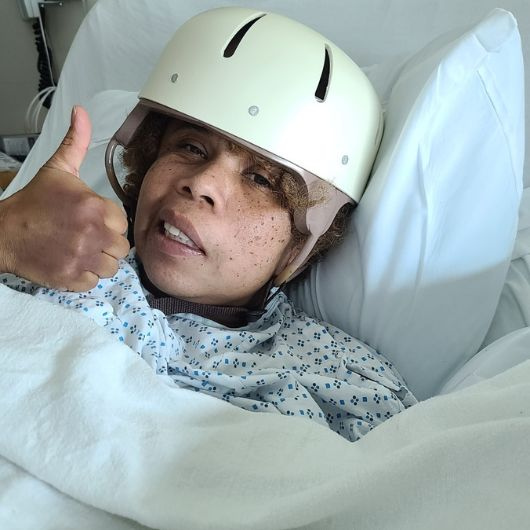
After almost a 12-hour surgery, complications led to Aretha needing part of her skull removed to relieve brain swelling.
Over the course of four months, she underwent 12 surgeries, 11 in the hospital and a 12th after discharge. Each procedure was to keep her stable and moving toward recovery, which included:
- Treating the aneurysm and controlling the swelling in her brain.
- Managing vasospasm, which can happen after an aneurysm and makes blood vessels tighten.
- Placing a shunt to help with hydrocephalus (fluid building in the brain.)
- Replacing her skull once all the surgeries were completed and Aretha was stable.
During the toughest time of her life, Aretha was grateful for the kindness and patience of Dr. Jethwa, especially when she was in such a critical condition. “He always took the time to explain everything and made my family feel so comfortable,” she notes.
“Aretha’s case quickly evolved from a single event to a marathon of critical care,” Dr. Jethwa reflects. “Each surgery had a specific goal: to stabilize, to protect, and finally, to rebuild. It’s a testament to all the care she has received, but most of all, it’s a testament to Aretha’s determination and resilience.”
The Road to Recovery
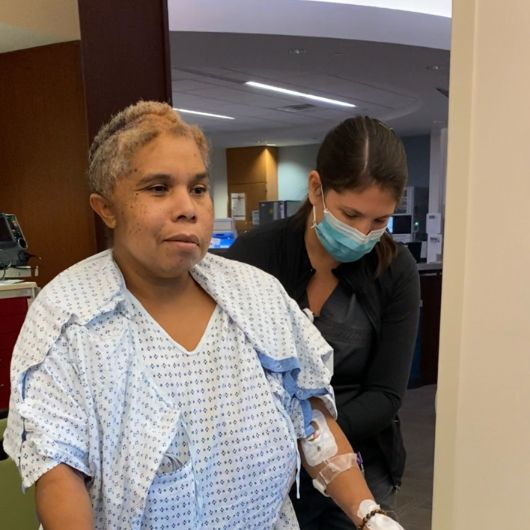
Once stable, Aretha began a long and challenging road to recovery that took place at both Riverview Medical Center and Jersey Shore.
She credits Gary, whom she lovingly calls “the drill sergeant,” with keeping her motivated and focused. She lauds Jorge F. Corzo, M.D., her physical medicine and rehabilitation provider at Riverview’s Johnson Rehabilitation Institute, and his caring staff for guiding her.
“As I struggled each day to get back to life, the hospital became my second family,” she says.
Holistic Healing for the Body and Mind
“Unlike surgeons, we don’t get to save a life every day, but we work every day at giving people back their lives and reintegrating them into daily life and their communities,” Dr. Corzo says. “What they want may be to return to work, or to hold their grandchildren, and we help them do what is important to them.”
Aretha’s complicated case is similar to the trauma of a severe motor vehicle accident, Dr. Corzo says. This type of aneurysm can affect a person’s ability to speak, eat and move, making the path to recovery long and difficult.
Patients may need physical, occupational and speech therapies, and if the brain is involved, neuropsychology, “a kind of mental calisthenics,” he says. This was key for Aretha, an experienced and successful higher education professional in research and special projects at a major New Jersey university.
“From first responders to doctors and nurses, patient care technicians and various therapists, everyone involved in my care helped put me on that path to recovery,” Aretha says. “They bathed, dressed and fed me. They listened as I talked for hours and tried to make sense of what had happened to me. At my lowest moments, they dried my tears and prayed with me when I needed it.”
One of the nurses who cared for her at Jersey Shore Medical Center, Carter Kurtas, RN, graduated from the university where Aretha works. She appreciates that many others went “above and beyond,” including her mother, father, sister, brother and daughter.
Giving Back to Other Survivors
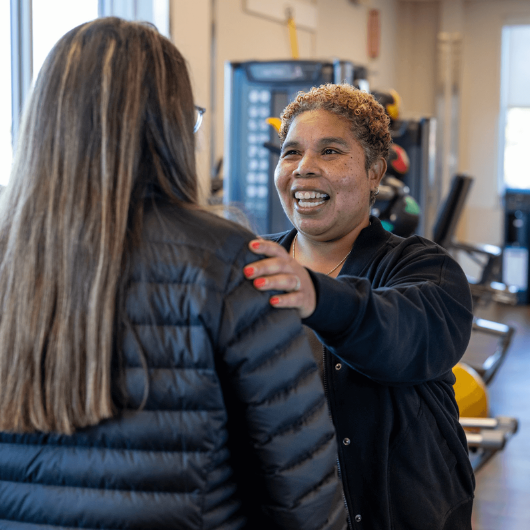
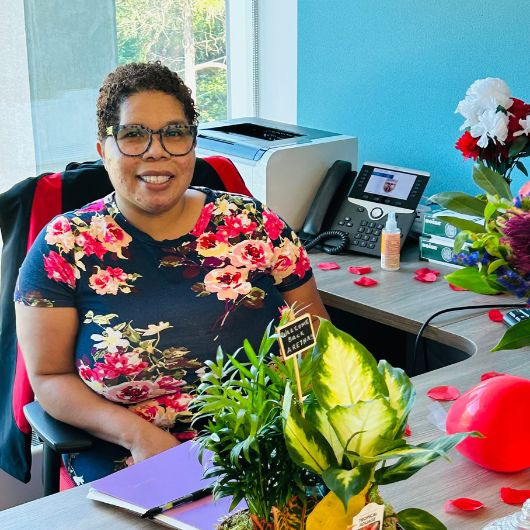
Aretha has learned to walk again, retrained her left arm, which was immobilized, and continues to regain more movement in her fingers. As part of her recovery journey, she started practicing yoga through the LoveYourBrain Foundation, a leading source of resources and education for those with brain injuries, and has since come full circle to become a certified instructor herself. She also participated in a Brain Aneurysm Foundation Advocacy Day in Washington, D.C.
Since 2024, she has also been a volunteer in the rehabilitation unit at Riverview, offering weekly support as a mentor to those returning home after rehabilitation.
“This part has been very fulfilling for me and has helped me channel what happened to me into helping others by sharing my story,” Aretha says.
“It’s just a testament of God’s goodness – I look at myself as a miracle walking, not like ‘Oh, I almost died,’” she adds. “Life is short; do what matters and brings you joy. And you never know when someone you've helped will be there to help you in return.”
Next Steps & Resources
- Meet our sources: Pinakin Jethwa, M.D., and Jorge F. Corzo, M.D.
- Make an appointment online with a neurologist near you, or call 800-822-8905.
- Learn more about neurosurgery at Hackensack Meridian Health
- Learn more about physical medicine and rehabilitation at Hackensack Meridian Health
State-of-the-Art Technologies Shrink New Jersey Man’s Brain Tumor
Groundbreaking technology at Jersey Shore University Medical Center shrunk Anthony Scuorzo’s brain tumor with no surgery, pain or anesthesia.
New Jersey Man Rebuilds Life with Innovative Stroke Rehabilitation
After the death of his wife and suffering a stroke, Luis Villa says he got his life back thanks to a comprehensive rehabilitation program.
Unique Brain Injury Rehab Program Delivers Recovery ‘Miracle’
JFK Johnson Rehabilitation Institute’s brain injury program helps 19-year-old Malachi Gaddy regain independence after sustaining life-threatening injuries.
5 Reasons to Avoid Skipping Physical Therapy Appointments
Is it OK to skip a prescribed physical therapy appointment? Our expert says “no”—and here’s why.